
Kevin O’Leary says startup founders cannot protect personal time
The Shark Tank investor told a Harvard Business School podcast that early-stage founders must accept heavy sacrifices to compete globally.
By Hana Yoshida · Markets Reporter
3 min read
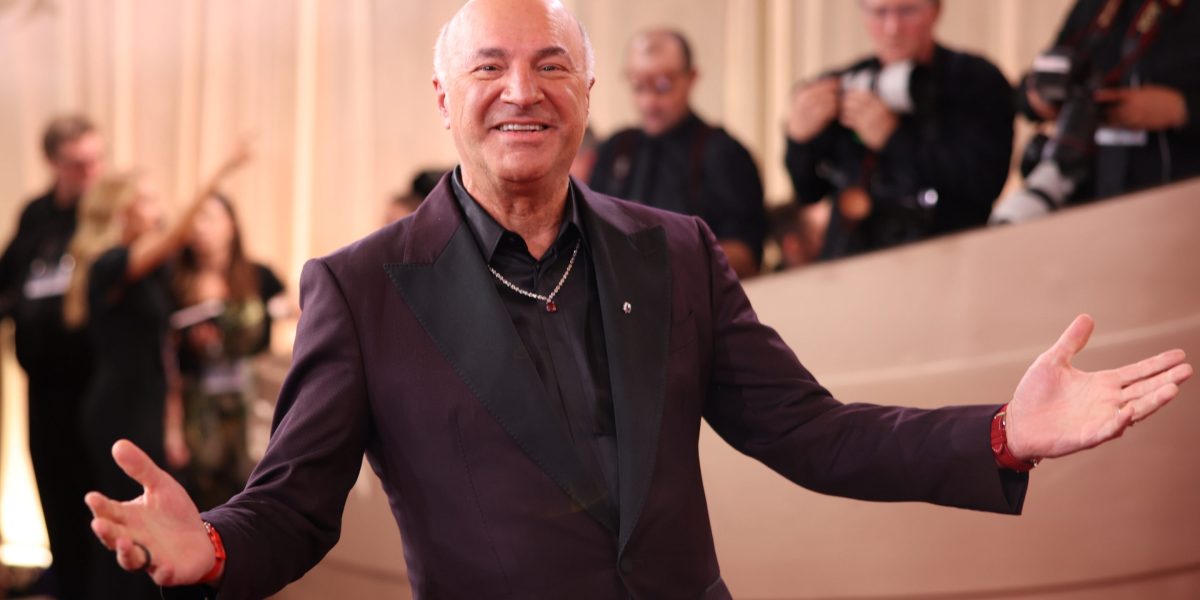
Kevin O’Leary used a Harvard Business School podcast to reject work-life balance for startup founders, saying the early years demand extreme hours. His argument adds another prominent investor voice to a hard-charging view of entrepreneurship: building a major company requires personal tradeoffs that many workers would not accept.
O’Leary made the comments on Harvard Business School’s The Founder Mindset, hosted by senior lecturer and entrepreneur Reza Satchu, according to Fortune. The Shark Tank investor said the first 36 months of a company leave little room for a founder to protect time away from work.
On the podcast, O’Leary called balance during those founder years “complete bullshit” and said entrepreneurs need to work “25 hours a day, eight days a week” because competitors in places such as Mumbai or Shanghai may be pursuing similar ideas. He described startups as a global contest in which another founder may already be working on the same concept.
O’Leary said founders who understand the early sacrifice have a better chance of succeeding, according to Fortune. He described the entrepreneurs he has backed successfully as “ferocious.”
O’Leary pointed to his own costs
O’Leary tied his view to his own experience building SoftKey, the educational software company he later sold to Mattel for $4.2 billion in 1999, Fortune reported. By October 1995, SoftKey products were sold in 18,000 retail outlets and distributed in more than 45 countries, according to Fortune.
He also acknowledged that the work came with family consequences. O’Leary said on the podcast that he was not around enough to consider himself the best father, and when Satchu asked whether he regretted that, O’Leary said he viewed it as one of the costs.
O’Leary also discussed strain in his marriage, including a two-year separation, Fortune reported. He said he and his wife later repaired the relationship.
In a separate appearance on the Diary of a CEO podcast, O’Leary argued against divorce largely in financial terms, Fortune reported. He said divorce can destroy wealth through payments to a former spouse and taxes that may follow asset sales.
Other executives have made similar arguments
O’Leary is not alone among business leaders in treating work-life balance as a warning sign for founders. LinkedIn cofounder Reid Hoffman told a Stanford startup class that hearing a founder talk about maintaining a balanced life suggests to him that the person is not committed to winning, according to Fortune.
Cerebras cofounder and CEO Andrew Feldman made a similar point on the 20VC podcast in 2025, Fortune reported. Feldman said he found it hard to understand the idea that someone could build something extraordinary while working about 38 hours a week and maintaining work-life balance.
Feldman said a person working 40 hours a week could still have a good life, according to Fortune, but he drew a line between that choice and building the next billion-dollar company.
O’Leary did leave room for one qualification. When Satchu said ambitious founders need a stable family base behind them, O’Leary agreed and said people may only recognize that value later, according to Fortune.
This story draws on original reporting from Fortune.