
Aaru founder sells skepticism as AI survey pitch
Aaru says simulated populations can beat human surveys, but research and its own tests show limits to AI predictions.
By Daniel Okafor · Business Editor
3 min read
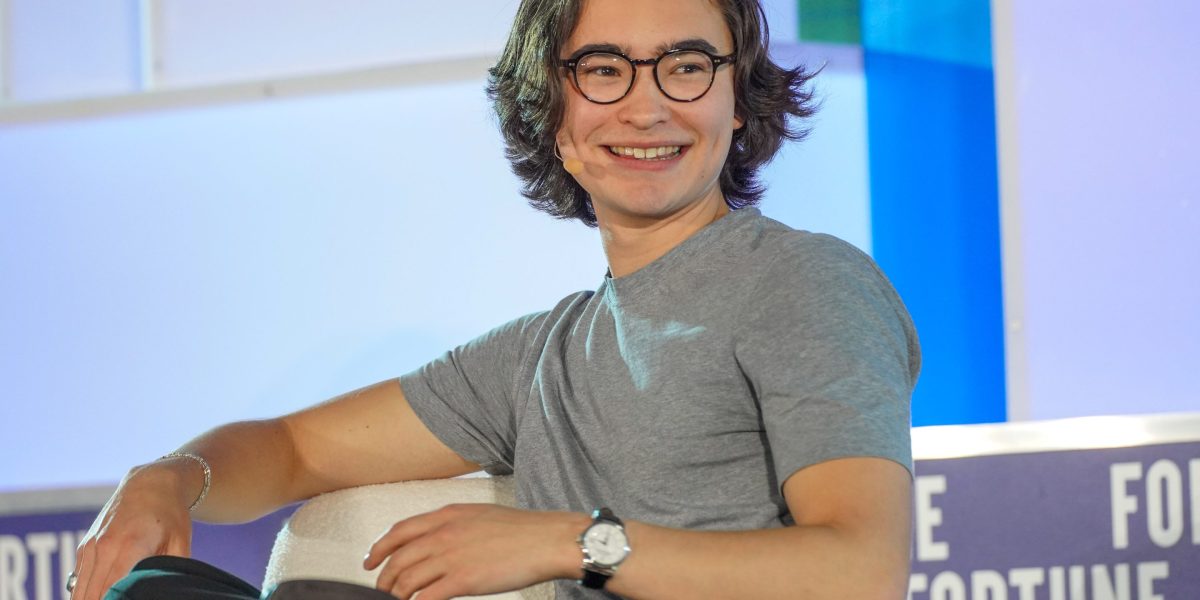
Fortune reported that Aaru, a two-year-old AI startup, is selling companies on simulated survey respondents while its president, Ned Koh, tells prospects to test the results rather than accept them on faith. The pitch, as Koh described it at Fortune’s Brainstorm Tech conference, is that clients should distrust both the company and its model until Aaru can rerun past research against known outcomes.
Koh, 21, cofounded Aaru in March 2024 with Cameron Fink and John Kessler, according to Fortune. Koh was 19 at the time, Fink was 18, and Kessler was 15, Fortune reported.
How Aaru says its model works
Fortune reported that Aaru builds statistically representative groups of thousands of AI agents. Each agent can be assigned characteristics including age, income, ZIP code and gender, and Aaru uses the agents as stand-ins for human survey respondents.
The company builds those agents from data types such as credit-card purchase history, food-delivery orders and demographic records, according to Fortune. Koh said Aaru trains and tests its systems against “outcomes,” including election results and purchase data, rather than relying only on what people say they plan to do.
Fortune reported that Aaru simulated nearly 2 million New Yorkers who voted in the city’s primary mayoral election. The company’s projection came within 2,000 votes of the final count, according to Fortune.
Koh told the conference that Aaru’s sales process is to tell businesses, “Do not trust us. Do not trust our model.” He said he wants potential customers to be skeptical because Aaru asks them to hand over past survey work, then runs its own blind version against the known result.
Why Koh says human surveys fall short
Koh pointed to an EY global wealth study as evidence for Aaru’s method, Fortune reported. EY, an Aaru partner, spent six months surveying 3,600 people in 30 countries, including a question about whether respondents would keep their parents’ wealth manager after their parents died.
In that survey, 82% of respondents said they would keep the adviser, Fortune reported. Koh said real-world retention is closer to 20% to 30%, while Aaru’s simulated respondents answered at about 40% when the company reran the survey blind.
Koh argues that people often misstate or omit information about their own behavior. He cited GLP-1 users as the demographic Aaru is most often asked to survey, saying those users may not tell family members they use the drugs and may also leave that information out of studies.
Fortune listed EY, Accenture, Interpublic Group, McDonald’s, Boston Beer, A24 and Bayer among the companies and backers buying into Aaru’s approach. Koh also said Aaru worked with Spindrift on product innovation before the beverage company launched a still tea drink.
Funding, risks and limits
TechCrunch reported that Aaru raised a Series A round in December led by Redpoint Ventures at a $1 billion headline valuation, while annual recurring revenue was still below $10 million. TechCrunch also reported that the round used a multi-tier structure, with some investors paying less than the headline price, putting the blended valuation below $1 billion.
PitchBook says Aaru has raised roughly $88 million in total. Fortune reported that Koh has not disclosed the company’s architecture or the mechanics behind its claims about reducing partisanship.
A Cornell University-led study published last year found that bot respondents across four large language models gave simplified representations of marginalized groups, portraying them more like outsiders would than like members of those groups would portray themselves. The study attributed that problem largely to AI systems being trained on human data that carries human bias.
Koh said Aaru differs from competitors that train agents on survey data because Aaru trains on behavior, which he described as more objective. Fortune also reported that Aaru has run into limits: attempts to simulate figures such as President Donald Trump and Jerome Powell did not accurately predict outcomes, even with years of public statements available.
This story draws on original reporting from Fortune.