
Brad Smith says U.S. AI policy leaves companies without clear rules
Microsoft’s president told Fortune that recent federal AI actions amount to regulation without a stable rulebook for companies.
By Maya Lindqvist · Senior Technology Correspondent
3 min read
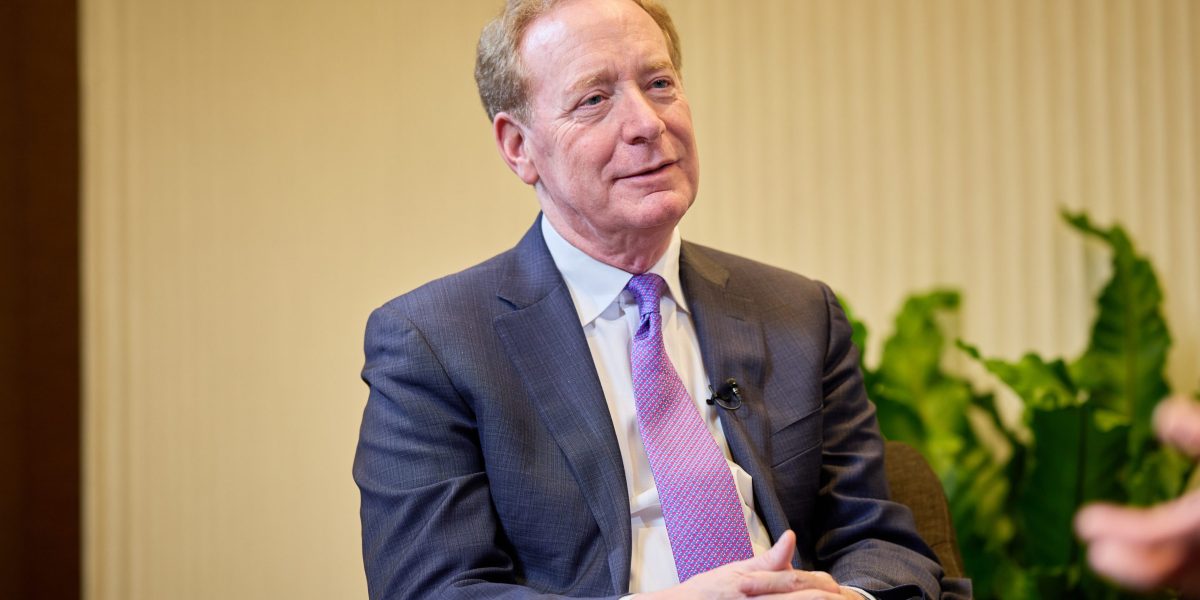
Microsoft President Brad Smith said the Trump administration’s handling of advanced AI releases is leaving companies to operate under unclear rules. His comments matter because recent federal actions against Anthropic and OpenAI have raised questions about how Washington will police powerful AI models before they reach the public.
Smith told Fortune on the sidelines of the AI for Good Global Summit that businesses need a clearer framework. He said the current approach amounts to “regulation without transparent or complete rules,” adding that companies cannot plan properly without knowing the standards they must meet.
The comments follow two federal interventions involving major AI labs. In June, the Commerce Department used export-control authority to require Anthropic to remove its Fable 5 and Mythos 5 models from the market worldwide, citing a cybersecurity risk, according to Fortune.
Weeks later, officials pushed OpenAI to delay the public release of its GPT-5.6 model family and limit early access to government-vetted partners, Fortune reported. Both measures have since been relaxed: Fable 5 returned online earlier in July, and OpenAI said GPT-5.6 would be released publicly on Thursday.
Smith said Washington was right to respond if it had information pointing to an urgent cybersecurity problem involving Anthropic’s Fable model. He also said frontier AI models should be assessed before release.
But Smith said the episode showed that the government lacks a suitable set of tools for AI oversight. According to Smith, officials relied on export controls because that was the available mechanism, even though it was not designed as a broad system for reviewing AI model launches.
Legal experts have raised similar concerns, according to Fortune. They have questioned whether export-control rules created for other purposes fit AI models delivered through online interfaces such as APIs, and whether the government’s action would have held up if challenged in court.
Critics have described the administration’s approach as resembling a licensing system without legislation or published standards, Fortune reported. A June executive order created a voluntary pre-release review process for frontier models but did not establish a formal licensing requirement that would force developers to obtain approval before launch.
Anthropic and OpenAI also faced different processes within a short period, with no public standard explaining how each decision was made, according to Fortune. The government has not disclosed who qualifies as a trusted partner or which models could face review later.
Foreign governments push for AI independence
The Anthropic decision also fed calls outside the United States for more control over AI infrastructure and models. Fortune reported that politicians in Europe said the shutdown showed the risk of relying heavily on U.S. technology providers.
A French politician compared the move to a blockade of the Strait of Hormuz, while a British lawmaker said hospitals and researchers lost access to important technology overnight, according to Fortune. Canadian Prime Minister Mark Carney made a related point around the G7 summit, calling the episode a lesson in the risk of relying on a small group of providers, the Associated Press reported.
Smith said the U.S. action against Anthropic has been misread by some foreign officials as an attempt to cut off overseas users. He told Fortune the government’s aim was to remove access for all users, including those in the United States, after Anthropic declined to take Fable off the market voluntarily.
Smith said U.S. tech companies and Washington now need to reassure customers abroad that American systems will remain available. He told Fortune that buyers will need confidence in supply certainty and continuity if U.S. companies want to keep selling services globally.
Salesforce CEO Marc Benioff made a similar argument at the summit, according to Fortune. Benioff said he felt good about the government’s decision involving Anthropic’s Fable 5 model and said Europe had mistaken a national-security response for a hostile move against foreign access to U.S. technology.
This story draws on original reporting from Fortune.