
Economist sees Trump’s China approach in Iran talks as oil risk rises
Oxford Economics says the U.S.-Iran conflict resembles Trump’s China trade fight, with oil-price risks still tilted higher.
By Sofia Marchetti · World Affairs Correspondent
3 min read
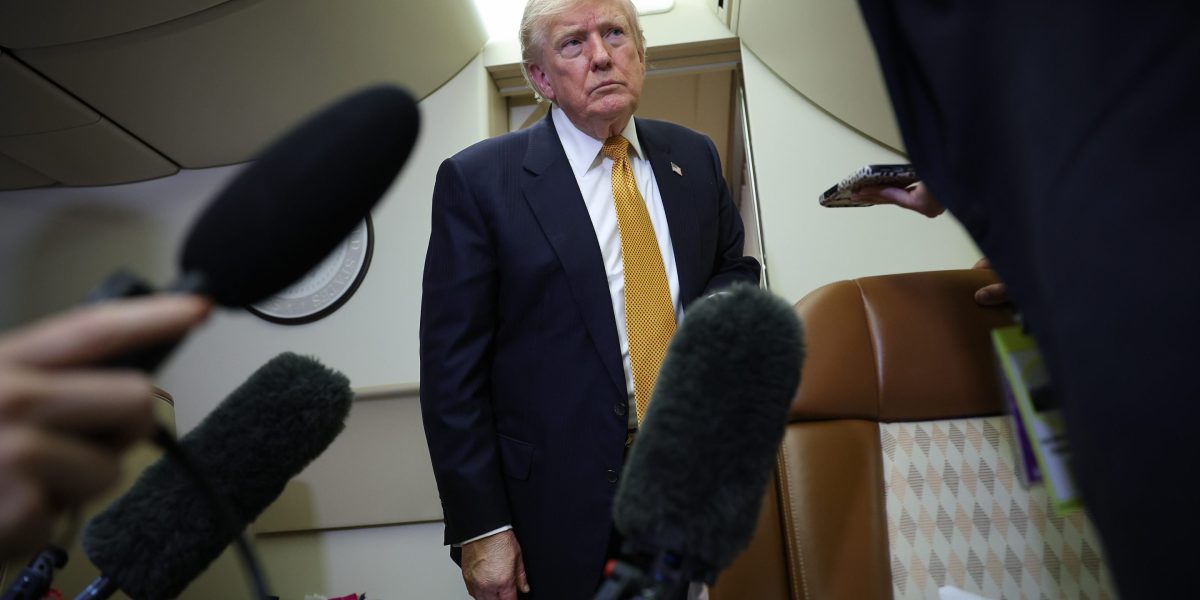
Fresh fighting between the U.S. and Iran has pushed oil back up and complicated efforts to keep talks alive, according to Fortune. Oxford Economics warned that the stop-start diplomacy now resembles President Donald Trump’s first-term trade fight with China, leaving markets unsure how much risk to price in.
Brent crude was trading around $77 a barrel, Fortune reported. That is well below its May peak of $113, but still above levels seen in February, when the war began.
The U.S. and Iran have exchanged strikes several times this week despite a stated ceasefire, Fortune reported. Oil tankers have become more hesitant to pass through the Strait of Hormuz, a key route for energy shipments, slowing supplies.
Financial markets have not fully treated the latest escalation as a lasting break in diplomacy, according to Fortune. Stocks remain higher on a month-to-month basis, while the VIX volatility index has climbed but remains below levels reached early in the conflict.
Oxford Economics points to the China precedent
Ben May, director of global macro research at Oxford Economics, said in a note cited by Fortune that the U.S.-Iran talks are “eerily similar” to Trump’s negotiations with Beijing during his first term. May said the lack of trust between Washington and Tehran made setbacks likely.
May compared the current pattern of confrontation followed by attempts at de-escalation with the trade dispute between the U.S. and China in 2018 and 2019, according to Fortune. During that period, the Trump administration imposed tariffs on Chinese goods, China retaliated, and the two sides eventually reached the “Phase One” trade agreement in 2020.
The U.S. government described that deal as an initial step toward correcting trade imbalances and addressing structural disputes with China, Fortune reported. Trump had accused China of taking advantage of the U.S., while also saying a trade agreement could be reached.
May said Trump has used a comparable mix of pressure and room for negotiation with Iran, according to Fortune. Trump has said talks with Iran were a “waste of time,” while also saying the conflict would not return to all-out war.
In May’s view, Trump has kept a path open by allowing U.S. negotiators to continue contact with Iran, Fortune reported. That has made it harder for investors to decide whether the latest strikes mark another temporary setback or a shift toward a more severe conflict.
Oil and inflation risks remain tilted upward
May said Oxford Economics had already found it difficult to forecast whether the Strait of Hormuz would reopen fully and where oil prices would settle, according to Fortune. He said the latest events raise the chance of more damaging scenarios involving prolonged disruption or a widening war.
Even so, May said the firm was not making broad changes to its central forecast, Fortune reported. Oxford Economics expects Brent crude at $73 a barrel by the end of the third quarter and $70 by year-end, close to pre-war levels.
May said that outlook depends in part on both countries continuing to leave talks available, according to Fortune. He argued that neither Washington nor Tehran benefits from a long shutdown of traffic through the Strait of Hormuz.
Oxford Economics still sees risks leaning toward a worse outcome, Fortune reported. May said it remains too early to treat a lasting surge in oil prices as the most likely result.
This story draws on original reporting from Fortune.