
Zelenskyy says Belarusian relays aiding Russian drones have stopped
Ukraine’s president said Belarus halted relay stations Kyiv says helped Russian drones reach western Ukraine after he threatened to strike them.
By James Whitfield · Staff Writer
3 min read
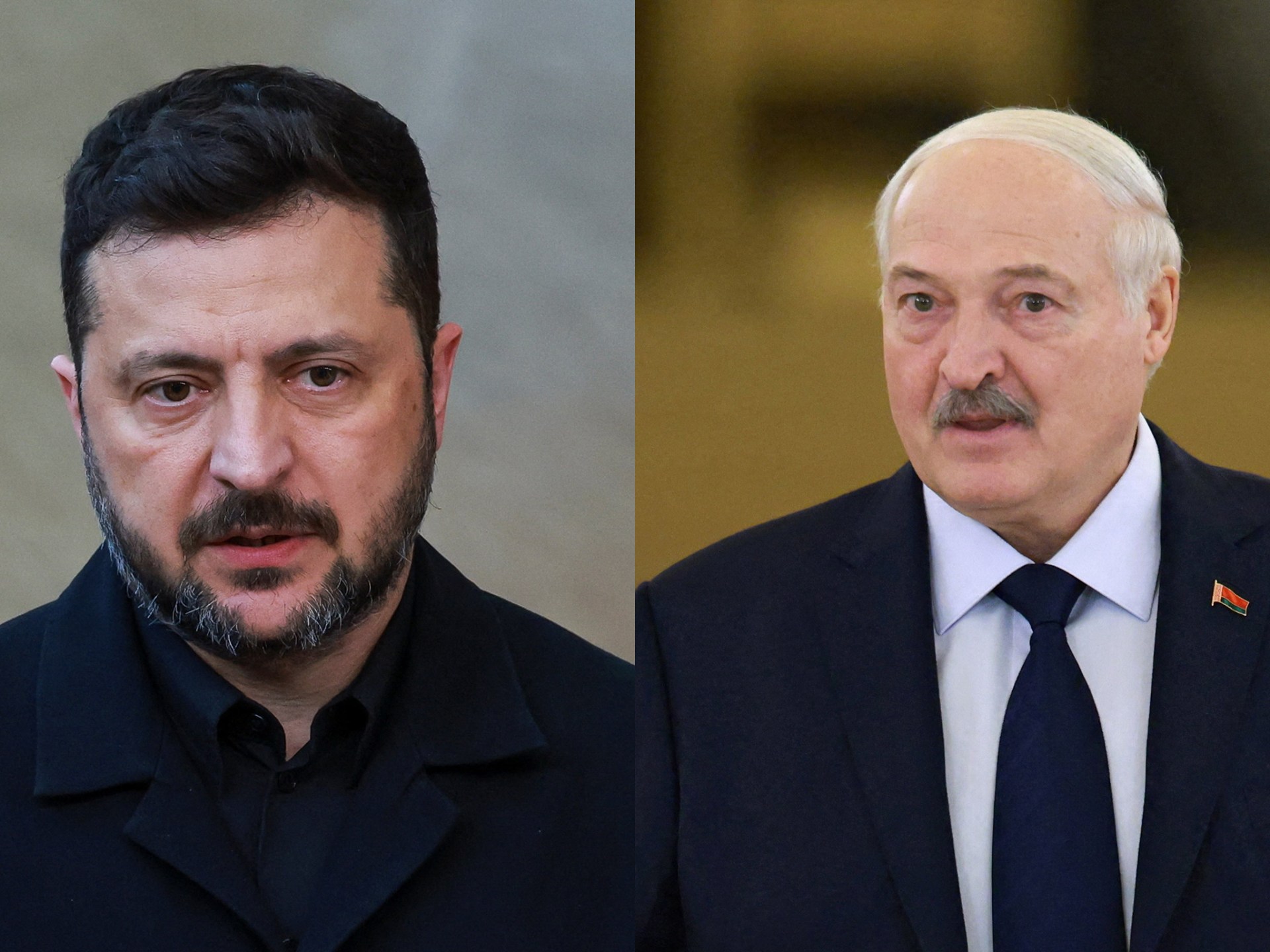
President Volodymyr Zelenskyy said relay stations in Belarus that Kyiv says helped guide Russian drones into Ukraine have stopped working after he threatened to hit them. The shutdown matters because Ukrainian officials and analysts said the equipment improved Russia’s ability to send drones deep into Ukrainian territory.
Al Jazeera reported that Zelenskyy had urged Belarusian President Alexander Lukashenko to remove four relay stations installed by Moscow. The stations had been cellular communications towers before being used to pass signals for Russian drone operators, according to the report.
Ukraine shares a 1,084km border with Belarus, much of it running through swamps and dense forest, Al Jazeera reported. The relays helped Russian unmanned aircraft exchange information and reach western Ukraine, where the report said drone interceptors and NATO-supplied air defences are limited.
Andriy Pronin, described by Al Jazeera as one of Ukraine’s early drone warfare figures, told the outlet that the equipment strengthened signals and made Russian strikes more accurate. Zelenskyy said on June 19 that Lukashenko had allowed Russia to operate equipment used to correct fire on Ukrainian civilians.
Zelenskyy set a deadline
Zelenskyy gave Lukashenko one week to act, saying that if Belarus did not remove the relays, Ukraine would do it. Robert Browdy, commander of Ukraine’s drone forces, wrote on Facebook that 500 targets in Belarus had been marked, according to Al Jazeera.
Lukashenko responded with a warning of his own, saying in televised remarks that Belarus had a serious target with exact coordinates near its border, Al Jazeera reported. The outlet said the comment was read as a reference to the Chornobyl Nuclear Power Plant, which lies in an exclusion zone less than 100km north of Kyiv and close to Belarus.
By Thursday, Zelenskyy said the relays were no longer operating. He said he did not know whether they had been dismantled, but said the key point was that they were not working at the time.
Flagstock, an independent Belarusian publication, reported that the last Russian drone crossed from Belarus into Ukraine on Sunday, citing residents in border areas. Lukashenko presented the shutdown as a move aimed at peace while also reaffirming Belarus’s alignment with Russia, according to comments carried by Belarus’s state news agency Belta.
Analysts see a concession
Ihar Tyshkevich, a Belarus-born analyst based in Kyiv, told Al Jazeera that Zelenskyy’s ultimatum had succeeded. He said Ukraine had raised the stakes in its dealings with Belarus and that talks could create a separate channel between Kyiv and Minsk.
Tyshkevich said such talks could help Lukashenko seek a way out of Western diplomatic and economic isolation and reduce Russia’s weight over Belarus. He added that Kyiv would still have demands tied to Lukashenko’s responsibility for the war and Ukraine’s own interests before allowing Belarusian companies or goods back into postwar reconstruction and trade.
Volodymyr Fesenko, head of the Kyiv-based Penta think tank, told Al Jazeera that the shutdown was an indirect compromise with Kyiv. He described it as a concession to Zelenskyy’s ultimatum that Lukashenko had avoided acknowledging publicly.
Moscow had not commented on the shutdown as of Al Jazeera’s report. Kremlin spokesman Dmitry Peskov called Zelenskyy’s ultimatum aggressive on Tuesday and said Russian President Vladimir Putin would discuss it with Lukashenko soon; Lukashenko then travelled to Moscow, and the Kremlin released no details of the meeting.
Al Jazeera reported that Moscow has urged Belarus to join the war since Russia’s full-scale invasion began, while Lukashenko has declined and sought political and economic concessions from Russia. The European Commission said on June 22 that Zelenskyy’s ultimatum affirmed Ukraine’s right to self-defence.
This story draws on original reporting from Al Jazeera.