
Yemeni fan sees World Cup through decades of war and power cuts
Adel Mohsen has followed every World Cup since 1982, but Yemen’s power cuts and economic crisis are making this year harder to watch.
By Lucas Ferreira · Science & Environment Writer
3 min read
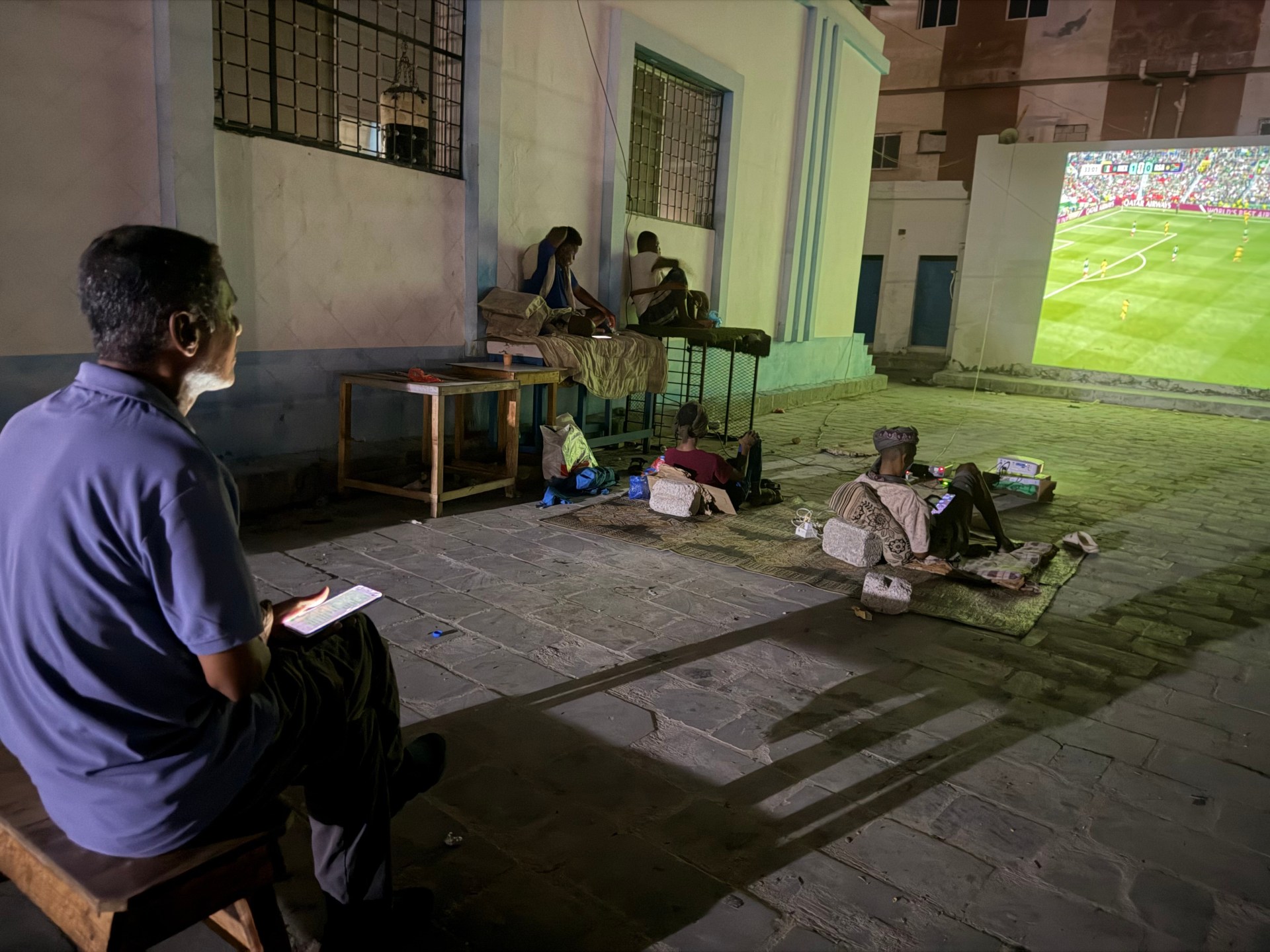
Adel Mohsen has followed every World Cup for more than four decades, but this year Yemen’s electricity failures and fuel shortages may keep him from many matches. His struggle to watch the 2026 tournament in Mukalla shows how the country’s long war and economic crisis reach into even small routines, Al Jazeera reported.
Mohsen, 56, told Al Jazeera that his backup battery failed weeks before the tournament and he could not afford to replace it. He had already paid for a local television subscription carrying the games, but without power at home during outages, that was not enough.
The replacement battery would cost about $200, Al Jazeera reported. Mohsen also could not pay for mobile internet vouchers to stream matches, while a fuel shortage in Mukalla limited his ability to travel by motorbike to places showing games.
That left a local stadium, where a public screen was set up for the opening match between South Africa and Mexico. Al Jazeera reported that generators started shortly before kickoff and the projector came on only minutes before play began.
Mohsen watched from a wooden bench, taking notes on an old mobile phone for football analysis he hoped to use later on local television or social media. He predicted during the match that Mexico would keep pushing until it scored, and Mexico soon opened the scoring, according to Al Jazeera.
A football habit that began in 1982
Mohsen’s World Cup routine began in 1982, when he was 12 and the tournament in Spain reached Mukalla not long after television arrived in parts of what was then South Yemen. He told Al Jazeera that families and neighbours gathered around sets, and that he still remembers players and venues from that tournament.
Because matches were recorded in Aden and sent by bus to Mukalla’s television station, local viewers watched games a day late, Al Jazeera reported. Mohsen said the delay did not diminish the excitement for people seeing a World Cup on television for the first time.
The 1986 tournament in Mexico came months after deadly fighting in Aden between rival factions of the ruling Socialist Party, according to Al Jazeera. Mohsen, then 16, said he watched with a more serious eye for the game and remembered that tournament as Diego Maradona’s.
By the 1990 World Cup in Italy, Mohsen was an amateur player and Yemen had united. He told Al Jazeera he studied tactics and technique from the matches and tried to apply them while playing in Yemeni cities including Sanaa, Aden, Hodeidah and Taiz.
War frames the tournaments
The 1994 World Cup in the United States coincided with Yemen’s civil war, which Mohsen described to Al Jazeera as the hardest tournament he had watched. He said fear, insecurity and frequent power cuts meant he might see one match and miss several others.
After that war, when then-President Ali Abdullah Saleh’s largely northern forces prevailed, Yemen entered a more stable period, Al Jazeera reported. Mohsen found the 1998, 2002, 2006 and 2010 tournaments easier to follow.
By the 2014 World Cup in Brazil, Yemen was entering another crisis, with al-Qaeda in the Arabian Peninsula increasing attacks and the Houthis expanding beyond their northern base, according to Al Jazeera. Mukalla has mostly avoided fighting inside the city during the years of war that followed, though Al Jazeera noted clashes in late 2025 between the internationally recognised government and the Southern Transitional Council.
For Mohsen, the obstacles now are often economic hardship and failing services rather than front-line combat. He told Al Jazeera he still sees sport as a short release from Yemen’s pressures, even when others question attention to football during a national crisis.
Despite the difficulties, Mohsen is still watching where he can. He also offered Al Jazeera a prediction for the 2026 winner: France.
This story draws on original reporting from Al Jazeera.