
Yemen flare-up raises risk to key Red Sea energy route
A strike on Sanaa airport and Houthi missile fire have renewed fears that Yemen’s war could endanger shipping through the Bab al-Mandeb Strait.
By Sofia Marchetti · World Affairs Correspondent
3 min read
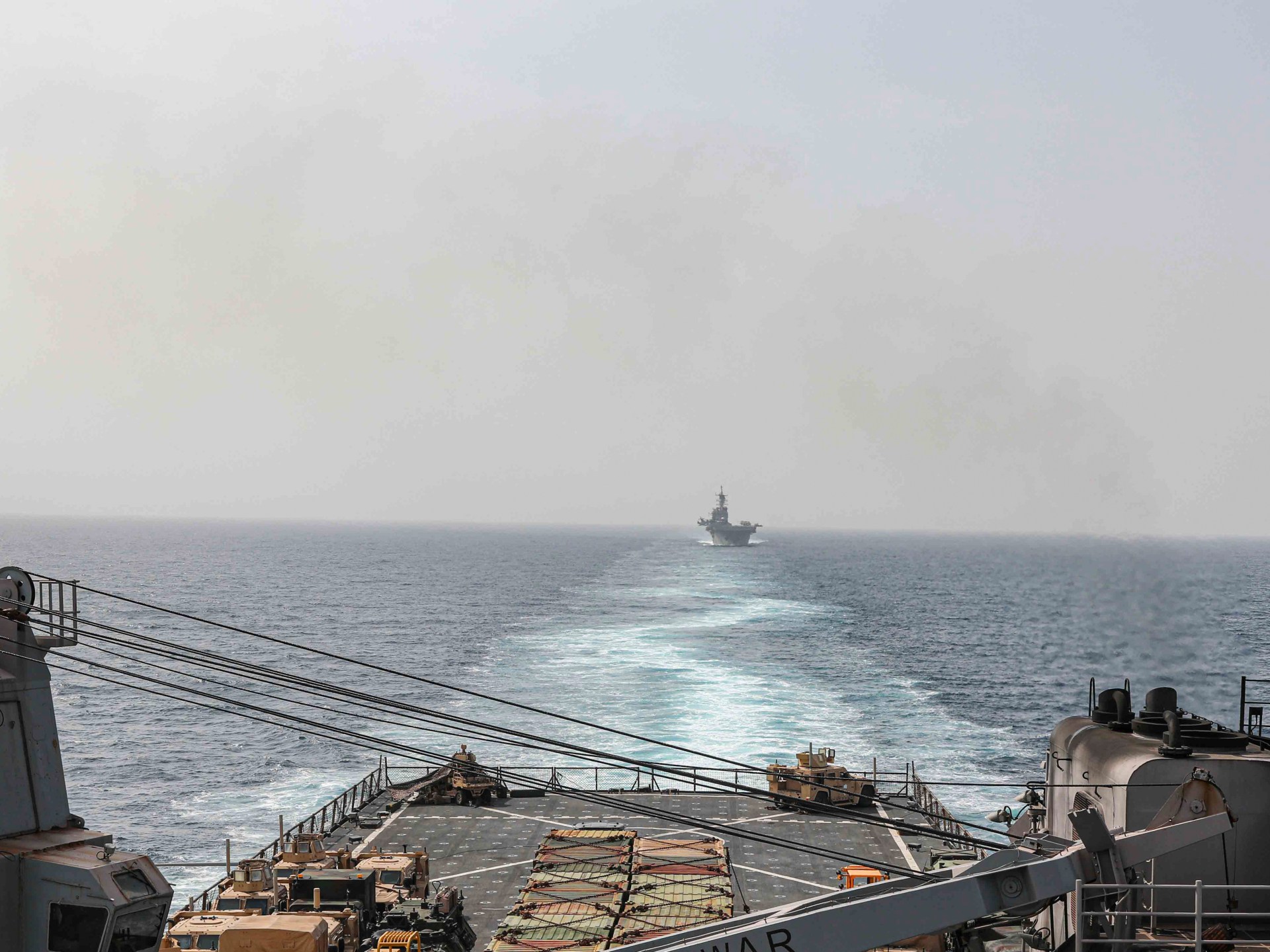
A new military escalation in Yemen has broken a fragile four-year informal truce and raised concern over one of the world’s main energy shipping routes. Al Jazeera reported that analysts are warning the airport dispute could spread toward the Bab al-Mandeb Strait if the fighting widens.
Yemen’s internationally recognised government bombed the runway at Sanaa International Airport on Monday, saying it acted to stop an Iranian aircraft from landing, according to Al Jazeera. Houthi forces responded by firing ballistic missiles toward southern Saudi Arabia and said their period of de-escalation with Riyadh had ended.
Airport strike sets off new confrontation
The Yemeni government, which is backed by a Saudi-led coalition, said the Iranian plane was carrying military experts, drone technology and communications equipment, Al Jazeera reported. Houthi officials disputed that account, saying the aircraft was carrying more than 200 stranded medical patients and a delegation returning from the funeral of Iranian Supreme Leader Ayatollah Ali Khamenei in Tehran.
According to Al Jazeera, the Houthis diverted the flight to Hodeidah. They then launched ballistic missiles at Abha International Airport in Saudi Arabia, which the Saudi-led coalition said it intercepted.
The renewed fighting comes as tensions are already high around another energy chokepoint. Al Jazeera reported that Iran has again effectively closed the Strait of Hormuz during its war with the United States and Israel, while US President Donald Trump has reimposed a naval blockade on Iran-linked ships trying to pass through that waterway.
Bab al-Mandeb becomes a second pressure point
The Bab al-Mandeb Strait links the Red Sea with the Gulf of Aden and the Indian Ocean. Al Jazeera, citing energy and trade data, reported that about 12 percent of global trade passes through the narrow route each day, and that oil flows through it averaged 4 million barrels per day in 2024.
Ibrahim Fraihat, a professor of international conflict resolution at the Doha Institute for Graduate Studies, told Al Jazeera that the Bab al-Mandeb region had been “on a powder keg” since the start of the broader war. He said the risk of spillover into surrounding areas was expected.
Mohammad Cherkaoui, also a professor of international conflict resolution, told Al Jazeera that a Bab al-Mandeb crisis alongside the Hormuz crisis would create a dangerous two-sided squeeze on Gulf security. Mohammad Saleh Sedghian, director of the Arab Centre for Iranian Studies, pointed to remarks by Iran’s Quds Force commander Esmail Qaani about forming a “belt” between Hormuz and Bab al-Mandeb to protect the Iran-backed “axis of resistance.”
Energy markets face wider risk
Al Jazeera reported that a simultaneous closure of the Strait of Hormuz and the Bab al-Mandeb would block about 25 percent of the world’s oil and gas supply. Ships would need to travel around the Cape of Good Hope, adding 10 to 14 days to delivery times and increasing shipping and insurance costs.
Bill Putnam, a former commander of the US Military Intelligence Readiness Command, told Al Jazeera he was concerned about Red Sea shipping if the Houthis respond further because they believe Saudi Arabia initiated the airport attack.
A Bab al-Mandeb disruption would also affect Saudi Arabia’s effort to bypass Hormuz. Al Jazeera reported that Saudi Arabia has used its 1,200km East-West Pipeline, operated by Saudi Aramco, to move oil from Abqaiq to Yanbu on the Red Sea, with full capacity recently restored to 7 million barrels per day after attacks.
That route still depends on ships leaving the Red Sea through the Bab al-Mandeb for Asian markets, according to Al Jazeera. If the chokepoint were closed, Saudi exports using the bypass would face the same broader constraint as other Gulf energy shipments.
This story draws on original reporting from Al Jazeera.