
Yemen dengue outbreak strains hospitals as Mukalla teams hunt mosquitoes
Yemen’s dengue outbreak has caused 7,815 suspected cases and 33 deaths in government-held areas, with Mukalla teams hunting mosquito sites.
By Lucas Ferreira · Science & Environment Writer
3 min read
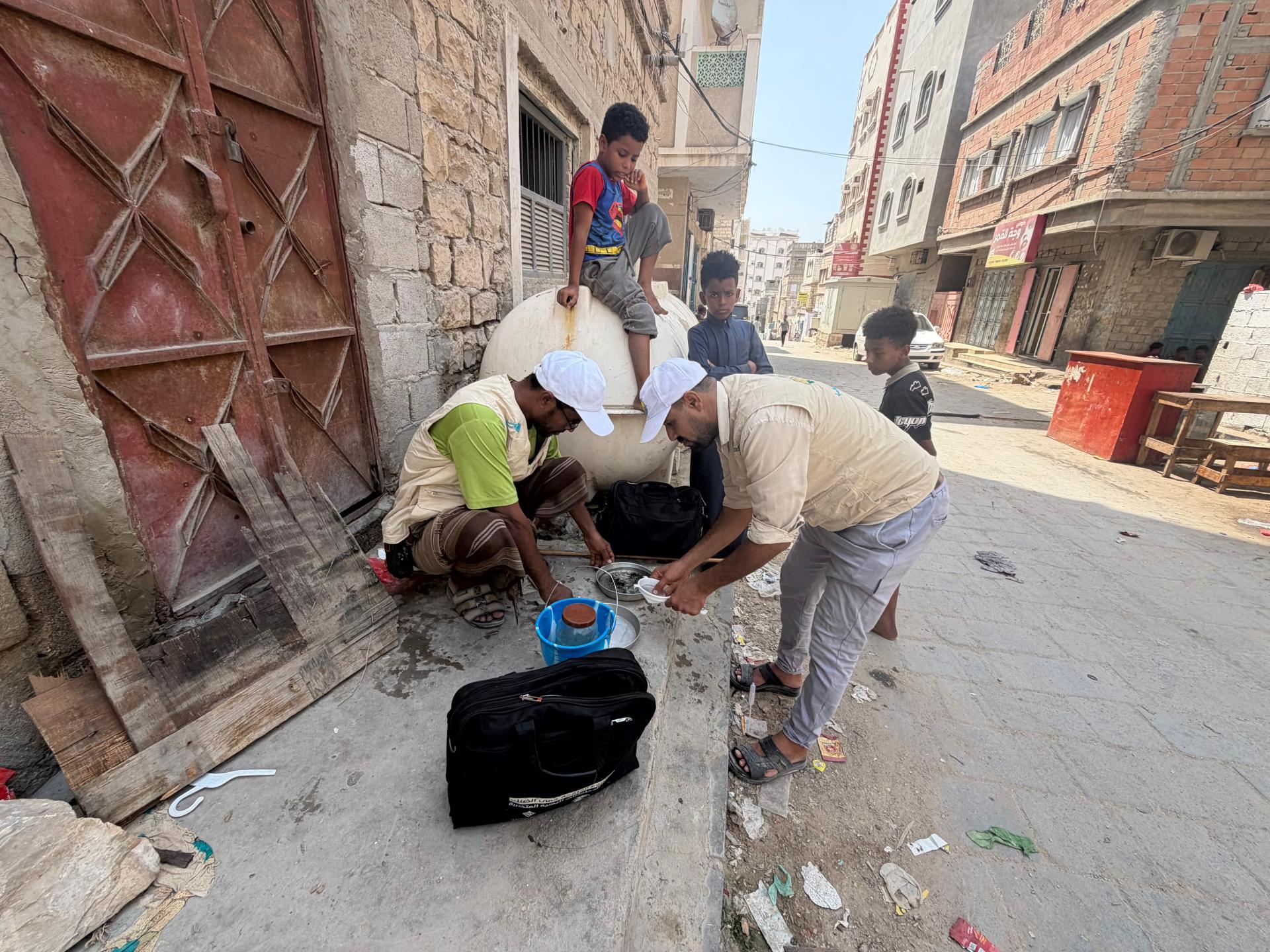
A Yemen dengue outbreak is pushing health workers into crowded neighborhoods to find mosquito breeding sites while hospitals handle a surge of suspected cases. Al Jazeera reported from Mukalla that surveillance teams are inspecting stagnant water in one of the country’s hardest-hit areas.
In Al-Koud, a densely populated district of the port city, insect surveillance officer Salem bin Shabz and colleagues checked drainage chambers, puddles and household water storage. Al Jazeera said the team found larvae in stagnant water from a household air conditioner and in an uncovered tank near a home.
Bin Shabz, who works with the provincial office of Yemen’s National Malaria Control Programme, told Al Jazeera the samples included larvae linked to both malaria and dengue transmission. He said the team identifies larvae and then decides what control steps are needed.
How bad is Yemen's dengue outbreak?
The Aden-based Electronic Integrated Disease Early Warning System recorded 7,815 suspected dengue cases and 33 deaths in government-controlled areas from January 4 to July 18, 2026, according to Al Jazeera. Hadramout had the highest reported total, followed by Aden, Abyan, Shabwa and Taiz.
- Hadramout: 2,204 suspected cases
- Aden: 1,639 suspected cases
- Abyan: 962 suspected cases
- Shabwa: 951 suspected cases
- Taiz: 770 suspected cases
Dengue is a viral illness spread by mosquito bites. It can cause fever, headache, body pain and nausea, and severe cases can be fatal, according to the account published by Al Jazeera.
The outbreak is adding pressure to a health system weakened by years of war, lack of funding and repeated disease outbreaks. Hospitals in Aden, Taiz, Abyan and Hadramout have treated thousands of suspected dengue patients, Al Jazeera reported.
Mohammed Omer, head of the laboratory at Mukalla’s government-run Ibn Sina Hospital, told Al Jazeera the facility received more than 60 suspected dengue cases in one day during the May peak. He said the hospital used one and a half boxes of dengue test kits in a 24-hour shift to process samples from 65 suspected patients.
Omer said patients often come to Ibn Sina because it offers free laboratory tests, consultations and inpatient care. He also said some patients arrived late because they lacked money for treatment or assumed their illness was an ordinary fever until bleeding symptoms appeared.
Why is dengue hard to control in Yemen?
Health workers and experts cited several reasons to Al Jazeera: weak sanitation, stagnant water, limited public awareness, underfunded control programmes and delays in seeking medical care. Mohammed Salem Hadi, who heads the NMCP office, said efforts in Shabwa are held back by funding shortages, low awareness and late treatment.
Abdulla bin Ghouth, a professor of community medicine at Hadramout University, told Al Jazeera dengue has become endemic in Yemen. He said there is no specific treatment for dengue beyond symptom care and fluid replacement, and no specific vaccine available for prevention.
Bin Shabz said water shortages and poverty make the mosquito problem worse. Many families store water in poorly sealed tanks, uncovered containers or open ponds, creating breeding sites that health teams must keep returning to inspect.
This story draws on original reporting from Al Jazeera.