
Viking-era textile site uncovered near Aarhus
Moesgaard Museum experts say the Danish site points to organized production tied to wider trade networks more than 1,000 years ago.
By Lucas Ferreira · Science & Environment Writer
3 min read
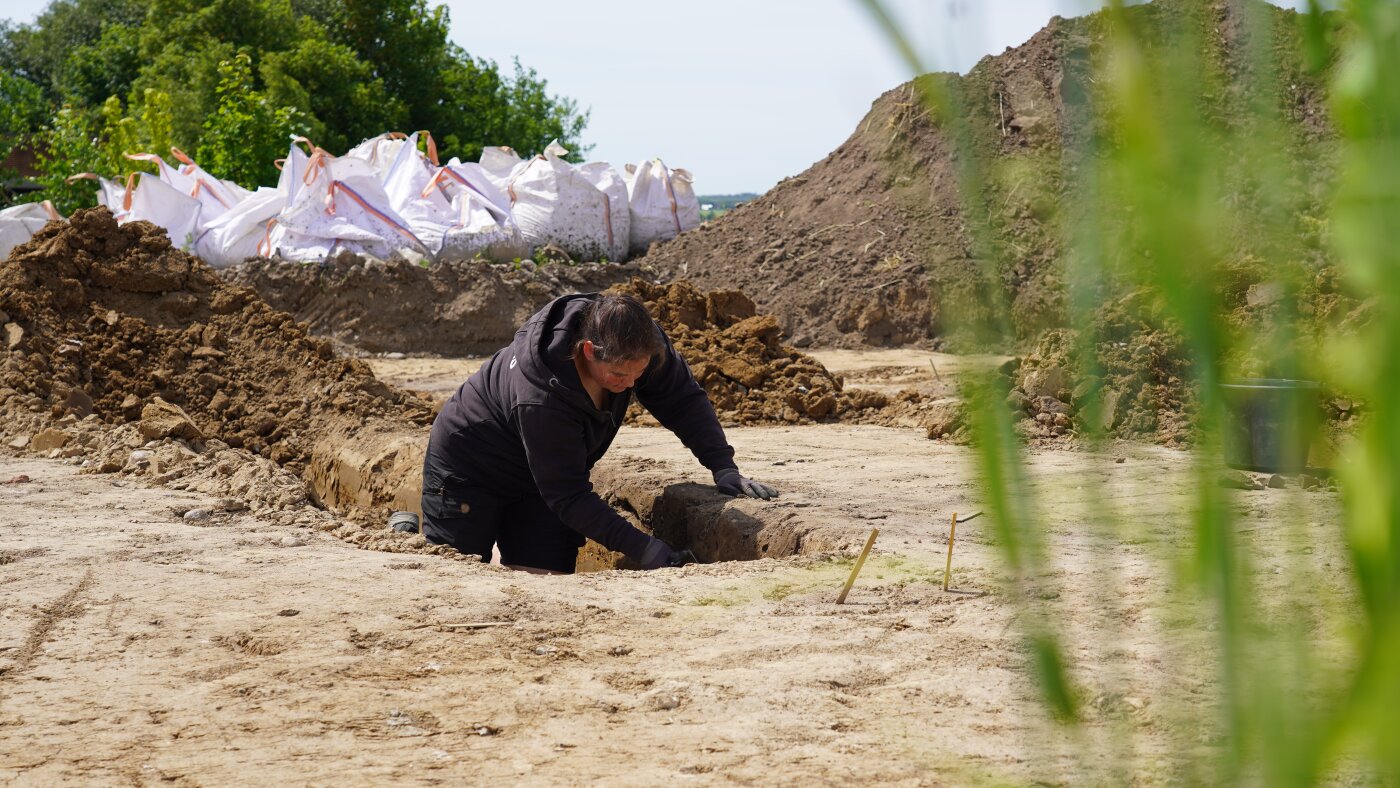
Archaeologists in Denmark have uncovered a large Viking-era textile production site near Aarhus, a find researchers say adds evidence that Viking society relied on organized craft work and trade. The Moesgaard Museum said the site includes workshop buildings, flax-processing areas and artifacts linked to weaving and spinning.
The complex lies at Søften, about 10 kilometers north of Aarhus on Denmark’s Jutland peninsula, according to the museum. Researchers date it to the late Iron Age and early Viking Age, between about A.D. 600 and 950.
Moesgaard Museum experts said the site covers roughly 100,000 square meters, or more than 1 million square feet. More than 80 pit houses have been found there, they said, referring to partly sunken structures used in the period as work spaces and homes.
Liv Stidsing Reher-Langberg, the archaeologist who led the 10-month excavation, told The Associated Press that textile work stands out as the defining activity at the settlement. She said finds including spindle whorls and loom weights show what kinds of tasks were taking place inside the pit houses.
Archaeologists also found silver coins, glass beads and pottery, according to Reher-Langberg. The museum said the layout shows distinct zones for craft and production activity, along with one residential building.
That arrangement may point to control by a person with status and access to resources, the researchers said. They interpreted the combination of specialized work areas and a single home as evidence that production was managed rather than scattered across an ordinary farming settlement.
The discovery followed earlier signs that the area held archaeological value. Reher-Langberg said metal detector users had found several silver coins in the area over the past 30 years, and a trial dig about a year and a half ago ahead of road and industrial construction drew further attention to the site.
As trenches were opened, she said, archaeologists saw that the remains continued across the area, with more houses, pit houses and signs of textile-related activity. The scale of the evidence led to the longer excavation.
Moesgaard Museum historian Kasper Andersen said the Søften find helps researchers understand the economic, cultural and political structure around Aarhus in the period. Aarhus, known then as Aros, served as a royal and international trading center during the Viking era, according to Andersen.
The museum also pointed to another nearby discovery last year at Lisbjerg, about 4 kilometers from Søften, where archaeologists found a Viking site thought likely to have housed members of the nobility. Andersen said goods from rural settlements such as Søften probably fed into wider trade routes through Aarhus.
Andersen said a production center of this size would have needed buyers beyond the local area. In his view, Søften should be understood as part of a broader international network rather than as an isolated village workshop.
Researchers still have questions about the exact nature of the textile work carried out at the site. Reher-Langberg said carbon dating and pollen analysis may help clarify what was produced and how the area was used.
The Viking Age is generally dated from A.D. 793 to 1066, a period in which Norse groups raided, traded, settled and conquered across Europe and reached North America. Andersen said the Søften evidence points to a society capable of coordinating production and supplying markets beyond its immediate region.
This story draws on original reporting from NPR.