
Venezuela quake toll climbs as aid groups warn of wider crisis
A week after twin earthquakes hit Venezuela, officials report 1,943 deaths while the U.N. warns that millions may need urgent aid.
By Daniel Okafor · Business Editor
4 min read
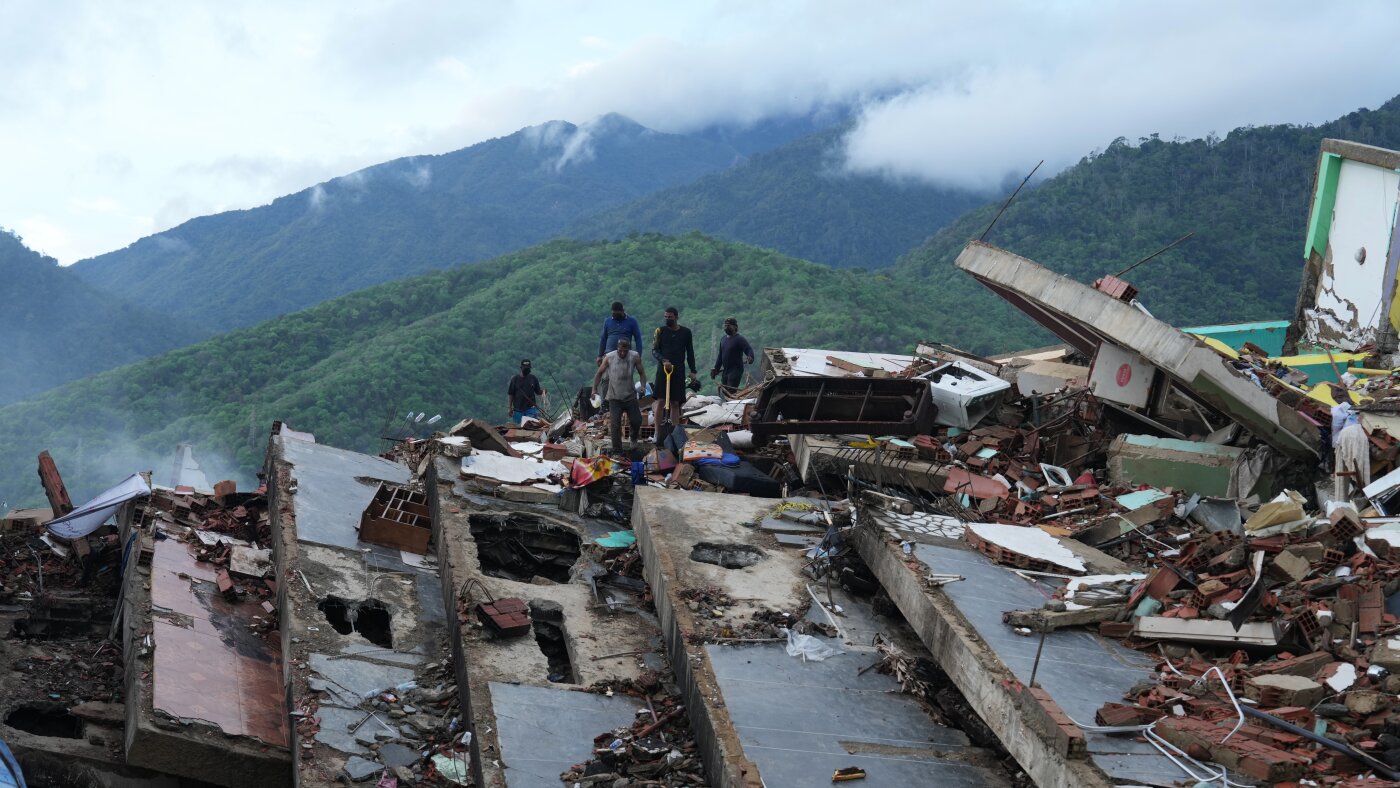
Venezuela is facing a widening emergency one week after two powerful earthquakes struck within seconds of each other on June 24. Officials say the known death toll has reached 1,943, while U.N. agencies and aid groups warn that the need for shelter, medical care, water and sanitation could affect millions.
The quakes, measured at magnitudes 7.2 and 7.5, hit at 6:04 p.m. with epicenters in Yaracuy state, west of Caracas, NPR reported. Venezuelan authorities have identified La Guaira state as the area hit hardest, and shaking was felt across the country and in parts of neighboring nations.
Jorge Rodríguez, president of Venezuela’s National Assembly, said Tuesday that more than 10,000 people had been injured. Tens of thousands remain unaccounted for, according to NPR.
Gianluca Rampolla, the U.N. humanitarian coordinator in Venezuela, said Monday that the number of confirmed deaths is expected to rise as search teams continue working and assessments expand. Rampolla said the U.N. and Venezuelan authorities had agreed to obtain 10,000 body bags, while expressing hope that the final toll would be lower.
The damage extends far beyond the casualty count. NASA’s analysis of satellite data estimated that 58,870 buildings were likely damaged or destroyed. The U.N.’s International Organization for Migration said as many as 6.8 million people could be affected and may need shelter, clean water, sanitation, healthcare and other emergency supplies.
Residents say rescue help came slowly
In badly damaged neighborhoods, residents have accused the government response of being too slow, NPR reported. In Los Corales, a coastal community in La Guaira, volunteers have recovered bodies from collapsed buildings and used garbage bags and plastic sheets when body bags were unavailable, according to NPR’s reporting from the area.
Rosalia Bustamante, a resident who said she lost friends in a collapsed 12-story building, told NPR that delays in getting rescue equipment to the site cost lives. Construction worker Julio Meléndez told NPR that police held up his effort to bring a jackhammer into a disaster zone for two days while asking for a permit and proof of purchase.
Some rescues have continued after the early window for survival. Acting President Delcy Rodríguez wrote on Telegram that a 3-year-old boy, Klieber Morán, was pulled alive from rubble in La Guaira six days after the quakes.
NPR also reported that Venezuelans deported from the United States hours before the earthquakes were among those feared dead after a hotel used for processing them collapsed. There were 146 deportees on the flight, and NPR reported that it was not clear whether any survived.
Hospitals and shelters under pressure
Thousands of people are sleeping in parks, on sidewalks and on soccer fields, according to NPR. Mirna Castillo, who was staying in a tent with her children after her Caracas building swayed during the quakes, told NPR she had not received shelter, assistance or guidance from the government.
Venezuela’s government has said it will open large camps for people who lost their homes. Rodríguez said on state television that a presidential commission was reviewing damage to housing and infrastructure and that new home construction would begin soon.
Karol Bassim of the International Medical Corps told NPR that many people in the worst-hit places lacked food, drinking water, shelter and basic healthcare. Bassim said hospitals were over capacity and health workers were exhausted, while the U.N. warned of infectious disease risks after damage to hospitals and reports of missing doctors.
Foreign aid begins arriving
The United States has announced search-and-rescue support, military logistics assistance and $150 million for charities and U.N. agencies, NPR reported. The European Union said it was sending more than $5 million in aid, responders from member states and satellite mapping support through Copernicus.
The United Kingdom announced specialist rescue teams and more than $2 million in humanitarian funding. Brazil’s President Luiz Inácio Lula da Silva said his country was sending firefighters, civil defense personnel, a field hospital and medical supplies, while India and China also pledged or sent humanitarian support.
The Associated Press reported that nongovernmental groups, including the International Federation of Red Cross and Red Crescent Societies and the Caritas network, are assisting the response. César Jiménez of Project Hope in Venezuela told NPR that damaged health facilities and urgent needs had left local teams seeking broad outside support.
This story draws on original reporting from NPR.