
Quake recovery stalls Venezuela’s push toward elections
Twin earthquakes have shifted Venezuela’s political agenda toward disaster relief, delaying talks over elections and democratic transition.
By Lucas Ferreira · Science & Environment Writer
4 min read
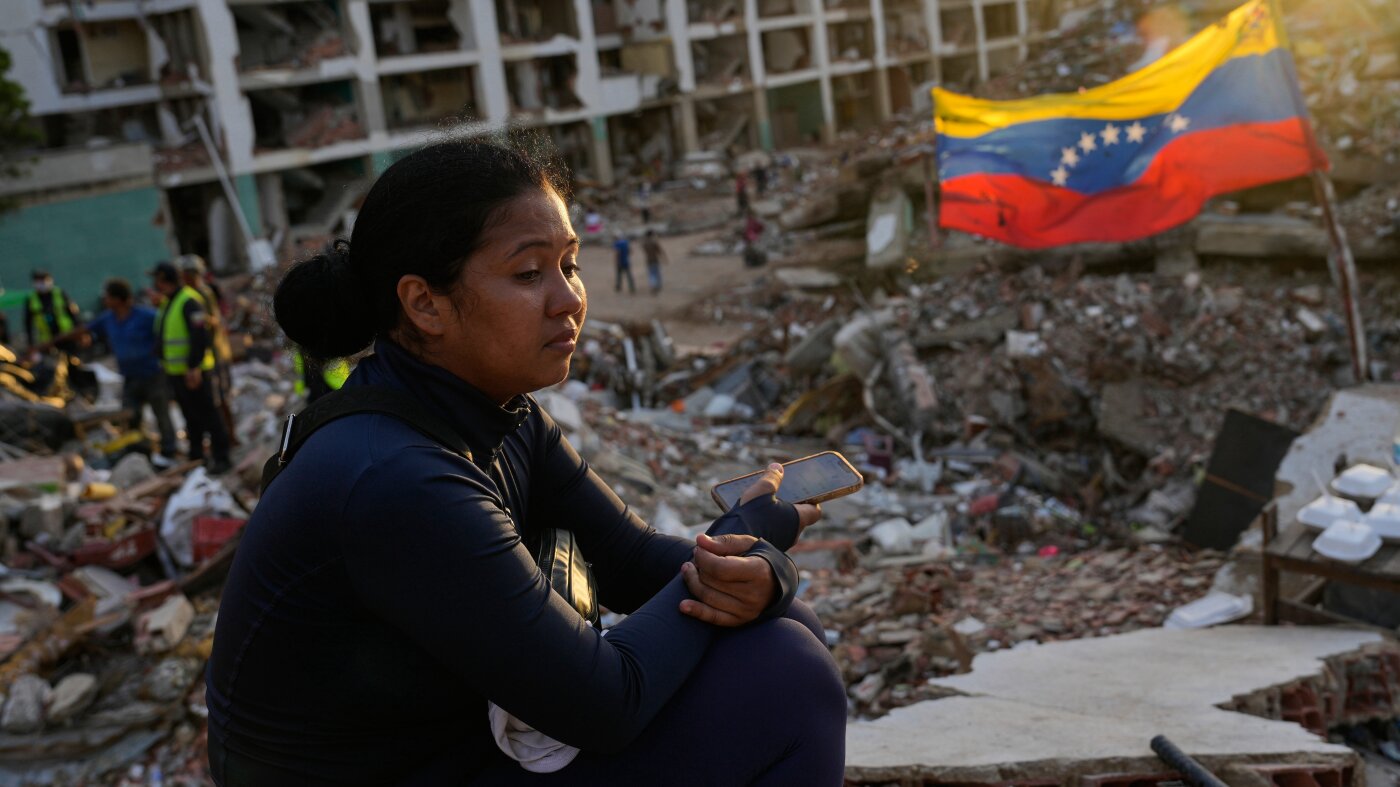
Venezuela’s drive for new elections has slowed as the country struggles to recover from twin earthquakes that killed thousands. NPR reported that disaster relief has overtaken political transition talks after a state of emergency gave acting President Delcy Rodríguez more room to delay an election timetable.
According to government figures cited by NPR, the earthquakes killed 4,829 people and injured 16,740. In Caracas last week, about 100 demonstrators called for free elections and then marched to the headquarters of the secret police to demand freedom for more than 300 political prisoners, NPR reported.
Authorities largely let the protest fade after sending armed police to watch it, according to NPR. The limited response reflected the changed political moment: recovery work has become the government’s central task, while demands for a democratic transition have slipped down the agenda.
Rodríguez took over after Nicolás Maduro, Venezuela’s authoritarian leader, was captured by U.S. troops in January, NPR reported. She has since worked with the Trump administration, though NPR said U.S. officials have put more emphasis on restarting Venezuela’s oil sector than on pressing for a quick return to democracy.
Critics told NPR that Rodríguez has used the emergency after the quakes to avoid setting a date for presidential elections. They also point to the presence of pro-Maduro hardliners in her government as evidence that the old power structure still carries influence.
Last month, Rodríguez’s government impeded opposition leader María Corina Machado’s effort to return from the United States by briefly closing Venezuelan airspace to her plane, NPR reported. In a speech last week, Rodríguez accused opponents of exploiting post-quake disorder to plot against her administration.
José Rolón, a pro-Machado activist in hard-hit La Guaira state, told NPR that the government keeps finding reasons to postpone political change. He said officials will keep arguing that elections and transition talks must wait.
Some Venezuelan analysts urge caution. Vladimir Villegas, a radio host and former diplomat, told NPR that elections would be difficult before Venezuela replaces its electoral council and supreme court, both of which he described as highly partisan.
Those institutions upheld Maduro’s claimed victory in the 2024 presidential vote despite broad evidence that opposition candidate Edmundo González defeated him, NPR reported. González had Machado’s backing after the Maduro government barred her from running.
Villegas told NPR that Rodríguez may have less appetite to remain in power after seeing Maduro imprisoned in New York on drug-trafficking charges. NPR also reported that polls show Rodríguez is highly unpopular and that her government has faced sharp criticism over its slow earthquake response.
Early discussions between opposition leaders and Rodríguez’s representatives about a democratic transition stopped after the earthquakes, according to NPR. Machado, speaking Tuesday to European Union members, rejected arguments that Venezuela needs more time to prepare for a fair vote, saying Venezuelans have shown their organizing capacity in previous elections.
The opposition faces its own divisions. NPR reported that Machado’s faction boycotted last year’s legislative elections and remains critical of opposition politicians who ran and now hold a small bloc in the National Assembly.
Machado’s Vente Venezuela party is also rebuilding after years of repression, NPR reported. Its Caracas office was looted by regime supporters, while many activists were jailed, fled the country or went underground.
Henry Alviarez, Vente Venezuela’s deputy leader and a recently released political prisoner, told NPR that the party is regrouping gradually. He still faces terrorism, treason and conspiracy charges that he calls fabricated, must check in monthly with judicial authorities and cannot leave Venezuela.
For now, NPR reported, Machado’s activists are concentrating on relief work while they wait for her return. They have gathered medical supplies including antibiotics, gloves, masks and body bags for health workers in disaster areas.
Rosa Cucunuba, a volunteer, told NPR that aid work does not mean the campaign for free elections has ended. She said activists intend to return to political organizing once immediate recovery needs ease.
This story draws on original reporting from NPR.