
John Esposito, Georgetown scholar of Islam, dies at 86
Georgetown University and his family said Esposito died July 15 after a five-decade career focused on Islam and interfaith understanding.
By James Whitfield · Staff Writer
3 min read
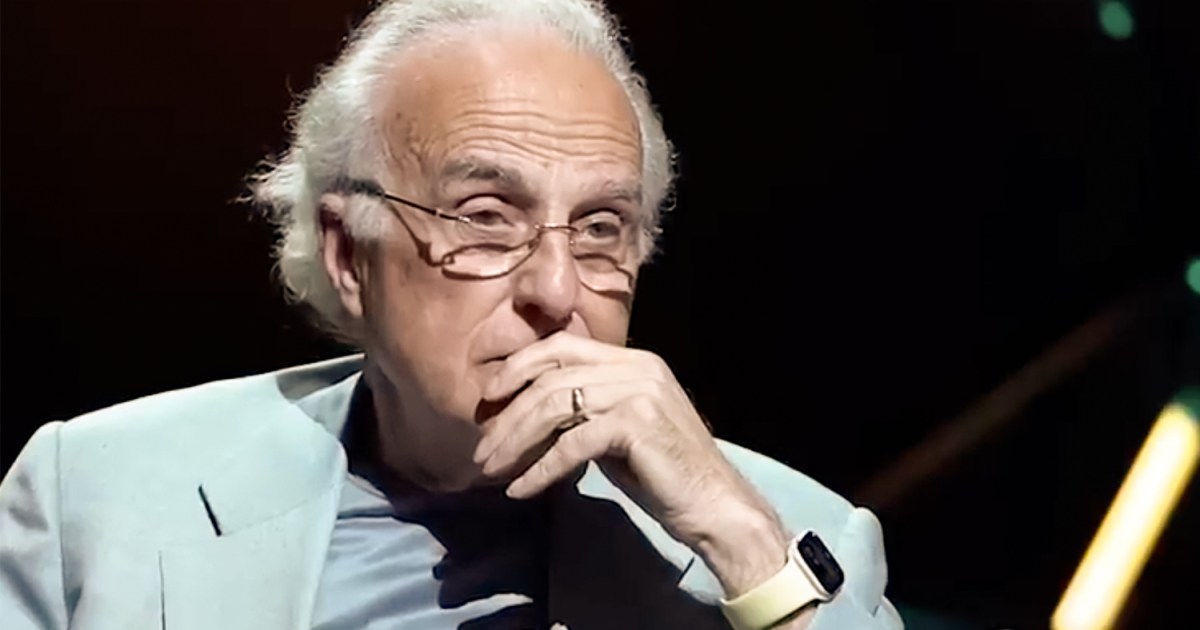
John L. Esposito, a Georgetown University scholar whose work helped shape the study of Islam in the United States, has died at 86, according to his family and the university. His death matters beyond academia because his books, teaching and public work reached students, policymakers, journalists and religious leaders during decades of debate over Islam in Western societies.
Esposito died on July 15, Al Jazeera reported, citing his family and Georgetown. He was widely regarded as one of the most influential non-Muslim scholars of Islam of his generation, according to Al Jazeera.
Born in Brooklyn, New York, in 1940, Esposito studied under Palestinian-American Islamic scholar Isma’il Raji al-Faruqi, Al Jazeera reported. That training helped define his career-long effort to present Islam through Muslim sources and experience rather than through Western fears, according to the report.
Esposito taught world religions for nearly 20 years at the College of the Holy Cross in Massachusetts, where he chaired the Department of Religious Studies, according to Al Jazeera. He later moved to Georgetown University, where he remained for the rest of his academic career.
At Georgetown, Esposito was University Professor of Religion, International Affairs and Islamic Studies, Al Jazeera reported. In 1993, he founded the Center for Muslim-Christian Understanding, which was later renamed the Prince Alwaleed bin Talal Center for Muslim-Christian Understanding.
Al Jazeera reported that the center became a major institution for interfaith dialogue under Esposito’s leadership. He also started the Bridge Initiative, a research project focused on monitoring and challenging Islamophobia.
Books and public influence
Esposito authored, co-authored or edited more than 50 books, and his work was translated into 35 languages, according to Al Jazeera. His best-known titles included Islam: The Straight Path, The Islamic Threat: Myth or Reality?, What Everyone Needs to Know About Islam, The Future of Islam and Islamophobia: The Challenge of Pluralism in the 21st Century.
His 2007 book Who Speaks for Islam? What a Billion Muslims Really Think, written with Dalia Mogahed, drew on more than 50,000 interviews in more than 35 Muslim-majority countries, Al Jazeera reported. The study became one of the most cited works on Muslim public opinion and challenged broad claims about the world’s then 1.6 billion Muslims, according to the report.
Esposito also edited major reference works, including The Oxford Dictionary of Islam, The Oxford History of Islam and The Oxford Encyclopedia of the Islamic World, Al Jazeera reported.
A practicing Catholic, Esposito linked his commitment to interreligious understanding to his own faith, according to Al Jazeera. He argued that commitment to one religious tradition did not require disrespect for another.
Esposito served as president of the Middle East Studies Association of North America and the American Academy of Religion, Al Jazeera reported. He received the American Academy of Religion’s Martin E. Marty Award for the Public Understanding of Religion and Pakistan’s Quaid-e-Azam Award for Outstanding Contributions to Islamic Studies.
Tributes after his death
Malaysian Prime Minister Anwar Ibrahim said on Facebook that he had known Esposito for more than five decades, since they first met in the early 1970s, according to Al Jazeera. Anwar described him as “a true friend of the Islamic world” and said his work was especially important after the September 11 attacks.
Sami Al-Arian, a Palestinian-American academic who directs the Center for Islam and Global Affairs at Istanbul Sabahattin Zaim University, said Esposito visited him repeatedly while he was under house arrest in the United States after a controversial terrorism case, Al Jazeera reported. Al-Arian wrote on social media that Esposito “built bridges in an age of walls.”
The Council on American-Islamic Relations also mourned Esposito, according to Al Jazeera. CAIR National Executive Director Nihad Awad said Esposito worked to improve understanding of Islam and Muslims at a time when misinformation and prejudice shaped public debate.
Esposito is survived by his wife, Dr. Jeanette P. Esposito, Al Jazeera reported.
This story draws on original reporting from Al Jazeera.