
Vavi warns South Africa’s anti-migrant anger misses roots of crisis
Zwelinzima Vavi says migrants are being used as scapegoats for unemployment, poverty and failing public services in South Africa.
By Daniel Okafor · Business Editor
3 min read
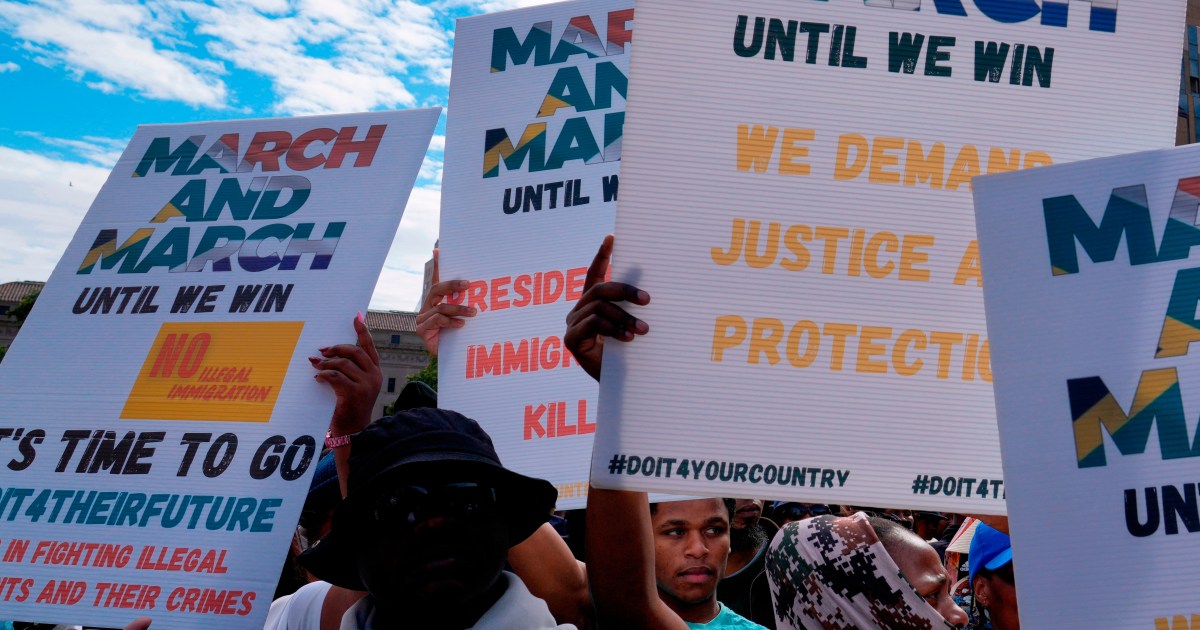
South Africa is facing a rise in anti-migrant sentiment, with vigilante groups marching in communities and foreign nationals blamed for crime, joblessness and public service failures, Zwelinzima Vavi wrote for Al Jazeera. He warned that the backlash puts vulnerable people at risk while leaving the country’s deeper economic and political problems untouched.
Vavi said many South Africans have legitimate reasons to be angry. He pointed to severe unemployment, poverty, hunger, strained public services and young people struggling to find work, saying working-class communities feel deserted by leaders who promised improvement and failed to deliver.
But Vavi argued that migrants did not create the country’s jobs crisis, weaken local government, shrink manufacturing or drive corruption. He said responsibility lies in long-running structural failures, including colonial dispossession, racial capitalism and apartheid-era exploitation, followed by a post-1994 economy that did not shift wealth, land or power away from a small minority.
Economic pressure and scapegoating
According to Vavi, weak growth since the 2008 global financial crisis, the decline of manufacturing and the spread of insecure work have fed frustration in South Africa. He said those conditions make it easier for political and social movements to blame migrants rather than confront inequality and concentrated economic power.
Vavi placed South Africa’s tensions in a wider pattern. He said movements in Europe, the United States, Latin America and elsewhere have used anti-immigrant rhetoric during economic crises, encouraging working-class people to turn against one another instead of challenging political and economic elites.
He argued that employers, corrupt politicians and wealthy interests benefit when workers are divided by nationality, language, ethnicity or race. Employers who rely on vulnerable labour gain when workers compete instead of organise, while politicians avoid scrutiny when public anger is redirected away from governance failures, Vavi wrote.
Calls for state action
Vavi said South Africa still has a duty to regulate migration under its laws. He called for reform of the immigration system, more capacity and resources for the Department of Home Affairs, action against corruption in immigration and law enforcement, and stronger efforts to break up human trafficking and criminal networks.
He also said employers who knowingly exploit undocumented workers to avoid labour rules should face serious consequences. At the same time, he warned that unemployment cannot be solved through street attacks, intimidation or mob action against foreign nationals.
Vavi said South Africa’s constitution, shaped by the struggle against oppression and exclusion, requires respect for human dignity and a rejection of discrimination. He framed those principles as necessary for social justice rather than barriers to it.
He said trade unions have a special role because workers share interests in fair wages, safe workplaces, decent jobs and public services, regardless of nationality or language. Vavi called on the labour movement to press the government on job creation, industrialisation, public investment, wealth redistribution, anti-corruption measures and enforcement of labour standards.
Vavi concluded that South Africa must choose between scapegoating and solidarity, arguing that only action on the causes of poverty, inequality and unemployment can produce lasting social peace.
This story draws on original reporting from Al Jazeera.