
Vatican declares SSPX in schism after unauthorized bishop consecrations
The Vatican said the traditionalist Catholic group broke with Rome after consecrating four bishops in Switzerland without Pope Leo XIV’s approval.
By Sofia Marchetti · World Affairs Correspondent
3 min read
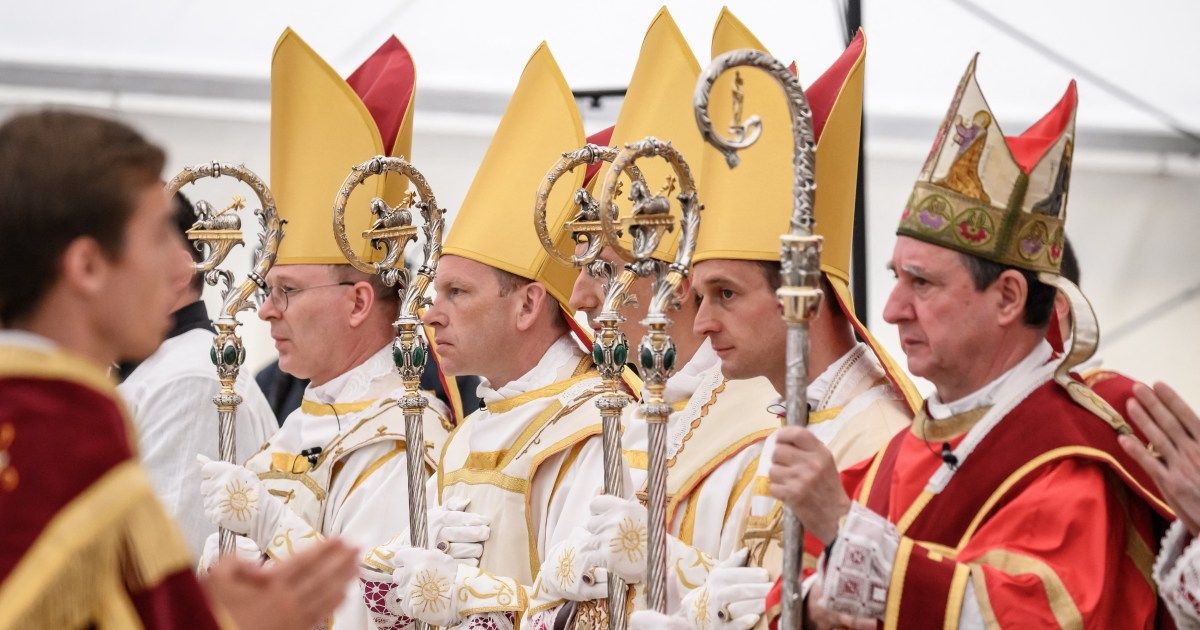
The Vatican has declared the Society of St Pius X in formal schism after the traditionalist Catholic group consecrated four bishops without papal approval. The move matters because it deepens a decades-long fight over authority, liturgy and the reforms of the Second Vatican Council.
In a decree issued Thursday, the Vatican’s doctrinal office said the bishops involved in the ceremony, along with priests and lay members who knowingly remain attached to the movement, had been excommunicated. The Vatican said the Swiss-based group’s sacraments are illicit and that it may no longer officiate marriages or hear confessions.
The consecrations took place Wednesday at an SSPX seminary in Econe, Switzerland, according to Al Jazeera and The Associated Press. The event drew an estimated 16,500 followers and lasted about five hours.
Bishop Alfonso de Galarreta led the rite for Pascal Schreiber, Michael Goldade, Michel Poinsinet de Sivry and Marc Hanappier, according to the report. Pope Leo XIV had sent a letter Tuesday warning that consecrating bishops without his mandate would be a “sin of extreme gravity” and would damage the faithful.
Under Catholic law, consecrating a bishop without the pope’s approval brings automatic excommunication for the consecrating bishop and the men consecrated, according to the account. Excommunication is the Church’s most severe penalty and bars a Catholic from receiving sacraments, marrying in the Church or holding Church office, among other restrictions.
What the SSPX is
The Society of St Pius X was founded in 1970 by French Archbishop Marcel Lefebvre, according to Al Jazeera and AP. The group formed in opposition to several reforms introduced by the Second Vatican Council, especially changes that reduced the centrality of the Latin Mass and sought to modernize the Church.
The SSPX says it is authentically Catholic, but the Vatican has long said the group has no canonical status in the Church. The movement operates internationally with bishops, hundreds of priests, seminaries and religious communities, according to the report.
The Reverend Davide Pagliarani, the SSPX superior general, acknowledged in a sermon Wednesday that many Catholics would see the consecrations as rebellion. “The greatest sacrifice that God can ask of us is that of being treated as rebels while we want to serve the church as a mother in difficulty, overwhelmed, suffering,” Pagliarani said.
The SSPX also rejected the penalties attached to the ceremony. A priest read a statement saying the consecrations were a necessary “sacred duty” to defend traditional Catholic faith against modernizing reforms, according to Al Jazeera and AP.
The Vatican II dispute
The Second Vatican Council met from 1962 to 1965 and approved major changes intended to help the Catholic Church engage with the modern world, according to the report. Those reforms included permitting Mass in local languages rather than only in Latin and improving relations with Jews, other Christians and followers of other religions.
Pope Leo XIV has described Vatican II as containing “fundamental elements” of Catholic teaching. The SSPX rejects several of the council’s reforms, arguing that they depart from long-standing Church tradition.
The dispute has a direct precedent. In 1988, Lefebvre consecrated four bishops without approval from Pope John Paul II, prompting the Vatican to declare the act schismatic and impose automatic excommunications, according to the report.
One of the bishops consecrated in 1988 was de Galarreta, who led Wednesday’s ceremony. Pope Benedict XVI lifted those 1988 excommunications in 2009 as part of an effort to promote talks, but the SSPX did not receive full legal status in the Catholic Church.
That 2009 decision also caused a crisis with Jewish leaders because one of the bishops, Richard Williamson, had denied that Jews were killed in gas chambers during World War II in a Swiss television interview. Benedict later said he should have been better aware of Williamson’s views, according to Al Jazeera and AP.
This story draws on original reporting from Al Jazeera.