
Vance’s Israel criticism points to early 2028 positioning
JD Vance has denied a major rift with Marco Rubio, but their split over Israel is becoming an early Republican 2028 fault line.
By Lucas Ferreira · Science & Environment Writer
3 min read
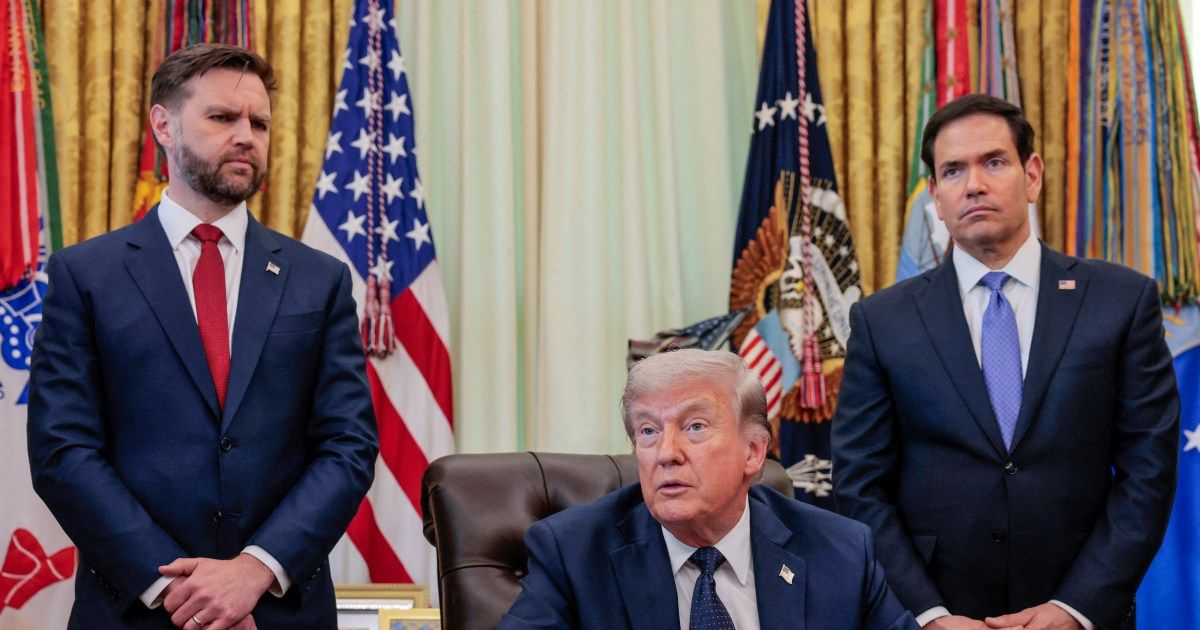
Vice President JD Vance has denied that he and Secretary of State Marco Rubio are locked in an “intense rivalry,” according to a recent New York Times interview. Josh Paul, writing for Al Jazeera, argues that their diverging public positions on Israel are becoming an early signal of how Vance may position himself for a 2028 presidential run.
Paul wrote that Vance has recently moved beyond his usual low-conflict public style by making pointed comments about Israel and about pro-Israel politics in the United States. Rubio, by contrast, has continued to support the Trump administration’s strongly pro-Israel line, according to Paul.
The split matters because Israel is becoming a more contested issue inside both parties, Paul argued. He cited a Pew Research Center survey finding that 57 percent of Republicans under 50 held negative views of Israel.
Vance and Rubio diverge on Israel
According to Paul, Vance has been involved in efforts to pursue a peace deal with Iran, a process that has unsettled Israel. Rubio, meanwhile, has pushed for pressure on Lebanon’s government toward an agreement on terms favored by Israel, Paul wrote.
Rubio has also backed Israel’s prime minister, Benjamin Netanyahu, in public and supported calls for the United States to enter the war with Iran, according to Paul. Paul also wrote that Rubio put his name on national security determinations used in deportation efforts against foreign students who criticized Israel.
Vance’s recent comments appeared to draw a distinction between US and Israeli interests. Paul quoted Vance as saying that pro-Israel Americans make mistakes by failing to separate “America’s interest and Israeli interests” and by treating criticism of a government as anti-Jewish hatred.
Paul framed that language as a break from parts of Republican politics that have treated support for Israel as a baseline position. He also said it could help Vance appeal to “America First” voters who question whether US policy is being shaped around Israeli interests.
Base pressure and 2028 calculations
Paul wrote that Republican elected officials critical of Israel have not yet built broad power in Congress, pointing to Representatives Marjorie Taylor Greene and Thomas Massie as prominent examples who will not return next year. But he said right-wing commentators including Tucker Carlson and Candace Owens have gained attention by pressing tougher questions about US support for Israel.
That opening comes with risks for Vance, Paul argued. As vice president, Vance remains tied to President Donald Trump, whose relationship with Netanyahu could improve before 2028. Paul also noted that a new Israeli leader could rebuild support in Washington if Israel changes governments this autumn.
Paul said Vance could also face pressure from Christian Zionists inside the “America First” coalition, a bloc that remains strongly supportive of Israel. On the Democratic side, he wrote that California Governor Gavin Newsom appears favored early, but has softened some comments on Israel and Palestine after pressure from pro-Israel party backers.
Paul concluded that Israel is likely to become a wedge issue in the next presidential race, especially after the failed Iran war and disputes over free speech tied to Israel and its US-aligned lobby groups. He described Vance’s positioning as less an abrupt change than a politician responding to shifting public opinion.
This story draws on original reporting from Al Jazeera.