
Analyst says Arab League weakness has limited Gaza response
Rami G Khouri argues Arab governments have favored regime stability over stronger action against Israel’s war in Gaza.
By Sofia Marchetti · World Affairs Correspondent
3 min read
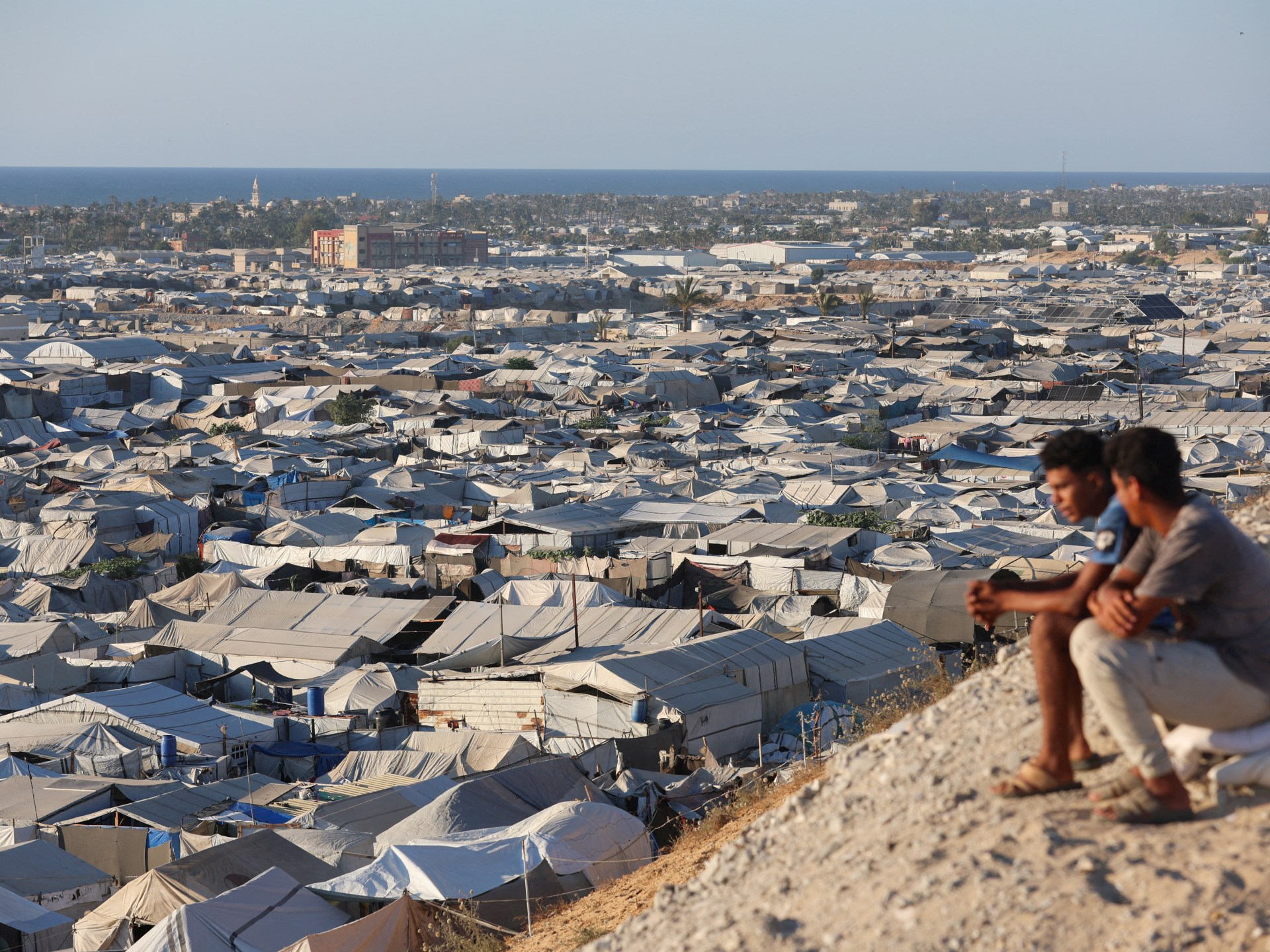
Arab governments and the Arab League have failed to mount an effective response to Israel’s war in Gaza because of dependence on outside powers, weak state structures and a wide gap between rulers and citizens, analyst Rami G Khouri argued in Al Jazeera.
Khouri, a distinguished public policy fellow at the American University of Beirut and a non-resident senior fellow at the Arab Center Washington DC, described Israel’s actions in Gaza as genocide and said the assault is nearing its third year. He wrote that the violence has also extended into the occupied West Bank, East Jerusalem, Syria and Lebanon.
Khouri said Arab states and wider international powers have largely answered the crisis with statements, symbolic aid and calls for United Nations meetings. In his view, the Arab League has come to represent official Arab caution rather than collective power.
Dependence on outside powers
Khouri argued that many Arab states remain shaped by a post-colonial order created after World War I, when borders and governing systems were built partly around foreign interests. He contrasted Arab states with Iran and Turkiye, saying Arab governments have been less able to turn natural resources, populations and geography into independent political strength.
According to Khouri, even some energy-rich Arab countries rely on non-Arab powers for financial, military, technological and other support. That reliance, he wrote, has weakened their ability to act on their own and has raised the political cost of confronting the United States or Israel.
He pointed to countries including Palestine, Syria, Lebanon, Iraq, Yemen, Somalia and Sudan as examples of states damaged by conflict, fragmentation or prolonged instability. Khouri said Arab leaders see those cases as warnings about the risks of defying powerful foreign backers.
US influence and the cost of confrontation
Khouri wrote that the United States has built extensive ties with Israel and Arab states across areas including water, food, energy, transportation, finance, environmental policy, technology and military security. He said those links often run through institutions such as the World Bank, the United Nations, NATO, the International Monetary Fund and US-linked banking and payments systems.
In Khouri’s analysis, any Arab state that moved beyond public criticism and directly challenged the US-Israel alliance could face sanctions, military attacks or other penalties. He argued that weaker states may view those risks as threats to their stability or survival.
Public anger and official caution
Khouri also cited a domestic divide between Arab governments and their citizens on Palestine, Israel, Iran, resistance movements and ties with Russia and China. He said many Arab political systems operate through what is often called an authoritarian bargain, with governments controlling policy and resources while citizens depend on the state for basic services.
He wrote that states unable to maintain that bargain, including Yemen, Syria, Iraq, Sudan, Somalia, Palestine and Lebanon, have faced poverty, unemployment, sectarian and ethnic strains, and shortages of water and electricity. Those pressures, he said, have often opened the way to foreign intervention and territorial fragmentation.
Khouri said Arab officials, elites and citizens care about Palestinian rights, but he argued that ruling elites have generally put their own survival first when forced to choose between stronger support for Palestinians and protecting their own governments.
He added that the Arab League is constrained by consensus-based politics, making agreement difficult on major political issues. Khouri said Arab divisions over Iran and Iran-linked groups such as Hezbollah, Hamas and Yemen’s Ansar Allah, also known as the Houthis, have further limited joint Arab action during the crises in Gaza, Lebanon and Iran.
This story draws on original reporting from Al Jazeera.