
USMCA review raises risk of yearly uncertainty for North American trade
Analysts say failure to extend the USMCA could leave companies facing annual reviews and tariff risks across the US, Canada and Mexico.
By Daniel Okafor · Business Editor
4 min read
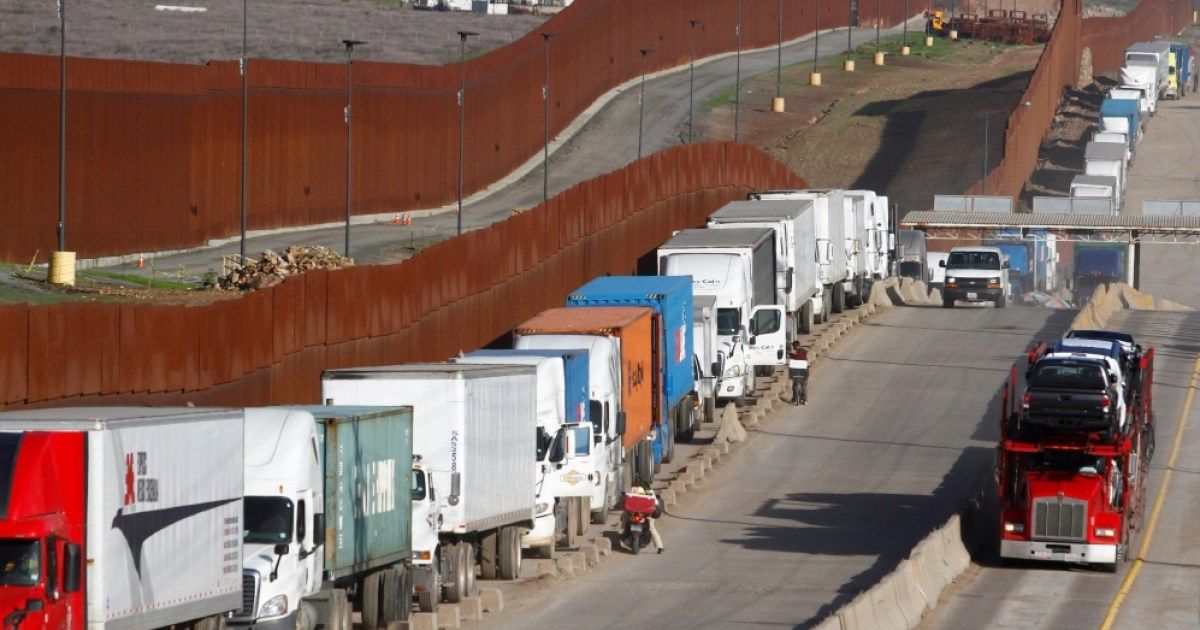
The United States, Canada and Mexico are heading into the first required review of the USMCA trade pact with no clear sign that Washington will back a full extension. Analysts told Al Jazeera that a failure to renew the agreement for another 16 years would leave businesses facing repeated uncertainty over North American trade rules.
The agreement, which replaced NAFTA during US President Donald Trump’s first term, took effect on July 1, 2020. Under its terms, the three governments must decide at the six-year mark whether to extend it; without unanimous support, the pact moves into yearly reviews until 2036, according to Al Jazeera.
Tony Stillo, director of Canada Economics at Oxford Economics, told Al Jazeera that annual reviews would hurt business planning. He said the likely effect would be continued uncertainty, calling it a “definite dampener” for corporate decisions.
Vina Nadjibulla, vice president and head of research at the Asia Pacific Foundation of Canada, told Al Jazeera that analysts expect the deal to enter an annual renewal process. She said it remains unclear whether negotiators will require a broad package deal or accept smaller changes.
Trump casts doubt on renewal
Canada and Mexico have said they want the USMCA to continue, according to Al Jazeera. Trump has taken a more uncertain position, telling reporters on June 10 that he did not know whether he would renew the pact while saying the US was in talks with the other governments.
During a later visit to Paris, Trump said he would prefer not to have the agreement but might sign it, Al Jazeera reported. Nadjibulla told the outlet that Trump has also said he wished the USMCA did not exist.
The pact could be cancelled if any party gives six months’ notice, according to Al Jazeera. Analysts cited by the outlet said that outcome would create wider risks, including possible tariff retaliation and damage to political ties among the three countries.
Tariffs remain central to the talks
The agreement has given Canada and Mexico some protection from tariffs Trump imposed after returning to office, Al Jazeera reported. Goods traded under USMCA rules have largely avoided those added charges, though the Trump administration has used other legal authorities to tax some compliant products.
Al Jazeera reported that the administration used Section 232 of the Trade Expansion Act to place 50 percent tariffs on Canadian steel, aluminium and copper, as well as 25 percent tariffs on the non-US content of USMCA-compliant vehicles. Some lumber products have also faced a 10 percent tax.
The Trump administration previously used the International Emergency Economic Powers Act for broad global tariffs before the US Supreme Court ruled those taxes unconstitutional in February, according to Al Jazeera. The White House later issued a 10 percent global tariff under Section 122 of the Trade Act and has threatened to raise it to 15 percent, though those measures face legal challenges.
Stillo told Al Jazeera that Canada is likely to seek tariff relief in the review. He said Oxford Economics’ expectation for a stronger Canadian economy later this year and next year depended on lower tariffs.
US exporters also face exposure
The risks are not limited to Canada and Mexico. A Peterson Institute for International Economics analysis cited by Al Jazeera found that several US states rely heavily on exports to the two neighboring countries under the USMCA.
According to that analysis, North Dakota sent 89.9 percent of its goods exports to Canada and Mexico last year, while Michigan sent 64.9 percent, Iowa 50 percent and Arizona 39 percent. Al Jazeera reported that all four states voted for Trump in the 2024 election.
The Peterson Institute analysis also found that US exports including auto parts, aircraft and oil products generated more than $10bn in sales to Canada and Mexico last year. Gary Hufbauer, one of the analysis’s authors, told Al Jazeera that ending the USMCA would pose a danger to US exports.
Hufbauer said the larger consequence could be political, with a failed review straining US alliances and friendships. Stillo told Al Jazeera that Canada will continue trading with the US but may seek more trading partners as uncertainty grows.
This story draws on original reporting from Al Jazeera.