
Protein target may help ovarian tumors regain chemotherapy sensitivity
Michigan State University researchers say blocking TPPP3 restored cisplatin sensitivity in lab models of ovarian cancer.
By Tom Brennan · Health & Medicine Correspondent
3 min read
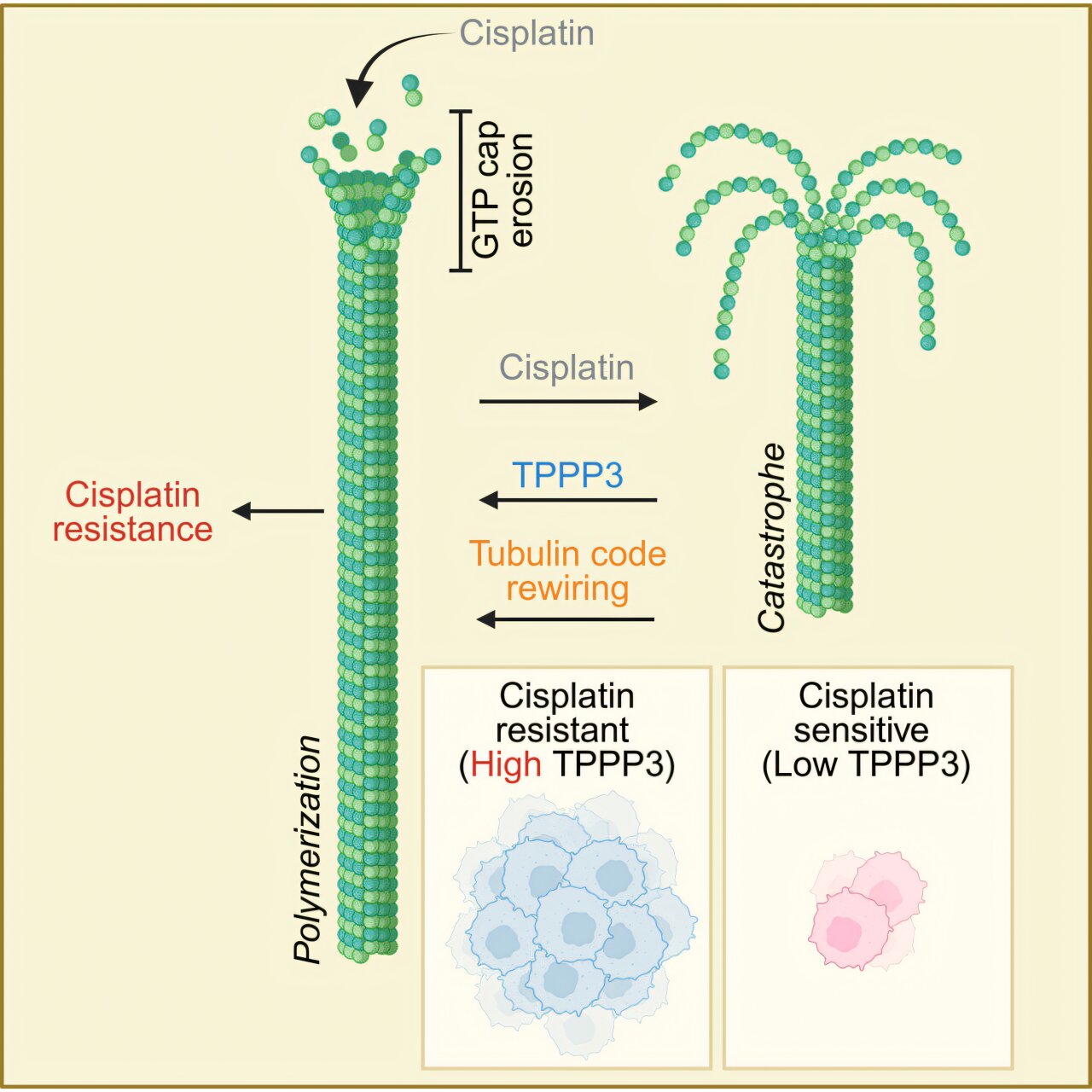
Michigan State University researchers say they have found a way ovarian cancer cells withstand chemotherapy and a possible route to make the drugs work again. The study, published in Cell Reports, points to a protein called TPPP3 as a driver of resistance to platinum-based treatment.
The work focuses on cisplatin, a widely used chemotherapy that Michigan State University says was discovered there in 1965. Cisplatin is used against ovarian cancer and other cancers, and the university described it as among the standard treatments for those diseases.
Scientists have long linked cisplatin’s cancer-fighting effect to DNA damage. The new study adds another mechanism: according to the Cell Reports paper, cisplatin also interferes with microtubules, the structural framework cells use to maintain shape, divide and survive.
How resistant cells protect their structure
The research team found that ovarian cancer cells with higher amounts of tubulin polymerization promoting protein 3, known as TPPP3, were better able to steady their internal scaffolding during treatment. Michigan State University said that helped the cells endure cisplatin or carboplatin, another platinum chemotherapy.
Sachi Horibata, an assistant professor in the Precision Health Program and the Department of Pharmacology and Toxicology at MSU’s College of Human Medicine, said the findings show that cancer cells can adapt to chemotherapy by changing their internal architecture. Horibata, one of the study’s lead researchers, said that adaptation helps tumors survive treatment.
The study also connected TPPP3 levels with patient outcomes. According to the researchers, patients whose tumors had lower TPPP3 levels lived longer and had better treatment responses than patients with higher levels.
In laboratory models, removing TPPP3 made ovarian cancer cells more sensitive to cisplatin again, Michigan State University said. Horibata described the protein as a kind of defense for cancer cells, saying that taking it away weakened those defenses and helped chemotherapy act more effectively.
A shift beyond DNA damage
The findings may help explain why ovarian cancer can return after an initial response to treatment, according to Michigan State University. Horibata’s interest in that problem grew after her grandmother was diagnosed with ovarian cancer, the university said.
The Cell Reports study describes changes in what researchers call the “tubulin code,” a set of modifications affecting microtubules. Michigan State University said resistant cancer cells can rework that code to keep microtubules stable under treatment stress.
That emphasis broadens the view of chemotherapy resistance beyond DNA repair alone. According to the researchers, targeting the structural changes that help cells survive could improve current drugs rather than require replacing them.
Next steps for treatment research
The MSU team is working on ways to turn the finding into treatment strategies, including drugs that block TPPP3. Researchers also plan to test whether TPPP3 could serve as a biomarker to identify patients more likely to develop chemotherapy resistance.
Future studies will examine how the mechanism affects existing chemotherapy combinations and whether it appears in other cancers, Michigan State University said. Because microtubules also matter in healthy cells, the researchers said the work could help scientists better understand side effects linked to chemotherapy, including nerve damage, hair loss and hearing loss.
The paper, “Cisplatin resistance in an ovarian cancer model is mediated by microtubule dynamics regulator TPPP3 in synergy with tubulin code rewiring,” was published in Cell Reports with DOI 10.1016/j.celrep.2026.117414.
This story draws on original reporting from Medical Xpress.