
US strikes Iran sites as Tehran says it hit regional US bases
CENTCOM said it targeted Iranian military and coastal sites, while Iran reported retaliatory attacks on US assets in Kuwait, Bahrain and Jordan.
By Lucas Ferreira · Science & Environment Writer
4 min read
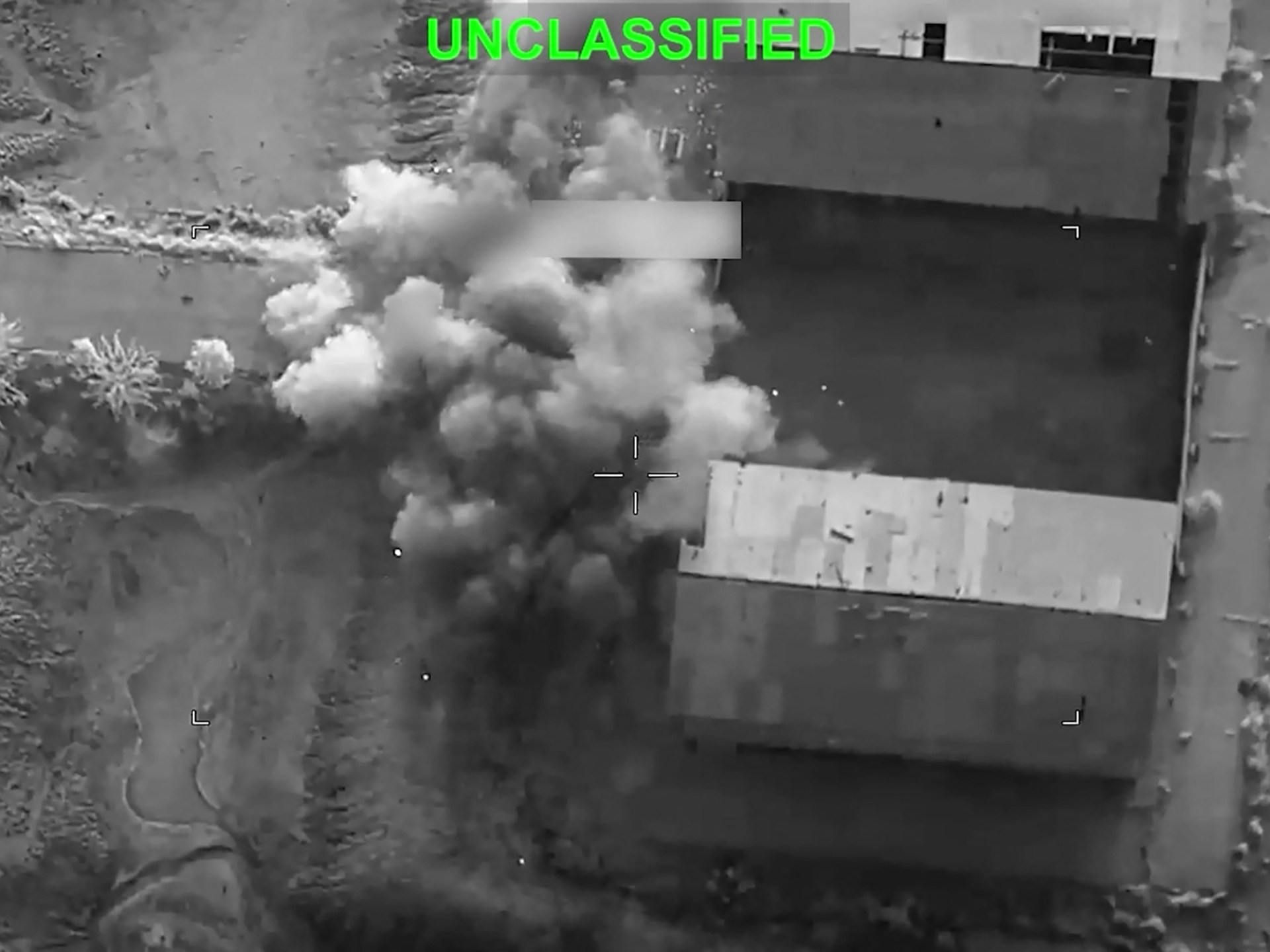
The US military said it carried out another round of strikes on Iran, while Tehran said it answered with missile and drone attacks on facilities used by US forces in Kuwait, Bahrain and Jordan. The exchanges raised pressure around the Strait of Hormuz, a critical shipping route that both sides say is now being affected by military action.
US Central Command said the Wednesday evening operation ended at 9pm ET, or 01:00 GMT Thursday, and lasted about 90 minutes. CENTCOM said the strikes were aimed at Iranian command sites, air defences, missile and drone systems, and coastal surveillance facilities to limit Iran’s ability to interfere with shipping through the strait.
According to CENTCOM, US forces struck targets in and around Bandar Abbas, a major Iranian naval centre on the southern coast, and on Greater Tunb island near the entrance to the Strait of Hormuz. Iranian state media reported air defence activity over Tehran and attacks across several parts of the country.
Iranian outlets reported explosions in Bandar Abbas and on Qeshm island, as well as in Sirik, Chabahar and Konarak on the coast. They also reported strikes farther inland, including in Rask, Khondab, Khorramabad and Semnan.
Iranian authorities said there were no casualties in Pakdasht or at the Parchin military complex near Tehran. IRIB, citing a senior security official, reported no deaths or injuries after an attack in Semnan.
Al Jazeera correspondent Resul Serdar Atas, reporting from Tehran, said the Semnan strike was the second reported US attack on northern Iran in a week. He said a civilian airport building in Semnan had minor damage and that a storage site in the city was also hit.
In southwestern Iran, the Islamic Revolutionary Guard Corps said it shot down a US MQ-9 drone over Andimeshk in Khuzestan province. Iran’s Ministry of Health said at least 35 people have been killed and more than 300 wounded since the current round of fighting began last week.
Iran reports retaliation
Iran said it launched retaliatory missile and drone attacks on US military-linked facilities in Kuwait, Bahrain and Jordan. Iran’s army, in comments carried by state media, said it targeted radar and air defence systems used by US forces in Kuwait and Bahrain.
The Iranian army said missiles hit Patriot batteries and fuel tanks used by US forces at Ali Al Salem Air Base in Kuwait. Kuwait said it intercepted four cruise missiles and 21 drones launched from Iran from Wednesday into early Thursday.
Iran’s army also said drones struck communications equipment, Super Hawk radar systems and Patriot installations used by US forces at Sheikh Isa Air Base in Bahrain. Iran’s military further reported missile and drone attacks on al-Azraq Air Base in Jordan.
The IRGC said it used Khyber-Shakan ballistic missiles against what it described as a US fighter jet storage area and a new US command-and-control centre at the Jordanian base. Jordan’s military said earlier Wednesday that it had intercepted eight Iranian missiles.
Trump signals broader campaign
The escalation followed a memorandum of understanding signed by Washington and Tehran less than a month ago, according to Al Jazeera. The agreement extended an April ceasefire and laid out negotiations meant to end a war that began on February 28 with Israeli and US strikes on Iran; the US and Iran have each accused the other of breaking the deal.
Al Jazeera correspondent Rosiland Jordan, reporting from Washington, said President Donald Trump has repeatedly indicated this week that he is willing to widen US military action against Iran. She said Trump has referred not only to military targets, but also to possible strikes on infrastructure such as power plants and bridges, a prospect she described as legally questionable.
CENTCOM also said US forces disabled a Curacao-flagged oil tanker, the M/T Belma, as it moved through international waters toward Kharg Island. CENTCOM said the ship ignored warnings tied to the US blockade and was stopped after a US aircraft fired Hellfire missiles into its smokestack.
During the first 24 hours of enforcing the blockade, CENTCOM said it redirected two commercial vessels that complied with instructions and disabled one vessel that did not. Al Jazeera reported that the US blockade of Iranian ports is occurring as Tehran blocks the Strait of Hormuz.
This story draws on original reporting from Al Jazeera.