
U.S. strikes Iran after missile attack on forces in Jordan
U.S. forces hit Iranian command and missile sites after CENTCOM said Iran targeted American troops in the Middle East.
By Sofia Marchetti · World Affairs Correspondent
3 min read
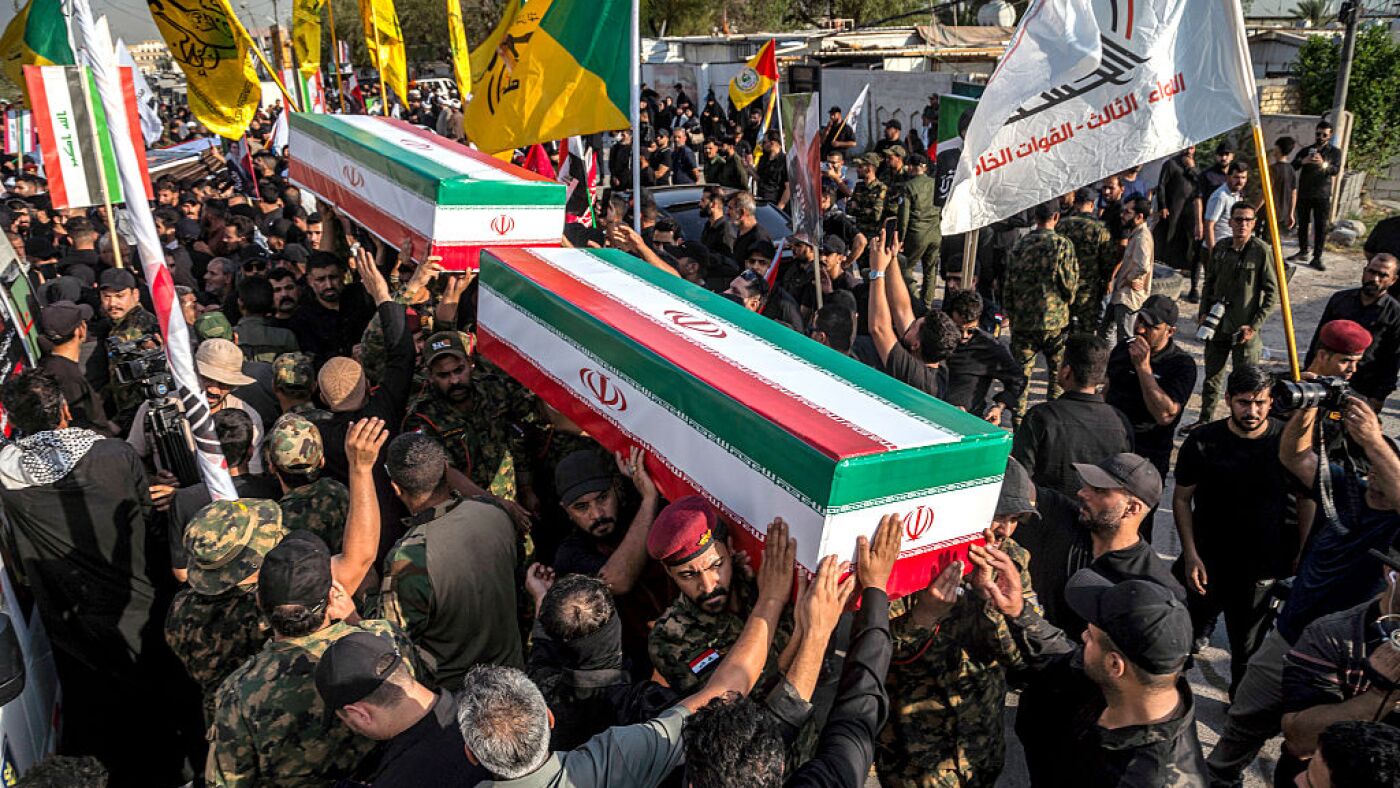
The U.S. strikes Iran on Thursday with what the military described as a heavy round of attacks on command centers and missile sites, escalating a widening conflict tied to American forces in Jordan. U.S. Central Command said the operation answered an Iranian ballistic missile attack Tuesday that it described as an attempted surprise attack on U.S. troops in the Middle East.
Iran said a residential building was also struck in the U.S. attacks and that two children were killed. The U.S. military account identified military command centers and missile facilities as the targets.
Why did the U.S. strike Iran?
U.S. Central Command said the strikes were retaliation for Iran’s missile attack on U.S. forces. Iran said Wednesday that its missiles were aimed at Muwaffaq Salti Air Base in Jordan’s eastern desert, a facility used as a U.S. air hub.
The Jordanian base has been attacked repeatedly, according to NPR, including in a mid-July strike that killed three U.S. service members. Jordan’s military said it intercepted five Iranian missiles headed for Jordanian territory early Thursday.
President Trump signaled the response Wednesday, telling reporters that the U.S. would hit Iran “very hard” because, as he put it, it was America’s turn. CENTCOM later announced the strikes inside Iran.
Fighting also spreads through Iraq
The escalation followed U.S. and Saudi attacks Wednesday on seven paramilitary bases in Iraq, according to NPR. Iran-backed militias said at least 20 fighters were killed, while Iran’s Revolutionary Guard said four of its members serving as military advisers to the militias also died.
Those militia groups said they had given Iraq’s government one week to respond to the U.S.-Saudi attacks. The paramilitary organizations are formally part of Iraq’s security forces, but NPR reported that some of the strongest factions operate outside effective government control.
Washington has urged multiple Iraqi governments to curb Iran-aligned militias, including the government of newly appointed Prime Minister Ali al-Zaidi, NPR reported. Zaidi met Trump in Washington in July, and Trump said the two had “tremendous chemistry.”
Zaidi, a businessman with little political experience, was chosen after the U.S. blocked Nouri al-Maliki from returning to power, according to NPR. Maliki had previously become prime minister with U.S. support but was later viewed in Washington as too close to Iran.
How Iraq’s politics complicate the conflict
Iran-backed militias expanded in Iraq after the 2003 U.S. invasion removed Saddam Hussein and left a security vacuum, NPR reported. Iran-aligned armed groups and political parties have since become deeply embedded in Iraq’s security system and politics.
At funerals Wednesday in Baghdad for fighters killed in the strikes, some mourners chanted against the United States and Saudi rulers, according to NPR. The strikes came during a major Shia religious period leading up to Arbaeen, when millions of pilgrims travel to Karbala to mourn Imam Hussein.
Zaidi appeared to cancel a planned trip to Saudi Arabia after the attacks, NPR reported. Iraq’s Shia-led governments have spent years trying to improve ties with Saudi Arabia and other Sunni Gulf states after Saddam’s fall.
Iran reports tanker incidents in the Strait of Hormuz
Iran said Thursday that it turned back two oil tankers in the Strait of Hormuz that were being guided by U.S. aircraft, NPR reported. Iran said one tanker caught fire but did not provide further details.
Iran also said it permitted a Qatari tanker to pass after coordination with Qatar. NPR reported there was no confirmation from Qatar.
This story draws on original reporting from NPR.