
U.S.-backed Libya plan puts pressure on Tripoli factions
A proposal to unify Libya’s executive authority has drawn backing in the east and forced western factions to weigh their response.
By Daniel Okafor · Business Editor
3 min read
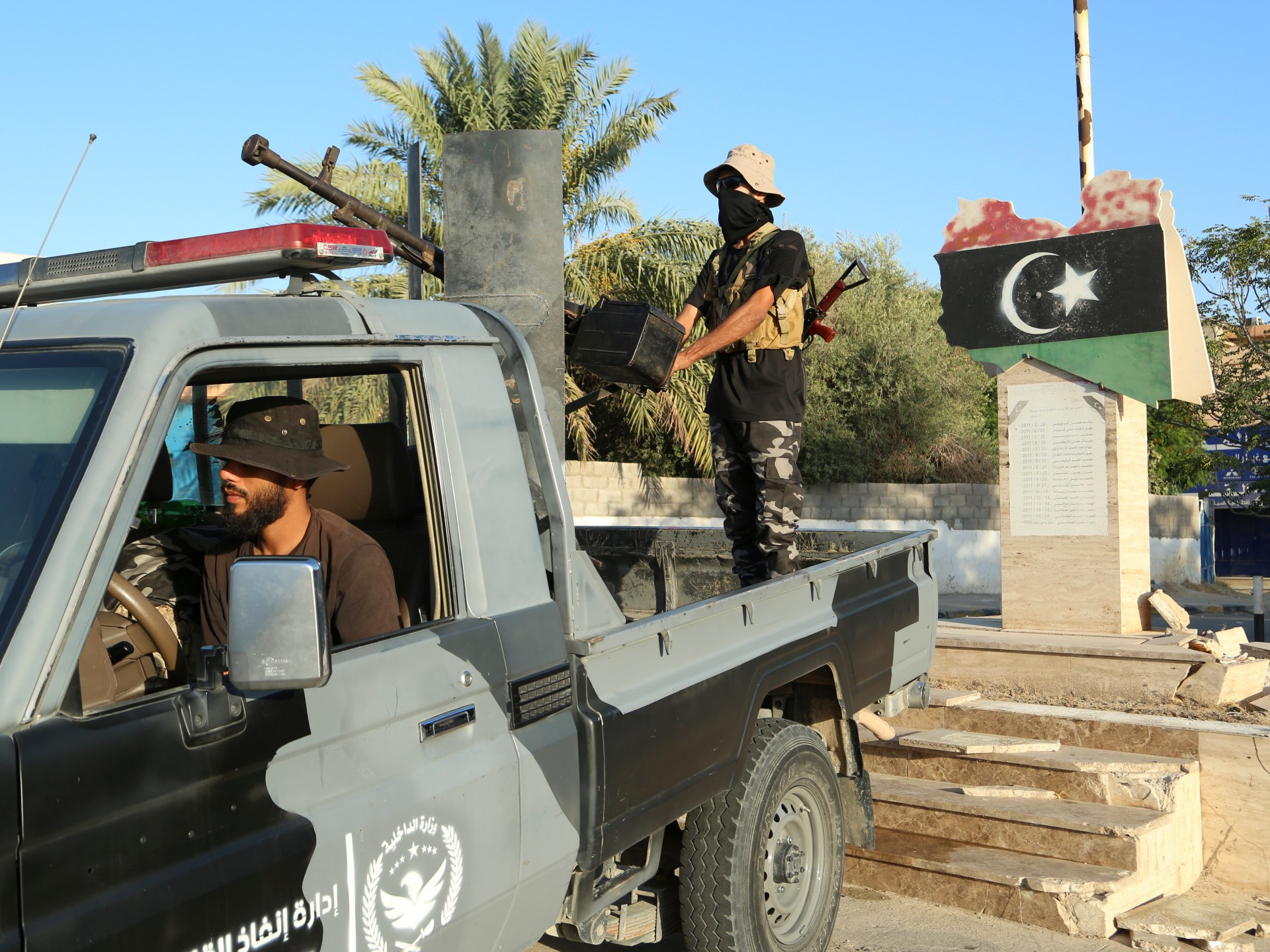
A U.S.-backed proposal to form a single Libyan government is testing the alliances that control Tripoli, Al Jazeera reported. The effort matters because it has won visible support in eastern Libya while the internationally recognized government in the west has yet to state a formal position.
Al Jazeera said the initiative is being led by Massad Boulos, the U.S. presidential adviser for Middle Eastern and African affairs. The plan seeks to unify executive authority, merge state institutions and promote U.S. investment in Libya’s oil sector, while Washington has presented it as supporting rather than replacing United Nations efforts.
Western Libya faces new pressure
According to Al Jazeera, Abdul Hakim Belhaj, a former commander of the Tripoli Military Council and current head of the al-Watan Party, publicly backed the U.S. effort on June 21. Belhaj called on the Tripoli-based Government of National Unity to clarify where it stands.
Al Jazeera reported that Belhaj described the proposal as a chance to speed up a political settlement ending Libya’s institutional split. His current political influence has declined, but Al Jazeera said his backing carries symbolic weight in western Libya.
The move followed support from eastern-based commander Khalifa Haftar’s forces and more than 100 members of the eastern-based House of Representatives, according to Al Jazeera. Aisha al-Tabalqi, a House member, told Al Jazeera the proposal differs from earlier efforts because it rests on an understanding between the main forces with influence on the ground.
Support for the plan is disputed. Mohammed al-Maazab, a member of the High Council of State, told Al Jazeera that some House members privately said their names had been included among supporters without their knowledge. He also dismissed Belhaj’s statement as an effort to position himself for any future arrangement.
Analysts split over the proposal
Al Jazeera reported that critics fear the U.S. plan could produce another long power-sharing formula instead of a path to elections. On Al Jazeera Arabic’s Beyond the News, political analyst Abdulsalam al-Rajhi described the effort as closer to a deal than a political initiative.
Al-Rajhi said leaked details suggest the plan could place Saddam Haftar, son of Khalifa Haftar, at the head of a new Presidential Council, with Ibrahim Dbeibah, nephew of Government of National Unity Prime Minister Abdul Hamid Dbeibah, as prime minister. Al-Rajhi also said both men were cited in a recent UN Panel of Experts report involving illicit oil smuggling and financial wrongdoing.
Senussi Ismail, a Tripoli-based analyst, told Al Jazeera that Libya’s stalemate makes engagement with the proposal necessary despite concerns about authoritarian rule or family control. He said any unified government should be tied to clear deadlines for presidential and parliamentary elections and merged with the existing UN roadmap.
William Lawrence, a former U.S. diplomat and international affairs professor, told Al Jazeera that Boulos’s first workable step is economic, including the unification of Libya’s financial and economic institutions. Lawrence said he saw no alternative plan at present.
Regional diplomacy intensifies
Al Jazeera reported that the U.S. push is unfolding alongside regional diplomacy. Foreign ministers from Egypt, Saudi Arabia and Turkiye met Boulos in Cairo, while Pakistan’s Ministry of Foreign Affairs announced an “R-4” mechanism with Pakistan, Egypt, Saudi Arabia and Turkiye to support regional stability.
There have also been intelligence contacts inside Libya, according to Al Jazeera. Egyptian intelligence chief Hassan Rashad visited Tripoli for talks with Dbeibah, while Turkish intelligence chief Ibrahim Kalin met Saddam Haftar in Benghazi to discuss institutional unification and stability.
Faisal Bwalraiga, a national security researcher, told Al Jazeera that Libya is now between a new political settlement and a reshaping of power among rival camps. Elias al-Barouni, a political analyst, said the Government of National Unity appears to be preserving room for maneuver while it waits for Washington’s final position to become clearer.
This story draws on original reporting from Al Jazeera.