
Tooth proteins suggest known Homo naledi remains are female
A Cell study of Rising Star Cave teeth adds new evidence to the debate over whether Homo naledi deliberately placed its dead underground.
By James Whitfield · Staff Writer
3 min read
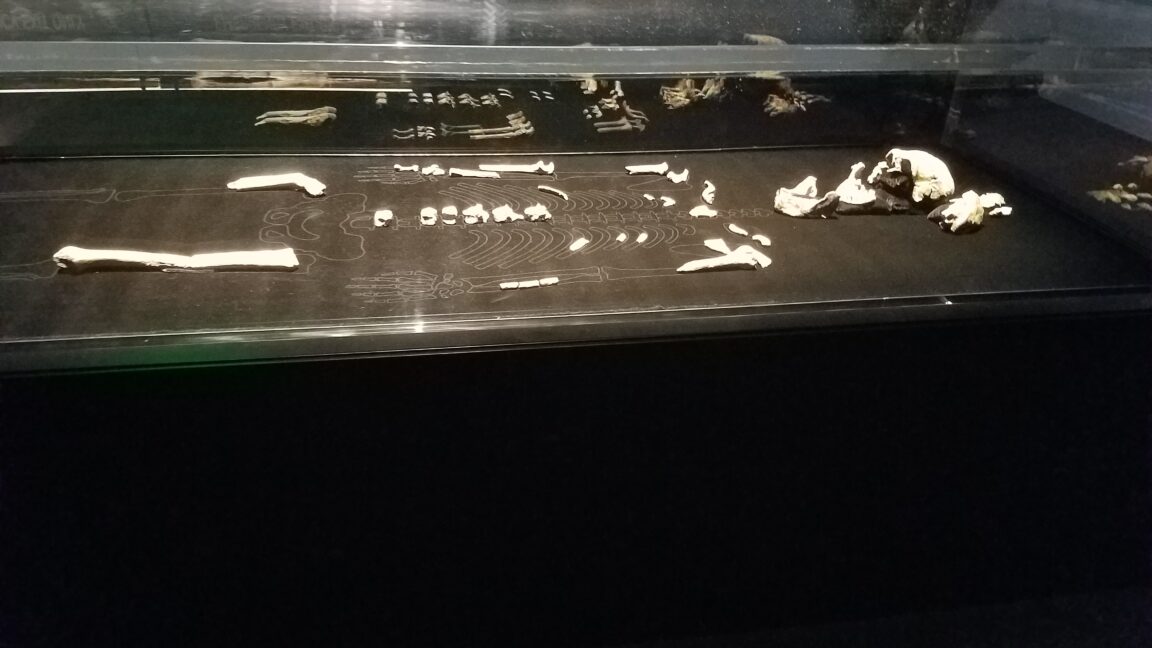
Ancient proteins in teeth from South Africa’s Rising Star Cave system indicate that the known Homo naledi individuals with preserved teeth were genetically female, according to a study published in Cell. The finding strengthens the case that the bodies did not end up deep in the cave by accident, researchers involved in the work told Ars Technica.
Homo naledi, a small-bodied human relative, was first reported after a team led by paleoanthropologist Lee Berger recovered remains in 2013 from the cave system. The fossils are between 335,000 and 236,000 years old, according to the researchers, and more than 20 individuals have been found in several deep chambers.
Proteins point to one sex
Palesa Madupe of the Max Planck Institute for Evolutionary Anthropology and colleagues analyzed enamel proteins from 23 Homo naledi teeth, according to the Cell study. The teeth came from at least 20 individuals in four cave chambers, including young children and older adults.
The team found AMELX, an enamel protein associated with the X chromosome, in every sample. It did not detect AMELY, the related protein encoded on the Y chromosome, according to the study.
Madupe and colleagues reported that the AMELX levels in the teeth were high enough that AMELY should have been detectable if it were present. They calculated the chance of a random all-female sample of 20 individuals at 0.0000954 percent.
The researchers noted one possible complication: in rare cases, the genetic region that produces AMELY can be missing, a phenomenon known in humans and at least one Neanderthal. They argued that such deletions are too uncommon to account for the pattern across the Rising Star teeth.
Burial debate gets new evidence
The result lands in a long-running dispute over how Homo naledi remains reached the narrow, dark spaces of Rising Star. Berger and colleagues have argued that Homo naledi placed bodies there deliberately, while other researchers have questioned whether the evidence proves burial or another mortuary practice.
John Hawks of the University of Wisconsin, a co-author, told Ars Technica that the all-female pattern is hard to explain without some form of cultural behavior. The researchers considered whether females may have been more likely to enter the cave for work or ritual activity, but they said that would not easily explain why children in the sample also appear female.
The finding also changes how scientists view the fossils’ limited variation. Berger’s team had previously thought male and female Homo naledi may have looked unusually similar in body size and shape. Madupe said in a statement that the low variation may instead reflect that the sampled individuals were from one sex.
Questions remain about males and ancestry
No confirmed male Homo naledi fossils are known from Rising Star, according to the researchers. Hawks told Ars Technica that some larger fossils from other sites may have been ruled out as Homo naledi because scientists were comparing them with what now appears to be a female sample.
The enamel proteins also offered clues about Homo naledi’s place in the human family tree. The study reported that five individuals carried a protein variant also seen in Paranthropus robustus, while 15 teeth had a variant that may be unique to Homo naledi.
Enrico Cappellini of the University of Copenhagen, another co-author, said broader protein sampling from African hominins could test whether that variant is unique and help clarify relationships among early human relatives. The team also hopes improved methods may make DNA recovery possible, although earlier attempts failed because the Rising Star DNA was too degraded, according to Hawks.
Berger told Ars Technica that his team has paused excavation in the cave system while laboratory analysis continues. He said the new findings raise ethical questions about how scientists should treat possible graves made by an intelligent non-human hominin species.
This story draws on original reporting from Ars Technica.