
UN humanitarian chief urges revival of responsibility to protect
Martin Griffiths says the UN has failed to enforce R2P but should revise and strengthen the doctrine amid continuing atrocities.
By James Whitfield · Staff Writer
3 min read
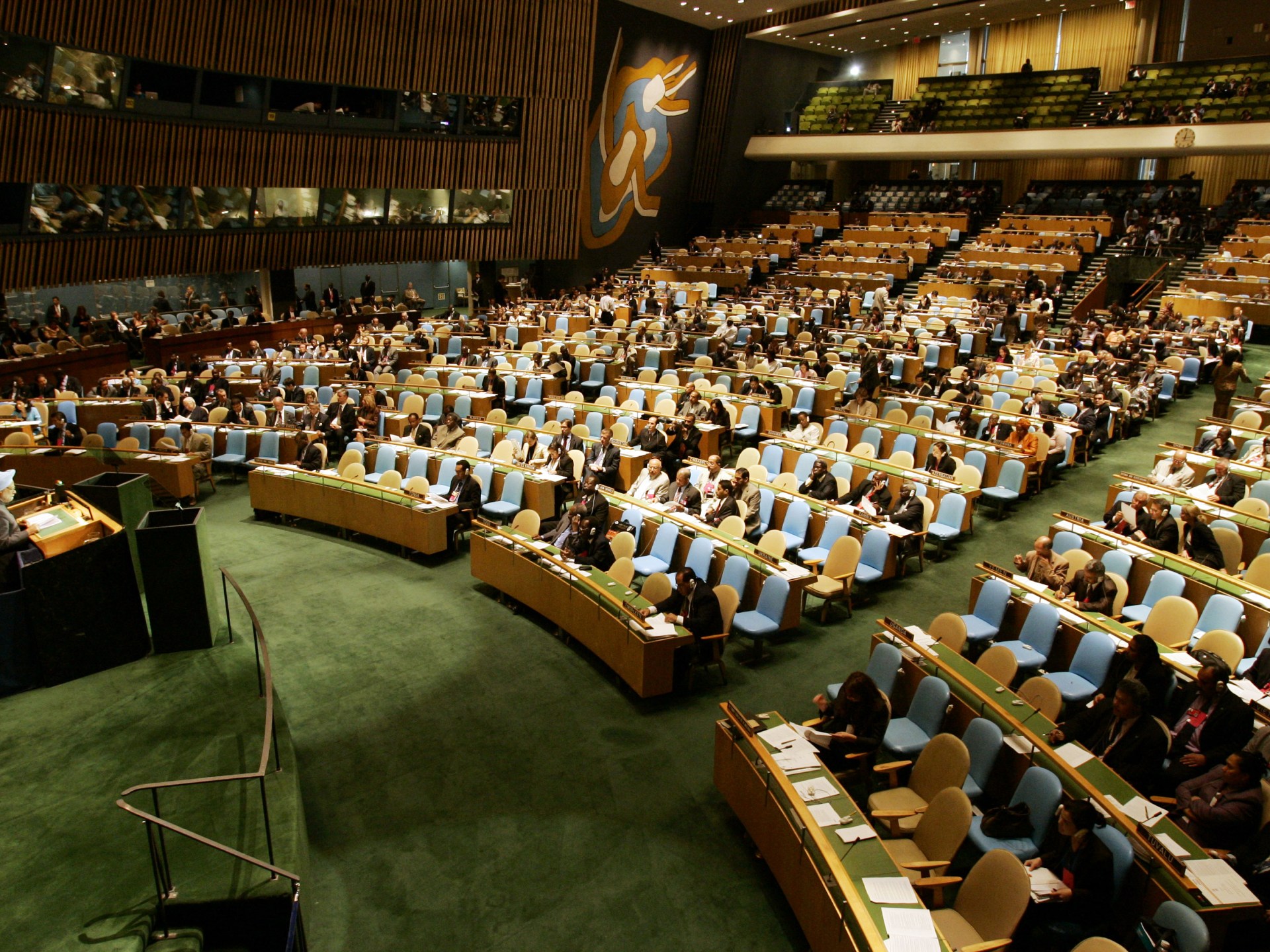
The UN General Assembly met in New York on July 6 to discuss the responsibility to protect doctrine as mass atrocities continue in several conflicts. Martin Griffiths, the UN under-secretary-general for humanitarian affairs, said the annual discussions held since 2018 have not led to effective enforcement, but argued the principle should be rebuilt rather than abandoned.
Writing for Al Jazeera, Griffiths said the doctrine known as R2P grew out of failures to stop genocide in Rwanda and Bosnia. He described it as an attempt to make states responsible for protecting their own populations and, if they fail, to give other states a duty to respond through the United Nations.
Doctrine born from past genocides
According to Griffiths, the International Committee on Intervention and State Sovereignty produced the R2P framework in 2001. World leaders then took up the idea at the 2005 UN World Summit, where the final document said the international community, acting through the UN, had a role in helping protect people from genocide, war crimes, ethnic cleansing and crimes against humanity using peaceful diplomatic and humanitarian means under the UN Charter.
Griffiths said the effort coincided with the creation of the International Criminal Court in July 2002, which was set up to prosecute people accused of war crimes, crimes against humanity and genocide. He called that period a high point for efforts to strengthen a rules-based system aimed at protecting civilians and holding perpetrators to account.
He said the promise was not fulfilled. Griffiths blamed the failure partly on powerful UN member states that, in his view, showed little interest in applying the doctrine despite some belonging to the Group of Friends of R2P.
Libya intervention damaged support
Griffiths also pointed to the 2011 intervention in Libya as a turning point. He said Western governments led by the United States invoked R2P after Muammar Gaddafi’s government responded violently to protests, but what was presented as a civilian-protection operation became a campaign for regime change.
That episode, Griffiths wrote, caused Russia and other powers to view R2P as a tool for Western intervention rather than a humanitarian norm. He linked that loss of trust to later inaction over atrocities in Syria, Palestine, Sudan, the Democratic Republic of the Congo, Ethiopia, Myanmar and other places.
Griffiths said his work in humanitarian operations and conflict mediation over the past six years had shown him the consequences of failures to protect civilians. He contrasted government statements of concern with the actions of ordinary people who sheltered, fed and cared for those displaced or wounded by war.
Proposals for reviving R2P
Griffiths urged the UN to go beyond yearly debates and take practical steps to restore the doctrine. His proposals include:
- Reconvening the international commission that developed R2P and asking it to revise the framework, including clearer conditions and limits for action.
- Securing endorsement of the revised report from the General Assembly, Security Council and Human Rights Council.
- Creating a UN reporting mechanism for situations where R2P may need to be applied, backed by an official mandate for a UN body.
Griffiths said those steps would require political will generated by public outrage over continuing atrocities. He warned that Sudan faces another possible genocidal episode, saying El Obeid is under siege and that signs point to a repeat of atrocities he said occurred in el-Fasher last year.
He said stopping genocide should be treated as a humanitarian duty rather than a political choice.
This story draws on original reporting from Al Jazeera.