
Ukrainian strikes force rare Putin admission on Russian fuel shortages
Drone attacks on refineries and fuel sites have led to rationing, long queues and growing economic pressure, analysts say.
By Lucas Ferreira · Science & Environment Writer
4 min read
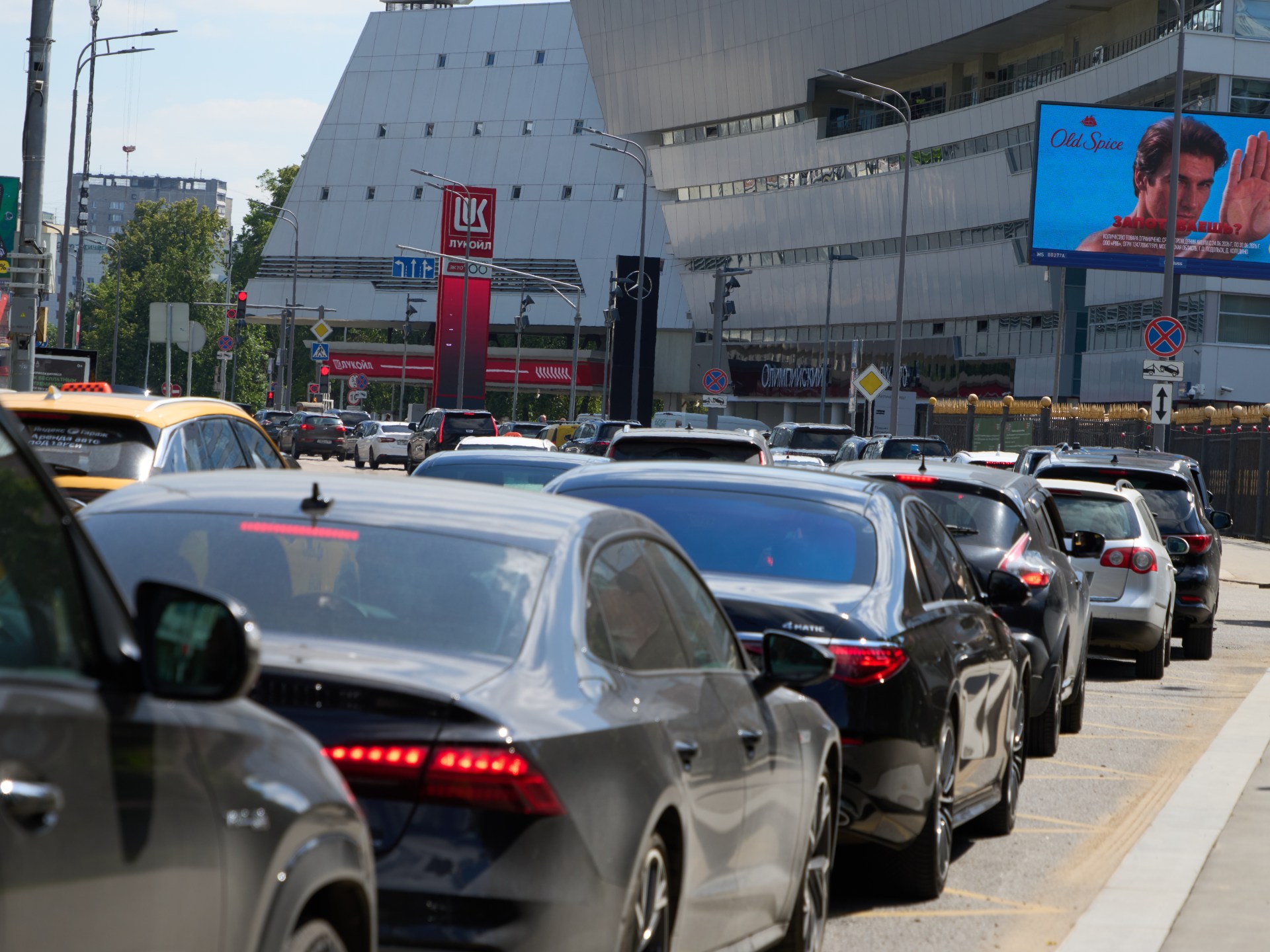
Ukrainian attacks on Russian energy infrastructure have pushed fuel shortages into public view, prompting President Vladimir Putin to acknowledge rationing and queues at petrol stations. The disruption matters because oil and refined fuel sales are a main source of Russian export revenue and help finance Moscow’s war in Ukraine, according to Al Jazeera.
Putin told senior officials on Sunday that drivers and businesses were still facing fuel problems, Russian news agencies reported. He said authorities needed measures equal to the scale of the challenge and described the strikes as attacks on civilian infrastructure, according to those reports.
In a Kremlin-published interview, Putin also said Ukrainian attacks on infrastructure were causing problems and that Russia was seeing a shortage, though he described it as not critical. He said the state would protect the country, its citizens and its borders, according to the Kremlin.
Refineries and fuel routes under attack
Ukraine has increased strikes on Russian energy facilities in recent months, Al Jazeera reported. The campaign has targeted refineries, storage depots, pumping stations and ports tied to oil loading, according to Indra Overland, head of the Center for Energy Research at the Norwegian Institute of International Affairs and an associate fellow at the Oxford Institute for Energy Studies.
Norsi, Russia’s fourth-largest oil refinery and its second-largest producer of petrol, halted operations last week after a Ukrainian drone strike, according to Al Jazeera. The refinery is near Kstovo in the Nizhny Novgorod region, about 450km east of Moscow.
Ukraine’s military said it also hit the Orenburg gas processing plant, a site near Russia’s border with Kazakhstan that can process 45 billion cubic metres of natural gas a year. The plant is more than 1,200km from the front lines in Ukraine.
Ukraine also struck two oil facilities in Kerch in Crimea and the port of Kavkaz, which Al Jazeera reported is used to move fuel to Russian front lines. Long-range drones hit the Slavyansk and Yaroslavl oil refineries, roughly 300km and 700km from the front, respectively.
Ukrainian President Volodymyr Zelenskyy said after Sunday’s refinery strikes that the attacks meant fewer resources for Russia’s military. He wrote on X that Ukraine would keep carrying out operations that reduce Russia’s capacity to wage war.
Economic pressure is spreading
Overland told Al Jazeera that Ukraine has focused on fluid catalytic cracking units at refineries, describing them as central components that are costly and slow to replace. He said Russian attempts to shield some of the equipment with scaffolding and nets have not stopped Ukraine’s stronger domestically made weapons, including the FP-5.
The FP-5, made by Ukrainian defence manufacturer Fire Point, can travel 3,000km and carry more than 1,000kg, according to Al Jazeera. Margarita Zavadskaya, a senior research fellow at the Finnish Institute of International Affairs, told Al Jazeera that Ukraine is attacking the connective parts of Russia’s broad energy system and exposing weak protection across key infrastructure.
Overland said the economic effects are growing, with most Russian regions limiting sales of petrol and diesel. He told Al Jazeera that some filling stations have closed or have queues lasting up to 12 hours, affecting commuting, freight transport, taxis and agriculture.
Russia, the world’s largest wheat exporter, could also face disruption during the July-August harvest because farms need fuel for tractors, pumps and moving crops to market, Overland said. He added that shortages are encouraging panic buying and hoarding, while pushing up prices because fuel is needed to supply food, medicine, building materials and other goods.
Markku Kivinen, director of the Aleksanteri Institute at the University of Helsinki, told Al Jazeera that Russia’s military sector has been shielded because war logistics remain the priority. He said the shortages may hurt the government’s standing without immediately weakening Russia’s war effort.
Political risks remain gradual
Zavadskaya told Al Jazeera the shortages had become too visible for the Kremlin to deny. She said Putin’s response fits a familiar pattern in which the president presents himself as in control while responsibility for failures falls on lower-ranking officials and managers.
Kivinen said Putin may also be using the admission to connect the attacks to his wider war narrative and justify escalation by pointing to threats against Russian infrastructure. Zavadskaya said the effect is likely to be cumulative and politically corrosive rather than an immediate threat to the regime.
Overland said Russia may face a harder test if Ukraine expands attacks on pipelines, which run for thousands of kilometres and are difficult to protect. He told Al Jazeera that gas pipeline damage would carry greater weight at the start of the autumn heating season.
This story draws on original reporting from Al Jazeera.