
Ukraine recovery meeting opens in Poland as wartime allies feud
Kyiv will send its prime minister to a Gdansk recovery forum after a dispute with Warsaw over Ukrainian nationalist history.
By Daniel Okafor · Business Editor
3 min read
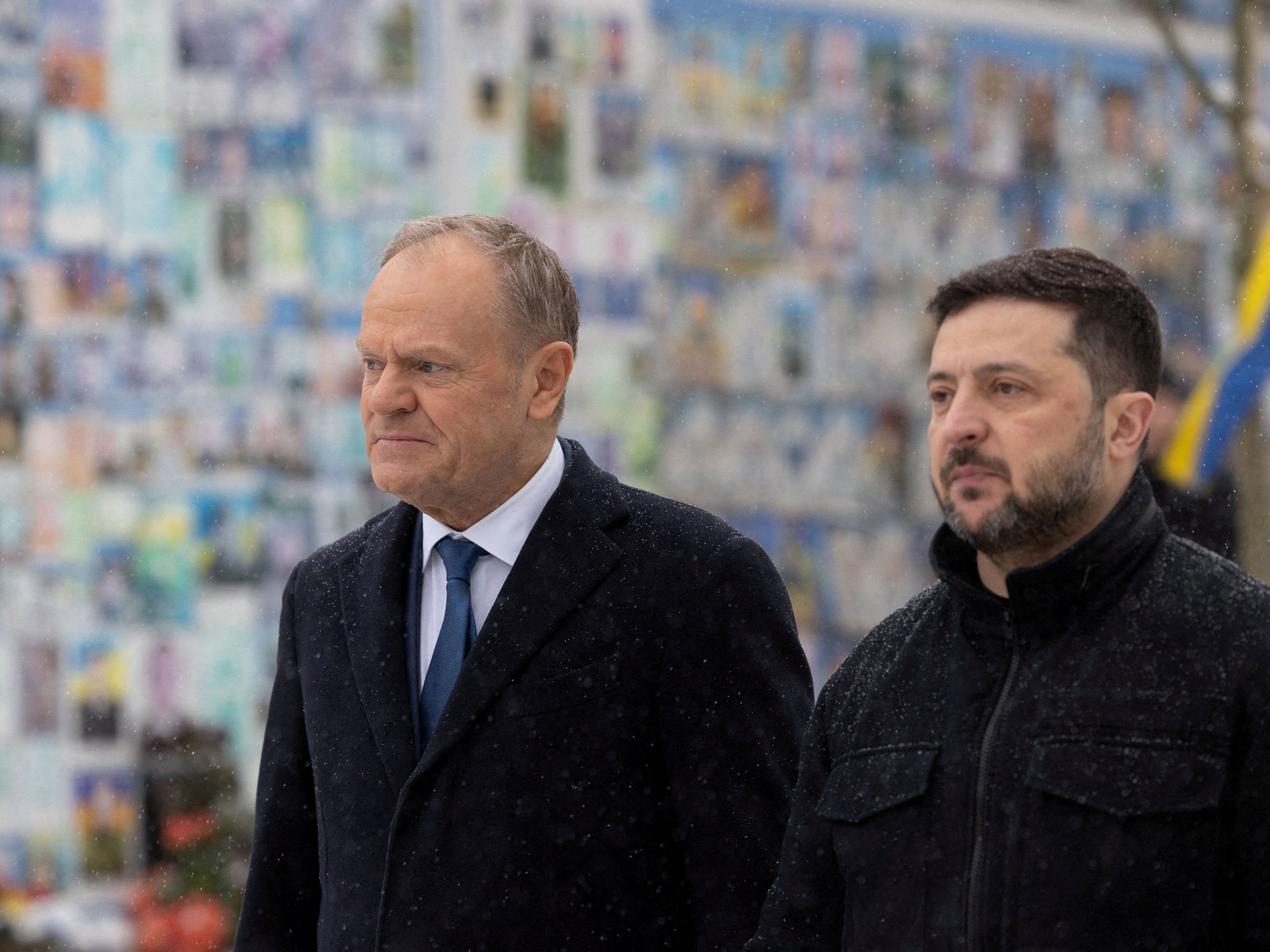
Ukraine’s Western-backed reconstruction plans are set to be discussed in Poland this week while Kyiv and Warsaw are locked in a dispute over the legacy of a wartime Ukrainian nationalist force. Al Jazeera reported that President Volodymyr Zelenskyy will not attend the Ukraine Recovery Conference in Gdansk, with Prime Minister Yulia Svyrydenko leading Ukraine’s delegation instead.
The row has tested a relationship that has been central to Ukraine’s war effort since Russia’s full-scale invasion in 2022. According to Al Jazeera, Poland has served as a key route for logistics, weapons and aid, while also taking in millions of Ukrainian refugees.
The dispute escalated after Zelenskyy took part in a May 22 reburial ceremony near Kyiv for Andriy Melnyk, a leader of the Organisation of Ukrainian Nationalists, or OUN, and his wife Sofiya, Al Jazeera reported. Zelenskyy described the ceremony as an act of “respect for Ukrainian heroes,” according to the report.
Four days later, Zelenskyy named an elite military unit after “the heroes of the Ukrainian Insurgent Army,” known as the UPA, Al Jazeera reported. The UPA grew out of the OUN, fought during World War II and later resisted Soviet control in western Ukrainian regions that had previously belonged to Poland, according to the report.
Polish President Karol Nawrocki responded on June 19 by stripping Zelenskyy of the Order of the White Eagle, Poland’s top state honour, Al Jazeera reported. Nawrocki said on social media that the UPA remained chiefly known as a force responsible for brutal crimes against Poles during World War II.
Several Ukrainian figures then gave back Polish honours, according to Al Jazeera. They included Kyrylo Budanov, head of Zelenskyy’s administration; Foreign Minister Andriy Sibiha; and former President Petro Poroshenko.
Tusk urges restraint before Gdansk forum
Polish Prime Minister Donald Tusk sought to lower the temperature before the recovery meeting. “A conflict between Poland and Ukraine delights Putin and shocks our allies,” Tusk wrote on X, referring to Russian President Vladimir Putin. “The frontline lies elsewhere.”
Anton Shekhotsov, who heads the Vienna-based Centre for Democratic Integrity and studies European far-right groups, told Al Jazeera that the dispute is unlikely to change Poland’s support for Ukraine. He said both countries view Russia as a larger existential threat.
Shekhotsov also told Al Jazeera that Kremlin-funded media involved in information warfare against Europe would likely try to use the UPA issue to create friction between Kyiv and Warsaw.
A contested wartime legacy
Al Jazeera reported that the UPA emerged from several pressures, including Ukrainian nationalist ambitions, World War II and Soviet repression, including the Holodomor famine, religious persecution, forced Russification and deportations. Historians and survivors cited by Al Jazeera say the UPA took part in the Holocaust and killed tens of thousands of ethnic Poles in western Ukraine before later fighting Nazi Germany.
Nadiya, a 95-year-old Ukrainian woman from Volyn, told Al Jazeera last year that UPA-linked attackers killed Poles and those who tried to protect them during the 1943 Volyn Massacre. She said she survived because her father hid her in a haystack, and Al Jazeera reported that she asked not to publish her surname because she felt unsafe in Ukraine.
University of Ottawa historian Ivan Katchanovski wrote in 2019 that Ukraine’s pro-Western leaders had denied, played down or justified the UPA’s role in the killings, according to Al Jazeera. He also wrote that most UPA members helped Nazi occupation authorities carry out genocidal policies against Jews, Ukrainians, Russians and Poles.
Experts cited by Al Jazeera said the war with Russia has shaped how many Ukrainians view earlier independence fighters. Vyacheslav Likhachev, who studies Ukrainian and Russian ultranationalists, told Al Jazeera that in the current war, many people focus on the UPA’s opposition to Moscow while other parts of its record receive less attention.
This story draws on original reporting from Al Jazeera.