
Trump threatens Iran after funeral chants target him
Trump warned Iran after mourners at Ayatollah Ali Khamenei’s funeral called for his killing, as U.S. officials pressed Tehran over the Strait of Hormuz.
By Sofia Marchetti · World Affairs Correspondent
3 min read
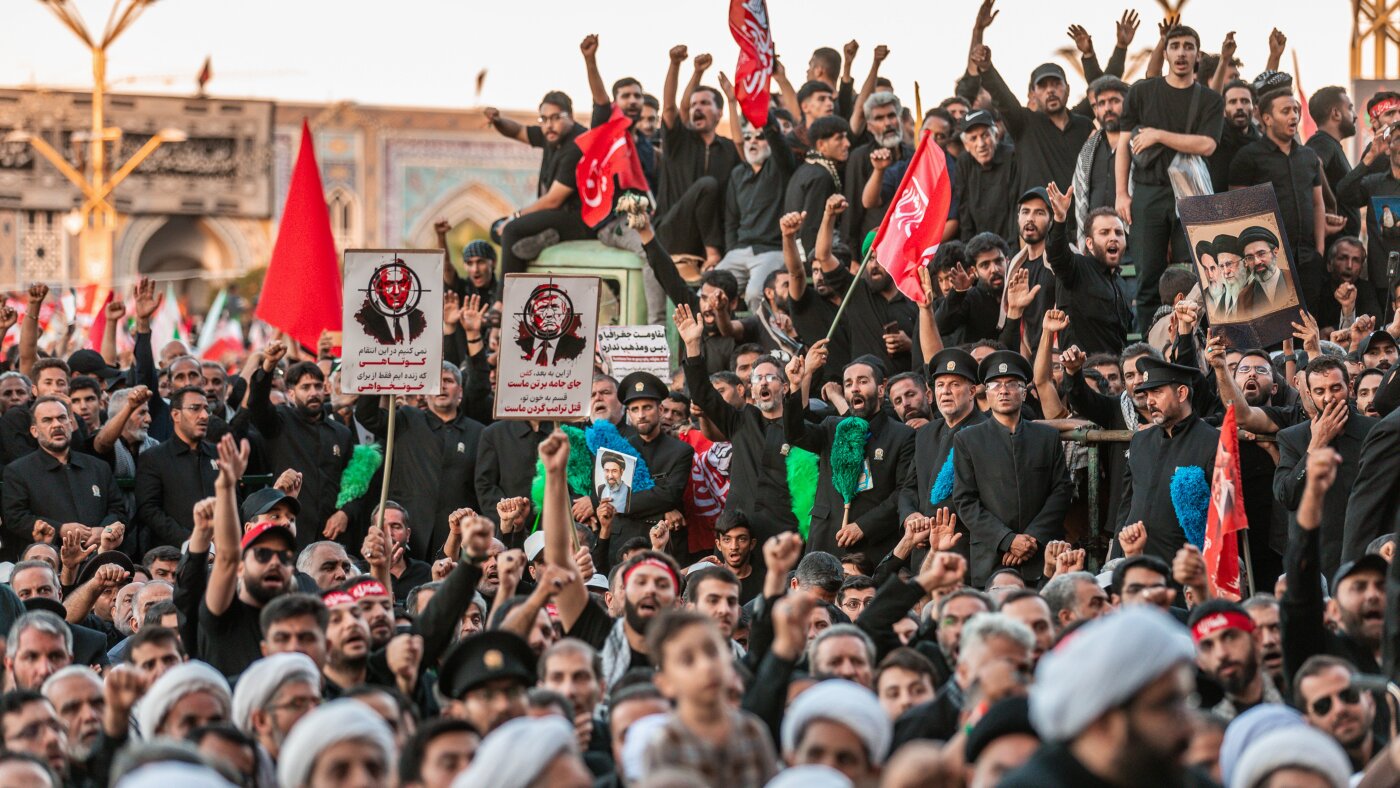
President Donald Trump threatened Iran on Saturday after mourners at Ayatollah Ali Khamenei’s funeral displayed calls for Trump and Israeli Prime Minister Benjamin Netanyahu to be killed, The Associated Press reported. The warning came as U.S. officials pressed Tehran to publicly declare the Strait of Hormuz open to shipping, a demand tied to efforts to keep an interim war deal from collapsing.
Trump wrote on Truth Social that U.S. missiles were aimed at Iran and said more would follow if Iran acted on threats against him, according to AP. He also threatened wide destruction inside Iran, framing the post as a response to what he described as threats to assassinate him.
Khamenei, 86, was killed in a Feb. 28 airstrike at the start of the Iran war, AP reported. Iran buried him this week after a multiday funeral procession that carried his body through cities in Iran and Iraq, ending in Mashhad.
U.S. pushes Iran on Hormuz
Senior U.S. officials told reporters that Washington wants Iran to state publicly that the Strait of Hormuz is open and that vessels using the waterway will no longer be attacked, AP reported. The officials spoke on condition of anonymity to describe negotiations with Iran.
Tehran has not issued that statement, according to AP. Instead, Iran has said the strait should be under its control and that ships passing through it should pay fees to Tehran, despite the route’s long-standing treatment by much of the world as an international waterway.
AP reported that the latest U.S. airstrikes followed Iranian attacks on three ships in the strait earlier in the week. Iran later fired back at countries across the region, including Bahrain, Jordan, Kuwait and Qatar, according to AP.
A U.N.-based Iranian diplomat told reporters that any activity in the strait, including reopening it or clearing mines, was solely Iran’s responsibility, AP reported. Iranian Foreign Ministry spokesperson Esmail Baghaei said Qatari mediators went to Iran on Friday for talks with officials.
Talks face tight timeline
U.S. officials said Trump had given negotiators limited time to reach an agreement with Iran, AP reported. They also said the president had several options if talks failed, without detailing them.
Iranian Foreign Minister Abbas Araghchi was set to discuss the strait with Oman’s foreign minister on Saturday, Iran’s state-run IRNA news agency reported, according to AP. Turkish Foreign Minister Hakan Fidan told state broadcaster TRT that he believed Iran and Oman could reach a solution over the weekend.
Araghchi accused Washington of breaching the interim deal by ending waivers that allowed Iran to sell crude oil on the open market in U.S. dollars, AP reported. The United States took that step after the ship attacks in the strait.
Before the war, about one-fifth of traded oil and natural gas moved through the Strait of Hormuz, AP reported. Iran’s control of the route during the conflict contributed to a global energy crisis, though oil prices have fallen sharply from wartime highs of $120 a barrel.
Nuclear demands remain unresolved
U.S. officials said any nuclear agreement would require Iran to surrender its stockpile of highly enriched uranium, AP reported. Iran has repeatedly refused that demand and maintains that its nuclear program is peaceful.
The uranium, enriched near weapons-grade levels, is believed to be at nuclear sites the United States bombed in 2025, according to AP. The International Atomic Energy Agency has said Iran is the only country enriching uranium to that level without a weapons program, AP reported.
U.S. officials also said Washington would not agree to a nuclear deal unless Iran first stopped attacks on ships in the Strait of Hormuz, AP reported.
This story draws on original reporting from NPR.