
Iran leader vows revenge as Trump threatens new missile strikes
The exchange came as U.S. and Iranian officials argued over the Strait of Hormuz, attacks on shipping and the terms of any nuclear deal.
By Sofia Marchetti · World Affairs Correspondent
3 min read
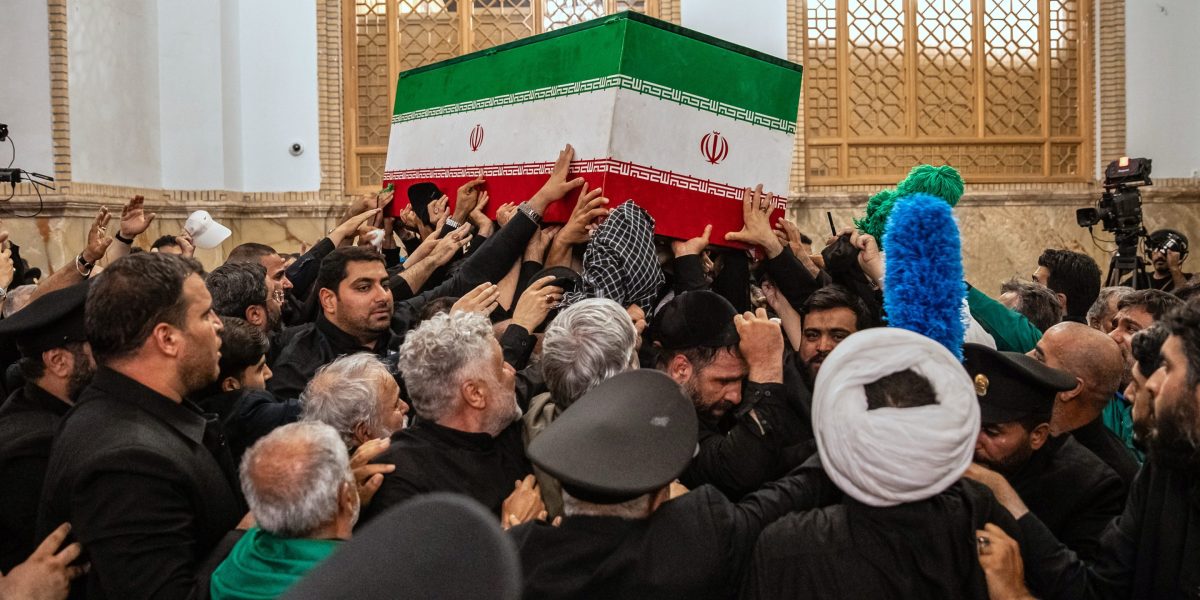
Iran’s new supreme leader vowed continued revenge for the killing of Ayatollah Ali Khamenei, while President Donald Trump threatened fresh missile strikes if Tehran tries to assassinate him. The exchange, reported by the Associated Press, added pressure to an interim deal meant to halt a wider U.S.-Iran war.
Iranian state television carried remarks Saturday from Supreme Leader Mojtaba Khamenei, who said Iranians would keep seeking to avenge his father’s death. He said such revenge was “the will of our nation” and had to be carried out, according to AP.
Trump wrote on Truth Social that 1,000 U.S. missiles were aimed at Iran, with thousands more ready to follow if Iran acted on threats against him. AP reported that Trump said he was responding to threats “to assassinate, or attempt to assassinate” him.
The threats followed funeral events for Ali Khamenei, where AP reported that mourners displayed posters and banners calling for the killing of Trump and Israeli Prime Minister Benjamin Netanyahu. Khamenei, 86, was killed in an airstrike at the start of the Iran war on Feb. 28 and was buried this week after ceremonies in Iran and Iraq, according to AP.
Hormuz dispute strains talks
The Strait of Hormuz remained a central obstacle. AP reported that senior U.S. officials demanded Iran publicly state that the waterway is open and that vessels using it will not be attacked.
Iran has not accepted those demands, according to AP. Tehran has said the strait should be under its sole control and that ships should pay fees to Iran, even though the route has long been treated internationally as a key global waterway.
AP reported that about one-fifth of traded oil and natural gas passed through the strait before the war. Iran’s hold on the route during the conflict helped fuel a global energy crisis, though AP said oil prices have fallen sharply from wartime highs of $120 a barrel.
U.S. officials, speaking anonymously to describe the talks, told reporters that recent strikes followed actions by what they described as a rogue faction of Iranian hard-liners seeking to undermine the ceasefire, AP reported. Iran has said its government is united under Mojtaba Khamenei.
Talks continue amid attacks
Trump said Friday that the ceasefire was over but that negotiations would continue, according to AP. Iranian Foreign Minister Abbas Araghchi traveled to Oman on Saturday for talks, while Qatari mediators met Iranian officials on Friday, Iranian Foreign Ministry spokesperson Esmail Baghaei said.
AP reported that U.S. airstrikes had targeted Iran for several days after Iran attacked three ships in the Strait of Hormuz. Iran then fired at countries across the Middle East, and AP said Tehran targeted Bahrain, Jordan, Kuwait and Qatar on Thursday in response to U.S. strikes.
Iranian Health Ministry spokesperson Hossein Kermanpour said strikes in Iran over two days killed at least 17 people and wounded 115 others, according to AP. AP also reported that additional attacks hit Iran after the latest U.S. strikes ended Thursday, with no claim from Israel.
Araghchi accused Washington of breaching the interim deal by ending waivers that allowed Iran to sell crude oil in U.S. dollars on the open market. He wrote on X that “there can only be mutual compliance,” AP reported.
Nuclear issue remains unresolved
U.S. officials told reporters any nuclear agreement must require Iran to surrender its stockpile of highly enriched uranium, according to AP. Iran has repeatedly refused to do so.
The officials said the United States has military options if no deal is reached, but they did not describe them, AP reported. The International Atomic Energy Agency has said Iran is the only country enriching uranium to such high levels without a weapons program, while Iran says its nuclear work is peaceful.
This story draws on original reporting from Fortune.