
Traore escalates clash with Muslim scholars in Burkina Faso
Burkina Faso’s military leader is confronting clerics over arrests, a new religious law and controls on Islamic education abroad.
By Lucas Ferreira · Science & Environment Writer
3 min read
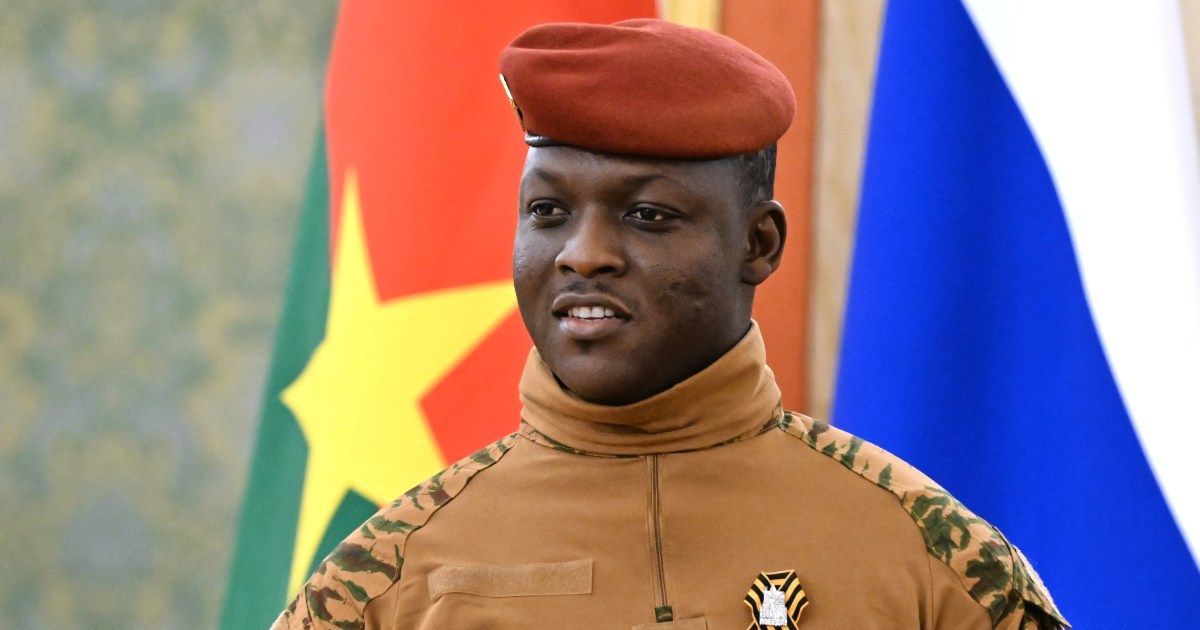
Burkina Faso’s transitional leader, Captain Ibrahim Traore, has intensified a confrontation with influential Muslim scholars, saying the state will act against what he describes as radical Islam. The dispute matters because several Sunni clerics who once supported the military leader are now clashing with his government over arrests, religious legislation and controls on Islamic education.
Traore told scholars accused of spreading extremist ideas that “the battle has begun” if they do not change. He said religion should be promoted through example rather than force or violence, and warned that imams who use sermons to advance extremist views would be suspended.
The military leader also questioned opposition from some Muslims to the country’s new Religious Freedoms Law. He said the state would support scholars who promote what he called a peaceful interpretation of Islam, while accusing foreign powers of using religion to unsettle Burkina Faso.
Controls on religious study
Traore announced plans to bring home Burkinabe students studying Islamic law in Arab countries. He claimed that more than 800,000 Burkinabe were receiving religious education abroad without gaining practical professional skills.
He warned that students who refuse to return could risk losing Burkinabe citizenship. The announcement came after a late-June government order requiring students seeking to study overseas to secure prior approval from the Ministry of Higher Education.
Authorities said that measure was meant to make foreign study programmes better match the country’s development priorities. The controls followed the transitional parliament’s unanimous adoption of the Religious Freedoms Law on June 20.
The government says the law is intended to strengthen Burkina Faso’s secular system. It sets prison terms and fines for practices authorities define as religious abuses, including forced child begging and violations of financial transparency rules by religious organisations.
Arrests and mosque closure
The law has added to tensions between the government and parts of the Muslim community. In late May, Imam Mohamed Ishaq Kindo, a prominent Sunni scholar, was arrested after criticising the draft legislation.
Traore described protests over Kindo’s arrest as the work of “a small minority of extremists”. After worshippers gathered to demand the imam’s release, authorities closed the largest Sunni mosque in Ouagadougou, citing public order concerns.
Agence France-Presse, citing a security source, reported that about 100 of Kindo’s supporters were moved to a military camp for what officials called “civic training”. Kindo’s detention followed the mid-April arrest of Imam Mahmoud Barro in Bobo-Dioulasso under similar circumstances.
The Timbuktu Institute, a Dakar-based think tank focused on peace and security, said Kindo’s whereabouts have not been disclosed since the protests were put down. The institute said the conflict reflects the collapse of an informal understanding between Traore’s government and Muslim scholars whose support had helped him after he seized power.
According to the institute, turning against those former allies could weaken a source of political legitimacy while failing to resolve the security crisis cited by the government to justify tougher measures.
Israel ties draw attention
Traore also recently received Israel’s new ambassador to Burkina Faso, Simon Seroussi, in Ouagadougou to present his credentials. Africa Intelligence, a Paris-based publication, reported that Seroussi’s accreditation request had been pending since the summer of 2025 before it was quietly approved.
The public reception appears to signal a shift from earlier caution among Traore’s circle, which had sought to maintain his anti-Western image. It comes as Israeli security agencies expand cooperation with members of the Alliance of Sahel States, the bloc formed by Burkina Faso, Mali and Niger, whose governments have shown interest in Israeli security technology.
This story draws on original reporting from Al Jazeera.