
Wildfire smoke pushes Toronto air quality to worst among major cities
Smoke from fires in northwestern Ontario triggered health alerts in Toronto and parts of the northeastern United States.
By Sofia Marchetti · World Affairs Correspondent
3 min read
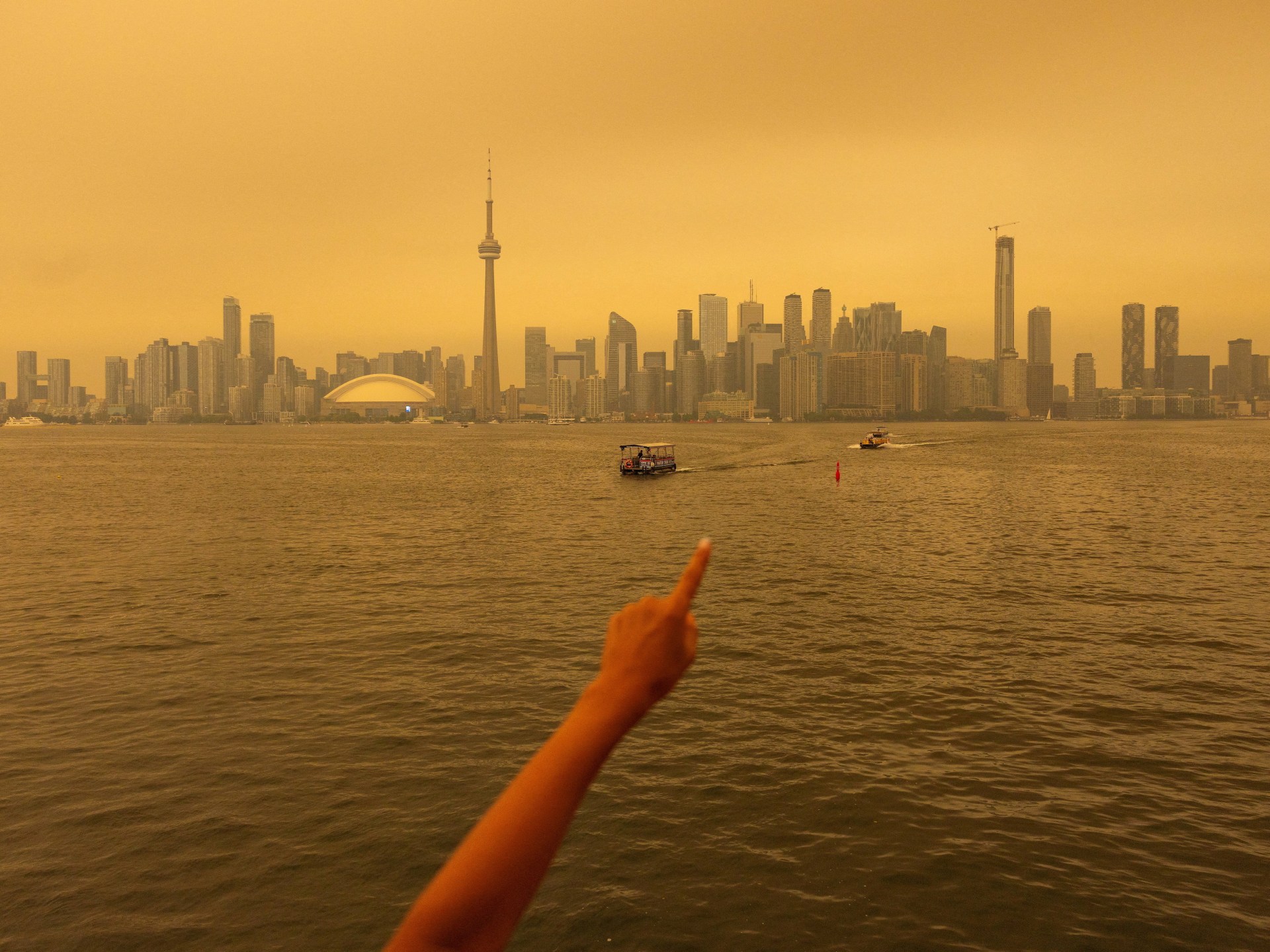
Wildfire smoke from northwestern Ontario pushed Toronto’s air quality to the worst level among major cities worldwide on Wednesday, according to IQAir. The smoke also spread into the northeastern United States, prompting health warnings from local and national authorities.
AFP and Reuters reported that the fires were burning in sparsely populated areas hundreds of miles from Toronto, Canada’s largest city. Cities in the region were not under direct threat from the flames, but smoke blanketed a wide area and reduced air quality on both sides of the border.
Environment Canada reported an Air Quality Health Index reading of 10+ for Toronto, a level the agency classifies as “very high risk.” Forecasts cited by AFP and Reuters indicated that dangerous conditions could last through Thursday night.
IQAir, the Swiss air quality technology company, ranked Toronto ahead of Kinshasa in the Democratic Republic of the Congo and New Delhi in India for the poorest air among major global cities. Armen Araradian of IQAir told AFP that wildfires were the main driver of Toronto’s pollution surge, with above-average temperatures also contributing.
Evacuations near Ontario fires
Canada’s wildfire season has been less severe than some recent years, but more than 800 fires were active nationwide, according to figures cited by AFP and Reuters. The Canadian government said 835 fires were burning across the country on Wednesday, including 112 listed as out of control.
Most of the active fires were in Manitoba, Saskatchewan and Ontario, the Canadian government said. It said fires had burned 1.9 million hectares, or 4.7 million acres, so far this season.
Canadian National said it evacuated employees in the Armstrong, Ontario, area and residents of Armstrong on Monday night after fire affected the area. The railroad operator said it suspended rail service near Armstrong as a precaution after a video circulated on social media showing a Canadian National train surrounded by fire.
The Canadian government said this year’s wildfire season began more slowly than the 2023 and 2025 seasons, which it described as the country’s two worst for wildfires. It also warned that warmer-than-usual temperatures across Canada meant fires remained likely.
Smoke spreads into US Northeast
Smoke also worsened air quality in several US states, with Pennsylvania, New York, Connecticut, Massachusetts, Maine and New Hampshire among those particularly affected, AFP and Reuters reported. New York City authorities issued an unhealthy air quality alert and advised residents to cut back on strenuous outdoor activity and take extra breaks if they were outside Wednesday and Thursday.
The National Weather Service said smoke could remain in the region until the end of the week. Dan Westervelt, a Lamont associate research professor at Columbia University, told Reuters that New York City, the Great Lakes, upstate New York and New England may not yet have seen the worst conditions from the smoke.
New York Governor Kathy Hochul urged people to use caution, especially those with health conditions. The warning came ahead of the FIFA World Cup final on Sunday, when more than 80,000 people were expected at an open-air stadium in New Jersey and another 50,000 were expected to watch from Central Park in New York City, according to AFP and Reuters.
Greg Evans, a professor of chemical engineering and applied chemistry at the University of Toronto, told Reuters that Toronto was facing severe heat and wildfire smoke at the same time. He said he expected such combined events to happen more often in coming decades and said cities and residents should prepare for them.
This story draws on original reporting from Al Jazeera.