
Supreme Court limits federal gun ban for some drug users
The justices unanimously sided with a Texas marijuana user who said a federal firearm restriction violated his Second Amendment rights.
By Lucas Ferreira · Science & Environment Writer
3 min read
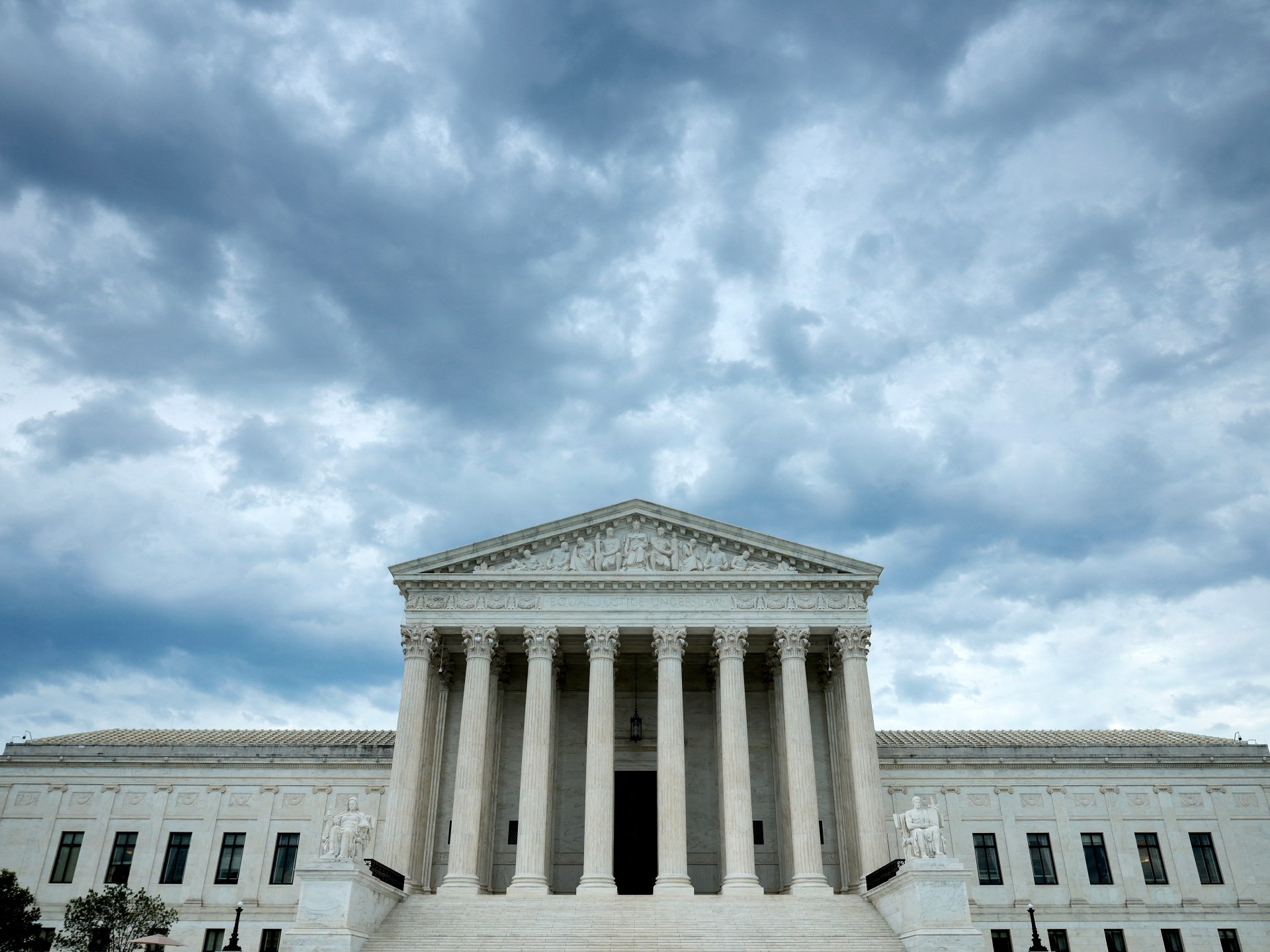
The US Supreme Court unanimously limited the federal government’s ability to bar some drug users from owning guns, ruling for a Texas marijuana user who challenged the restriction on Second Amendment grounds. The decision leaves room for prosecutions involving people addicted to drugs or currently intoxicated, according to Justice Neil Gorsuch’s opinion.
All nine justices sided Thursday with Ali Danial Hemani, a Pakistani American dual citizen who told authorities he used marijuana or cannabis. The ruling upheld a lower court’s dismissal of an illegal gun possession charge against him, according to Al Jazeera, Reuters and The Associated Press.
The case centered on a 1968 federal law that prohibits illegal drug users from possessing firearms. Hemani argued that the law, as applied to him, violated the constitutional right to keep and bear arms.
Ruling narrows the law
The court did not strike down the drug-user gun restriction in full. Instead, the decision reduced the government’s ability to use the law against people based on marijuana use alone, while keeping open the possibility of charges in narrower circumstances.
Gorsuch wrote that the court was not deciding whether the government may bar people with drug addiction, or people who are intoxicated at the time, from having firearms. “We do not address efforts to ban addicts, or those presently intoxicated, from possessing a firearm,” he wrote.
Gorsuch also pointed to changing state policies on cannabis, noting that many states have moved to legalize its use. He wrote that the federal government had contributed to the broader shift, leaving it in a difficult position when claiming that regular marijuana users as a group are unusually dangerous.
The Trump administration defended the 1968 law before the court. Its lawyers compared the restriction to 19th-century rules that allowed authorities to temporarily disarm people described as “habitual drunkards,” according to Al Jazeera, Reuters and The Associated Press.
Gun rights and civil liberties groups backed challenge
Hemani’s challenge drew support from both gun rights advocates and civil liberties organizations. Those groups argued that drug use alone should not strip a person of a constitutional right.
Niz Ahmad, a lawyer for Hemani, said after the ruling that the decision would protect “millions of Americans from draconian punishment” for using marijuana while owning a firearm.
The American Civil Liberties Union, which helped represent Hemani, had said earlier that the federal restriction gave prosecutors too much discretion and could lead to arbitrary or discriminatory enforcement.
The same federal law had been used in the prosecution of Hunter Biden, son of former President Joe Biden. Hunter Biden was convicted over purchasing a gun in 2018 while addicted to cocaine, but Joe Biden later pardoned him near the end of his presidency, according to Al Jazeera, Reuters and The Associated Press.
This story draws on original reporting from Al Jazeera.