
Spain and France fight wildfires as forecasters warn of more danger
Fire crews battled major blazes in Spain and France as heat, dry storms and wind kept much of southern Europe on alert.
By Lucas Ferreira · Science & Environment Writer
3 min read
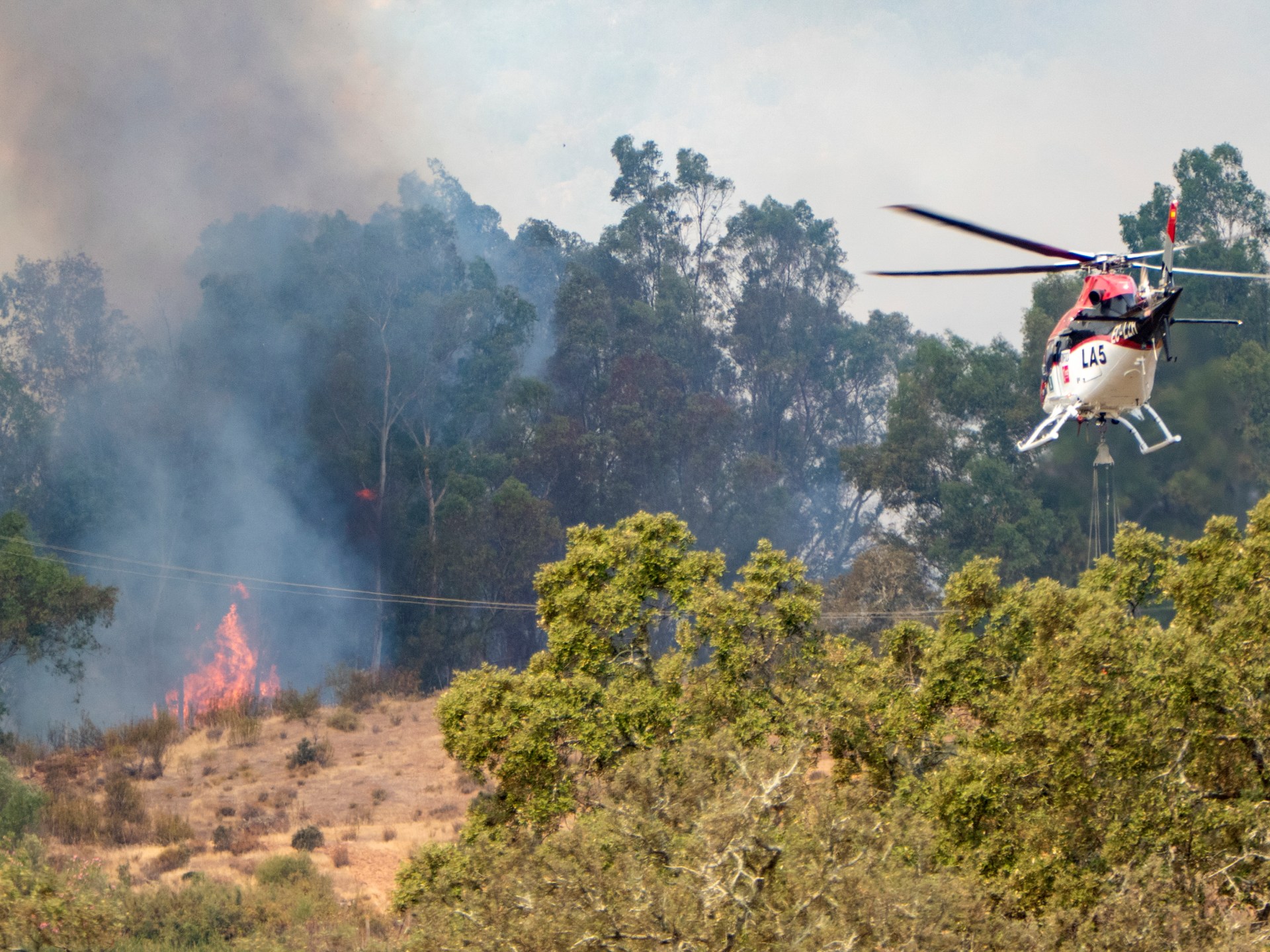
Spain and France were still battling major wildfires Wednesday as forecasters warned that more could break out in the days ahead. The warnings matter because fires have already killed people, forced evacuations and burned large areas during a year of repeated European heatwaves, Reuters and The Associated Press reported.
Spain’s national weather agency, AEMET, said the wildfire threat was “very high or extreme” across most of mainland Spain and the Balearic Islands. The agency said dry thunderstorms and Saharan dust were adding to the danger during the current heatwave, and urged extreme caution.
In central Spain, firefighters were working to control a blaze in rural Guadalajara, about 100km north of Madrid, that has burned more than 32,000 hectares. Reuters and AP described it as one of Spain’s largest fires on record.
The Guadalajara fire followed a deadly blaze less than two weeks earlier in southern Spain that killed 13 people, including several foreigners, after hitting a small expatriate community, according to Reuters and AP.
Prime Minister Pedro Sanchez visited the damaged area in Guadalajara on Wednesday and called for a cross-party agreement to address climate change. Speaking in the village of Tamajon, Sanchez said: “Year after year we clearly see how climate change kills and destroys wealth in our communities. This isn’t politics. It is science, it’s about facts.”
AEMET said temperatures were expected to ease slightly in some areas on Thursday. But the agency also forecast dry westerly winds that could bring another burst of heat to Mediterranean areas, where highs could reach 42 to 44 degrees Celsius.
In France, local authorities said milder temperatures and lighter winds helped crews fighting a fire in the southeastern Var region. That blaze had burned 2,500 hectares, damaged dozens of homes and forced 400 people to leave, Reuters and AP reported.
Helicopters were dropping water on the Var fire, which had not yet been contained. Commander William Vogl, a spokesman for Var firefighters, told RMC radio that the situation had been “very difficult,” though he said winds were expected to become more favourable.
Simon Babre, the prefect for the region, banned barbecues and asked municipalities to cancel planned summer fireworks. Officials also reported another active fire in the Hautes-Alpes, also in southeastern France.
France’s weather service, Meteo-France, said the risk of additional wildfires remained very high in western and southwestern France for the rest of the week. French authorities also said the country recorded 5,764 more deaths than usual between June 17 and July 2, after a late-June heatwave; they said the excess deaths were from all causes and were not all clearly tied to heat.
Other parts of Europe were also under weather-related restrictions. In Italy, several fires burned across Sicily on Wednesday and prompted scattered evacuations, while the country’s civil protection agency kept the entire island at the highest wildfire-risk level for several days.
Reuters and AP reported that winds and temperatures near or above 40C helped fuel fires in Sicily from areas near Palermo to Catania and Agrigento. In Greece, authorities banned outdoor work during the hottest midday hours as temperatures were forecast to exceed 41C, and Cyprus barred outdoor work during Wednesday afternoon.
Scientists say human-driven climate change is increasing the intensity of heatwaves, droughts and wildfires, while also creating conditions for sudden destructive storms. Data cited by Reuters and AP showed wildfires have already burned more land in Europe this year than the annual average over the past two decades.
This story draws on original reporting from Al Jazeera.