
Satirical youth party turns exam anger into India street protests
The Cockroach Janta Party has moved from social media satire to rallies demanding accountability over alleged exam leaks in India.
By Sofia Marchetti · World Affairs Correspondent
4 min read
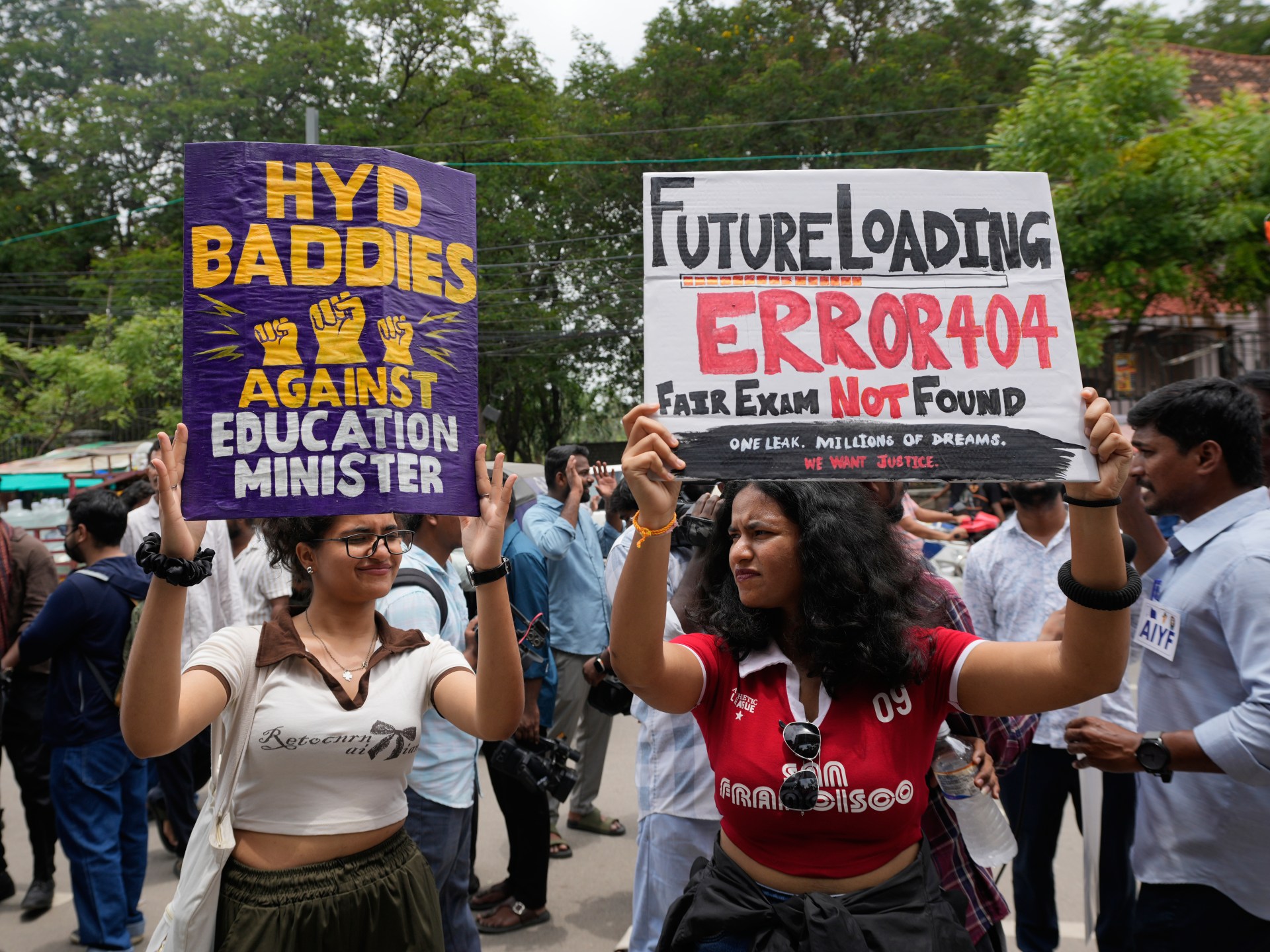
A satirical youth group born from outrage over a judge’s “cockroaches” remark has become a street protest campaign over India’s exam system. Al Jazeera reported that the Cockroach Janta Party, or CJP, is drawing students angry about alleged paper leaks, cancelled tests and the pressure of high-stakes admissions.
The movement has found an audience among candidates such as Ayush Shimpi, a 20-year-old from Gadchiroli in Maharashtra who sat India’s National Eligibility cum Entrance Test, known as NEET, on May 3. Shimpi told Al Jazeera he had spent two years outside formal education preparing for the medical entrance exam and felt relief when it ended.
Nine days later, according to Al Jazeera, the government cancelled the test over allegations of leaked papers and broad irregularities. The exam has been rescheduled for June 21. More than two million candidates were competing for fewer than 130,000 medical college places, Al Jazeera reported, and several students died by suicide after the cancellation.
From insult to organising
The CJP emerged after Chief Justice of India Surya Kant made a controversial comment during a court hearing last month, referring to some unemployed young people as “cockroaches” and linking them to media, social media and right-to-information activism.
Abhijeet Dipke, a 30-year-old Indian student in Boston, responded online by asking what would happen if the “cockroaches” came together, according to Al Jazeera. On May 16, he announced the Cockroach Janta Party, a satirical name that echoes Prime Minister Narendra Modi’s Bharatiya Janata Party.
The group set up a website and asked people to sign up as members. Dipke had previously worked briefly with the Aam Aadmi Party, Al Jazeera reported, a political party that grew out of anti-corruption mobilisations in 2012 and later governed Delhi for a decade.
Dipke returned to India on June 6 for the CJP’s first public rally at Jantar Mantar in New Delhi. The group demanded the resignation of federal Education Minister Dharmendra Pradhan, accusing him of failing to prevent leaks and irregularities in important exams.
Media reports cited by Al Jazeera put attendance at fewer than 2,000 people. Dipke gave Pradhan a same-day deadline to quit, then extended it by seven days; after speaking in severe heat, he suffered heat exhaustion and was taken away from the rally.
Rallies spread beyond Delhi
CJP spokesman Saurav Das told Al Jazeera the Delhi turnout was respectable for an organisation less than a month old. He said the group lacks the structure of a registered organisation or union, making on-the-ground mobilisation harder.
The CJP later held rallies in Pune, Jaipur, Amritsar, Bengaluru and Hyderabad, according to Al Jazeera. In Jaipur, Dipke was slapped several times by people who approached him while he was being carried by supporters; he later posted on X that the movement would continue peacefully and repeated the demand for Pradhan to resign.
The group says its campaign could return to New Delhi later this month if Pradhan does not step down. Al Jazeera reported that a CJP online petition demanding Pradhan’s removal had received more than 800,000 signatures.
At a Pune rally, the CJP released an “exam manifesto” calling for compensation of 10,000 rupees per candidate when a paper leak occurs, a more transparent testing process, physical evaluation of answer sheets and an independent audit of government contracts with private exam agencies. Das said CJP representatives plan to meet members of parliament before the monsoon session to press them to raise the issue.
Online reach and political doubts
The CJP has relied heavily on social media while rejecting sections of India’s mainstream press that critics call “godi media,” or “lap media,” for perceived support of the Modi government. Al Jazeera reported that the CJP Instagram page gained more than 22 million followers in less than a month and that its protest reels had passed 400 million views by Monday.
Modi wrote on X on June 13 that his government was working toward “youth-led development.” Das called the statement hypocritical, telling Al Jazeera the prime minister had not addressed student suicides, paper leaks or the ongoing youth protests.
Analysts quoted by Al Jazeera differed on the CJP’s prospects. Journalist and former AAP politician Ashutosh said he doubted the movement could shake the government without broader support from established public figures. Columnist Ajaz Ashraf said the CJP reflects anger over educational corruption, unemployment and living costs, while journalist Saba Naqvi said it had drawn political interest from young people who usually avoid politics.
This story draws on original reporting from Al Jazeera.