
Russia limits fuel sales as refinery strikes strain supplies
Ukrainian drone attacks have disrupted Russian refining capacity, forcing rationing, export curbs and emergency measures in some regions.
By Lucas Ferreira · Science & Environment Writer
3 min read
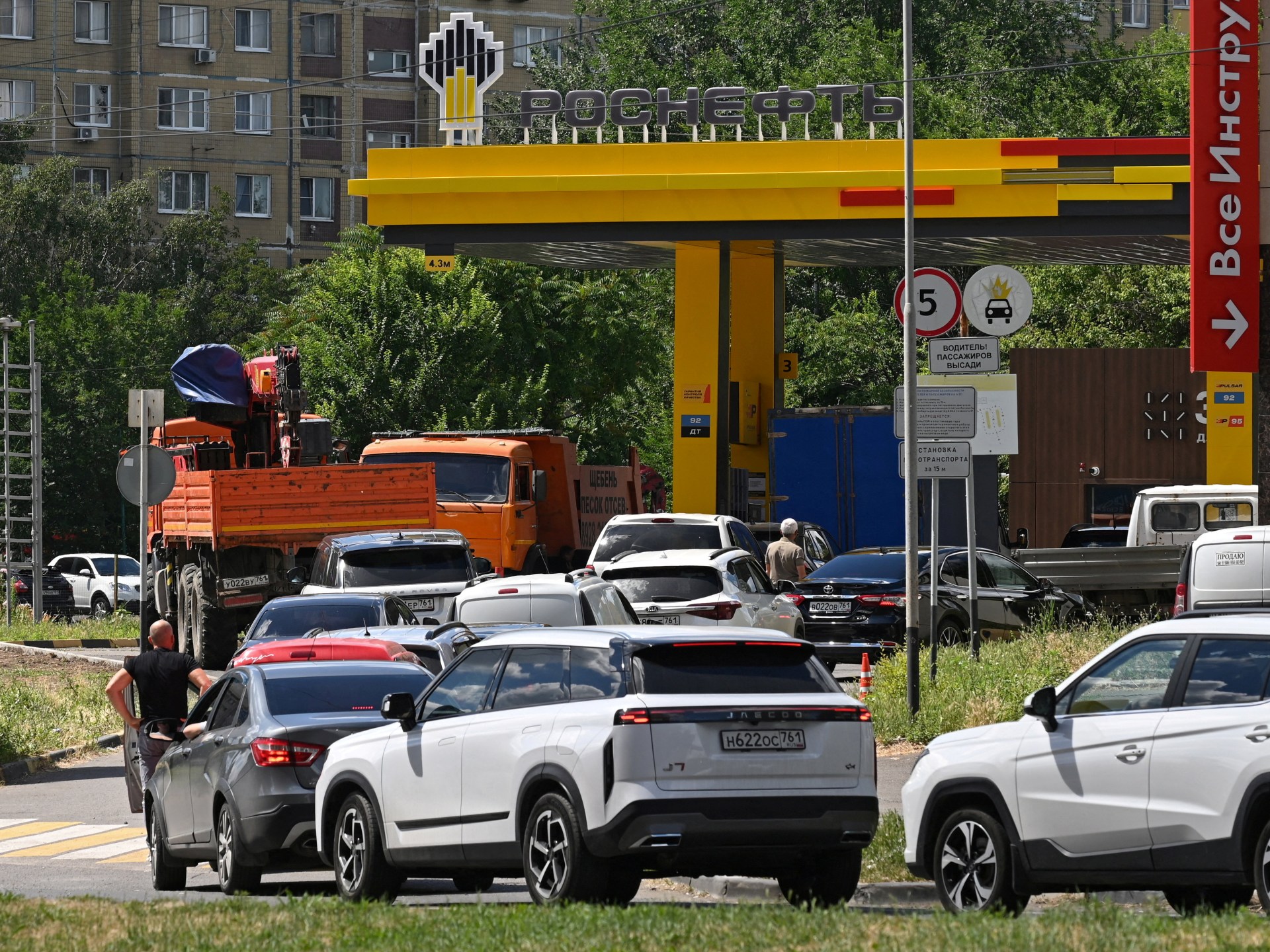
Russia is tightening controls on domestic fuel supplies after Ukrainian drone strikes damaged refinery operations and worsened shortages across the country, Al Jazeera reported. The crunch matters because it is hitting drivers, farms and transport networks while Moscow tries to keep prices capped during the war in Ukraine.
Queues at petrol stations have become common in several parts of Russia, including Moscow, according to Al Jazeera. Some drivers have waited for hours, while some stations have run out of fuel entirely.
A Moscow woman identified as Irina told Al Jazeera she was worried about the uncertainty and did not know where the situation was heading. Another Moscow resident, Igor, told the broadcaster that the situation could become harder to control if fuel problems forced major industries to stop work. Both asked that their surnames not be used.
Refineries under pressure
Stanislav Mitrakhovich, an expert at the National Energy Security Fund at the Russian Financial University, told Al Jazeera that the crisis was deep and that Russian authorities had been slow to recognise it publicly. He said that response had increased public distrust and encouraged panic buying.
Mitrakhovich said indirect signs suggest Ukrainian drone attacks have put about one-quarter of Russia’s oil refining capacity out of action. He also said seasonal demand has added to the pressure, with some regions more exposed because they do not have local refineries.
Areas closer to the fighting are in a worse position, Mitrakhovich told Al Jazeera, adding that restrictions and rationing have already been used there for some time. In Russia-controlled Crimea, authorities have declared a state of emergency, according to Al Jazeera.
Rationing and import plans
Russian authorities have introduced limits on fuel purchases, Al Jazeera reported. Sales are often capped at roughly 20 to 30 litres per vehicle, and motorists are generally required to pump fuel directly into vehicle tanks rather than into jerry cans.
The government has already banned exports of petrol and jet fuel, according to Al Jazeera. Officials are also considering restrictions on diesel exports, while authorities have temporarily relaxed fuel-quality rules to allow lower-grade fuel to be sold domestically.
The timing is sensitive for Russian agriculture. Al Jazeera reported that authorities are prioritising diesel supplies for farmers as the harvest season approaches, in an effort to avoid damage to food security.
Moscow has also turned to outside suppliers. Reuters, citing industry sources, reported that Russia has brought in 60,000 to 80,000 tonnes of petrol from India. Al Jazeera reported that Russia plans to import 400,000 tonnes of petrol a month from various countries, with Belarus and Asian markets among the options.
Putin says shortages are not critical
Russian President Vladimir Putin has acknowledged that attacks on energy facilities are causing problems, but he said the shortage was not critical, according to Al Jazeera. He called for faster refinery repairs and increased production of high-demand air defence systems.
Ukraine is pressing its advantage. Al Jazeera reported that President Volodymyr Zelenskyy has authorised a 40-day military and intelligence campaign intended to increase pressure on Russia to end the war.
Mitrakhovich told Al Jazeera that the direction of the crisis will depend on which side proves more effective: Ukraine’s drone strikes or Russia’s air defences.
This story draws on original reporting from Al Jazeera.