
Soil bacterium slows its growth to survive antibiotic stress
Researchers found Bacillus subtilis uses a control switch that favors stress tolerance over speed, challenging assumptions drawn from E. coli.
By Priya Raghavan · Science Reporter
3 min read
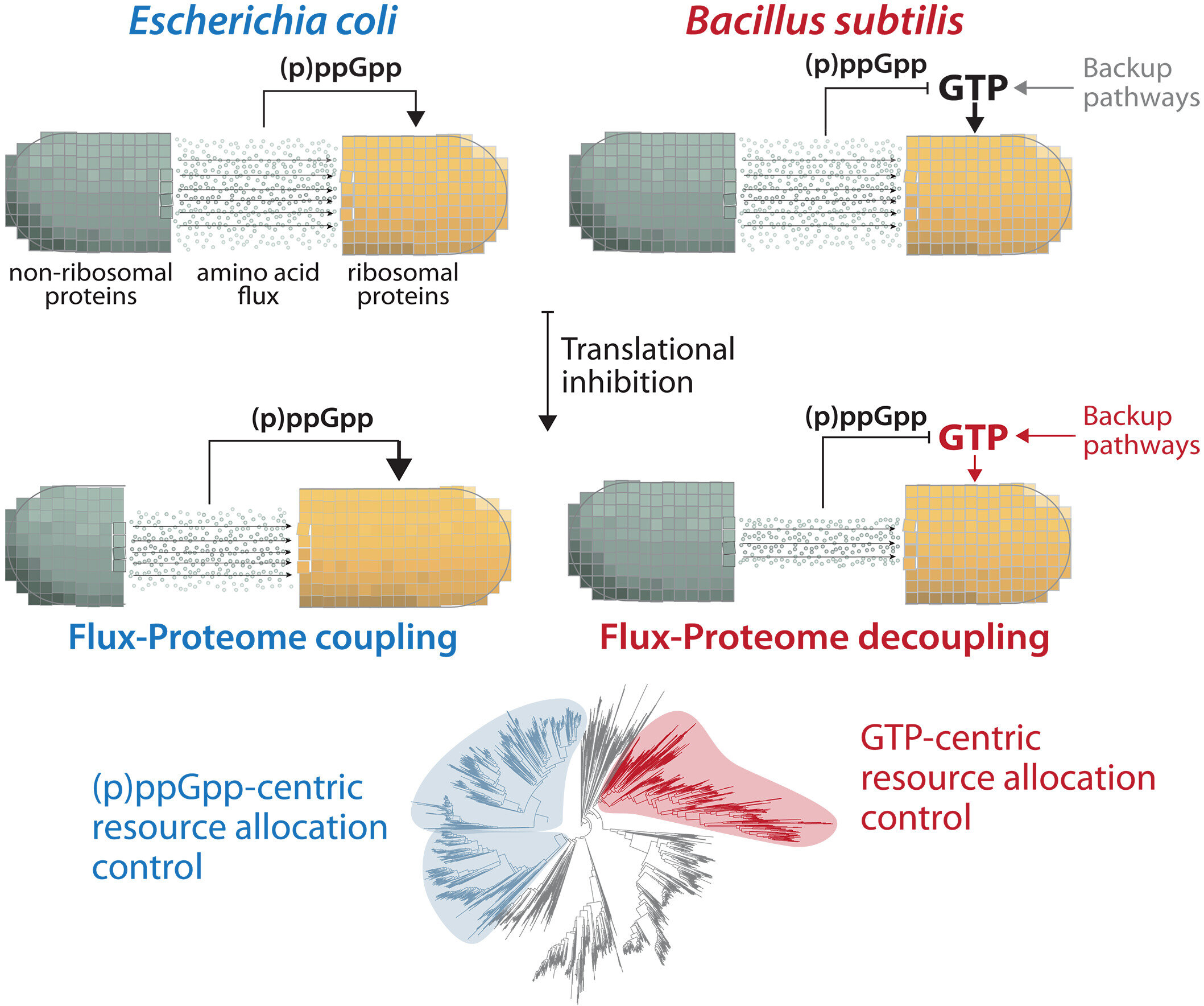
A UC San Diego-led research team has found that Bacillus subtilis can restrain its own growth under antibiotic stress, a strategy that differs from the fast-growth model long associated with Escherichia coli. The finding, published in Science, could affect how researchers think about bacterial stress survival and antibiotic tolerance.
According to UC San Diego, E. coli has often served as the model for broader assumptions about bacteria because it is among the most studied bacterial species. E. coli typically grows as quickly as conditions permit, sometimes doubling in about 20 minutes, and scientists had expected other bacteria to manage resources in a similar way.
The new work focused on B. subtilis, a bacterium commonly found in soil. Researchers in the lab of UC San Diego physics professor Suckjoon Jun first noticed an unexpected difference about a decade ago while trying to reproduce an E. coli result in B. subtilis, the university said.
A different response to stress
In E. coli, when an antibiotic partly interferes with protein production, the cell responds by making more ribosomes, the molecular machinery that builds proteins, according to UC San Diego. The Jun lab expected B. subtilis to do the same, but its ribosome levels did not rise.
After repeated tests produced the same result, Jun worked with Jue D. Wang, a bacteriology professor at the University of Wisconsin-Madison who studies the bacterial stringent response. That response helps bacteria cope with hostile conditions, including nutrient shortages and antibiotics, according to UC San Diego.
The collaboration pointed to two different control systems. In E. coli, a molecule called (p)ppGpp helps adjust ribosome production when amino acid supplies fall, keeping protein-making capacity aligned with available materials, according to the Science paper.
B. subtilis relies on guanosine triphosphate, or GTP, as a key control signal, the researchers reported. GTP supports core cellular processes, including protein synthesis, and also helps regulate stress responses. Under difficult conditions, GTP levels in B. subtilis drop.
That drop reduces amino acid production while ribosome levels remain steady, according to the study. The result is slower growth, but the researchers found that the trade-off can make the cells more tolerant of stress.
Growth speed versus survival
UC San Diego said experiments by the Jun and Wang labs found B. subtilis survived antibiotic environments better than E. coli. The university said the result may relate to persistence, a phenomenon in which a small share of bacterial cells survives antibiotic exposure without genetic resistance and later resumes growth when conditions improve.
Jun said, according to UC San Diego, that the work challenges the common expectation that bacteria aim to grow as fast as possible. In B. subtilis, the researchers found that changing the control system could speed growth, but also left the cells more exposed to stress.
The paper, by Ryan Thiermann and colleagues, is titled “Decoupling of global metabolic flux and proteome partitioning in bacteria” and appeared in Science. The study is available at DOI: 10.1126/science.aeb6410.
The findings do not show that all bacteria use the same slow-growth strategy. They do suggest, according to UC San Diego, that researchers may need to look beyond E. coli when studying how bacteria balance reproduction against survival under antibiotic pressure.
This story draws on original reporting from Phys.org.