
Rubio and Wang discuss US-China tensions at ASEAN meeting
The top US and Chinese diplomats met in Manila as disputes over the South China Sea, Iran and a planned Xi visit shaped ASEAN talks.
By Lucas Ferreira · Science & Environment Writer
4 min read
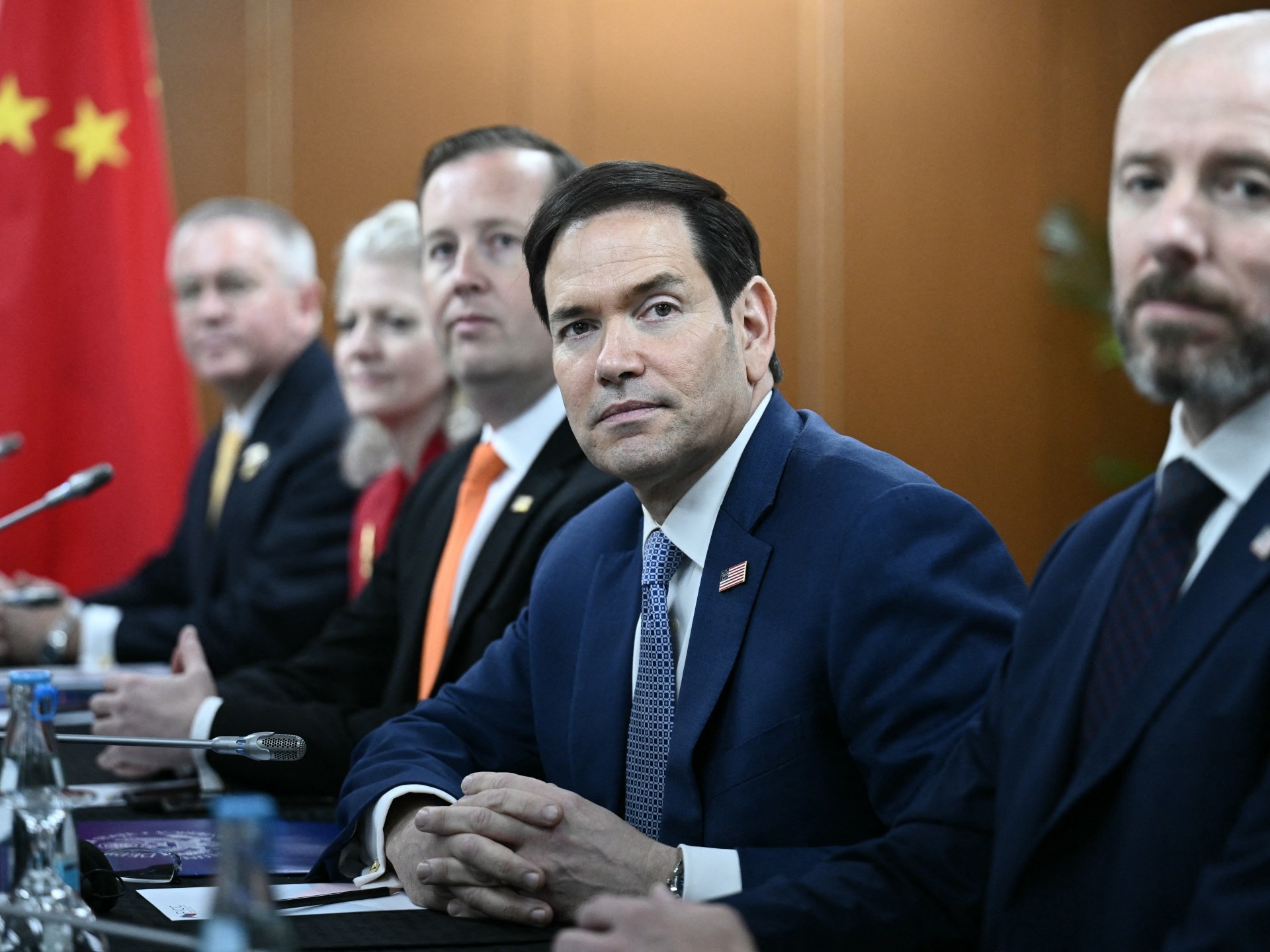
US Secretary of State Marco Rubio met Chinese Foreign Minister Wang Yi in Manila on Wednesday as Washington and Beijing tried to keep high-level diplomacy on track despite disputes over security and regional influence. Al Jazeera and Reuters reported that the talks took place on the sidelines of an Association of Southeast Asian Nations foreign ministers’ meeting, ahead of an expected visit by Chinese President Xi Jinping to the United States in September.
Rubio said the two countries have “great differences” that are likely to continue “for the foreseeable future,” according to Al Jazeera and Reuters. He said he and Wang discussed how to manage those disputes so Xi’s planned US visit can be “very positive.”
China’s Ministry of Foreign Affairs said the meeting was “pragmatic, positive and constructive.” In an official summary, Wang said Washington should “respect China’s core interests,” manage disputes and address what Beijing called China’s legitimate concerns.
The Chinese ministry said both sides agreed to prepare for the next stage of senior-level exchanges. Al Jazeera and Reuters reported that the meeting came as relations have also been strained by US President Donald Trump’s allegations that China interfered in US elections, claims Beijing has rejected as “pure fabrication.”
South China Sea tensions shadow talks
The ASEAN meeting has been dominated in part by concern over China’s conduct in the South China Sea and the US war against Iran, Al Jazeera and Reuters reported. ASEAN governments had voiced concern about both issues during the gathering.
Rubio’s meeting with Wang followed a confrontation on Monday between Chinese and Philippine vessels at the disputed Second Thomas Shoal. According to Al Jazeera and Reuters, the Philippines said a Chinese coastguard member hit a Philippine navy staff member on the head with a wooden baton, while China said Philippine personnel attacked first and accused Philippine vessels of ramming a Chinese patrol boat.
Rubio said the clash benefited no one, according to Al Jazeera and Reuters. He said the United States had told counterparts in its meetings that it remains bound by its defence treaty commitments to the Philippines.
“We intend to live up to our treaty obligations, and I think we’ve done so, and will continue to do so,” Rubio said.
Rubio had also written in Philippine media on Tuesday that Beijing’s actions in the South China Sea could create “dire new threats” if the waters came under the control of a power prepared to use trade as a geopolitical tool, according to Al Jazeera and Reuters. Beijing claims nearly all of the South China Sea through a map line that overlaps with the exclusive economic zones of Brunei, Indonesia, Malaysia, the Philippines and Vietnam.
Al Jazeera and Reuters reported that tensions between China and the Philippines have risen in recent years as Manila has taken a firmer position and expanded defence links with the United States, Australia and Japan. A US State Department fact sheet said Washington has raised military financing for the Philippines to $100m for the 2026 fiscal year and is adding $9m to expand a coastguard pier on Palawan to support maritime law enforcement in the South China Sea.
Iran and Ukraine also raised
Rubio told ASEAN foreign ministers that Iran was responsible for the latest escalation with Washington, according to Al Jazeera and Reuters. He said Tehran was “not serious about talks,” adding that the United States would protect its interests and those of its allies if Iran did not engage.
Al Jazeera and Reuters reported that the United States has struck Iran for eleven straight nights, including recent attacks on roads, bridges and power plants, a campaign that has severely damaged an interim peace deal reached last month. Rubio also said Iran could not be allowed to control the Strait of Hormuz because of the precedent it could set elsewhere.
Rubio said he would meet Russian Foreign Minister Sergei Lavrov on Thursday to discuss the war in Ukraine, according to Al Jazeera and Reuters. He said Washington remained willing to play a constructive role in efforts to end the conflict.
This story draws on original reporting from Al Jazeera.