
Retired Israeli officers meet Palestinian cave dwellers amid settler attacks
A Palestinian farmer in Masafer Yatta hosted former Israeli security chiefs who are warning that West Bank settlement growth threatens Israel’s future.
By Daniel Okafor · Business Editor
3 min read
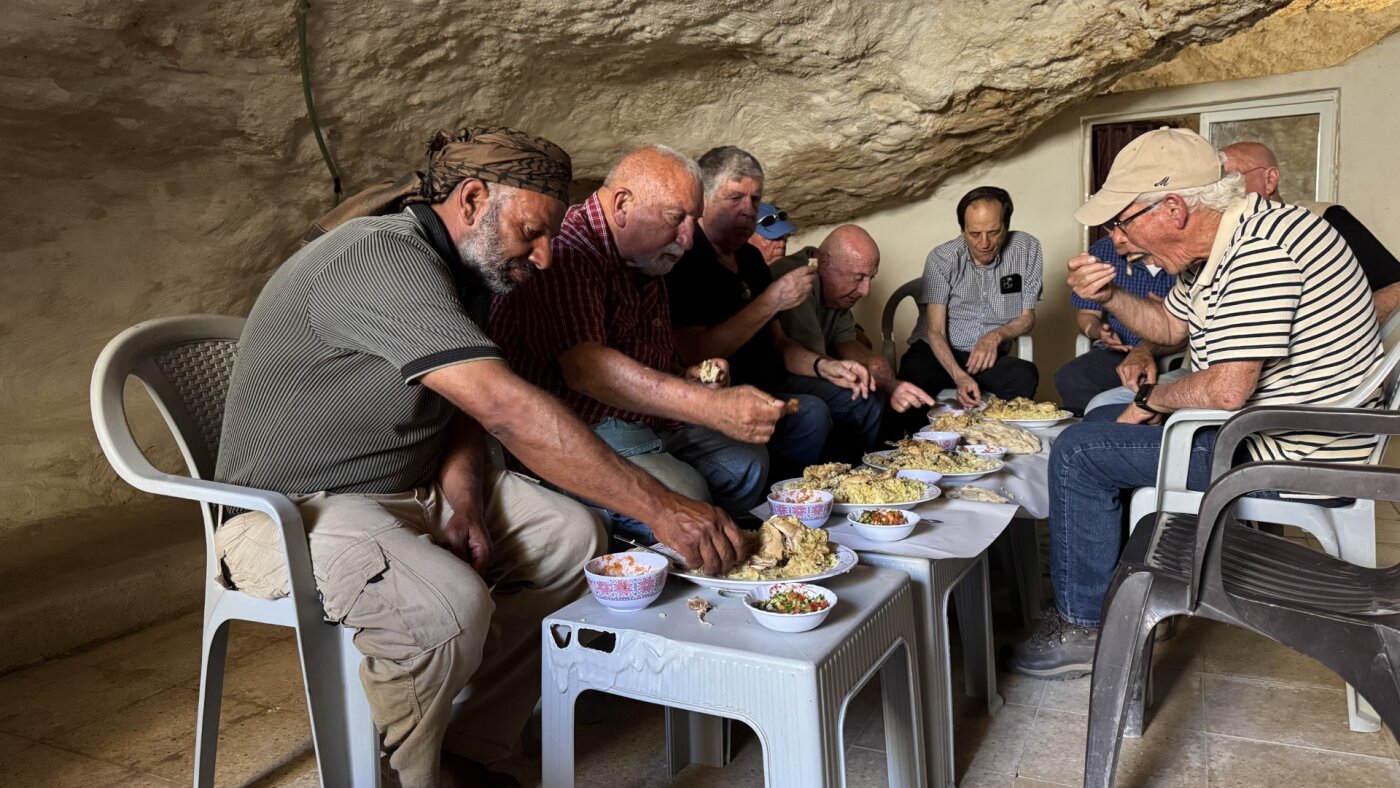
A Palestinian farmer who says Israeli settlers beat him at his cave home in the occupied West Bank hosted a group of retired Israeli security officers for lunch, NPR reported. The meeting in Masafer Yatta highlighted rising settler violence and a widening Israeli debate over settlements in territory Palestinians want for a future state.
Mohammed Abu Sabha, 49, told NPR that seven men arrived in two cars in January and attacked him with clubs, leaving him with serious injuries to his head and leg. He said he lost consciousness and woke up in a hospital.
Abu Sabha said he had installed a security camera because of growing attacks in the area. NPR reported that he gave Israeli police video of the assault but said he had not heard back from authorities.
Former officers visit Masafer Yatta
The lunch guests included eight members of Commanders for Israel’s Security, a group made up of former Israeli generals and other senior security officials, according to NPR. Many of them once served in roles that included protecting Jewish settlers in the West Bank.
Yoni Shimshoni, a retired Israeli brigadier general and former West Bank brigade commander, told NPR that conditions in the territory were unacceptable on human, Jewish and universal grounds. Another retired general, Mendy Or, organized the visit and said many Israelis were avoiding the issue.
Abu Sabha served the visitors chicken and saffron rice inside the family cave, NPR reported. He told NPR his family has lived there for generations, with relatives and animals sharing the same home.
The cave has natural limestone walls and ceilings, with tile, carpets, electricity, a refrigerator, a dining table and sleeping mats, according to NPR. Abu Sabha and his wife have six children, and families in the area survive by raising sheep and goats and, in some cases, growing wheat.
Violence and settlement growth
The United Nations has recorded more than 1,000 settler attacks on Palestinians in the West Bank in each year from 2023 through 2025, NPR reported, citing U.N. data. The U.N. says this year’s pace could exceed 2,000 attacks.
Those incidents include assaults, killings, damage to homes and vehicles, livestock theft and cut water lines, according to NPR’s summary of U.N. reporting. NPR also reported that militant Palestinians attack Jewish settlers, though less frequently.
Israeli settlements have expanded in the West Bank since Israel captured the territory in the 1967 Middle East war, NPR reported. About 750,000 Jewish Israelis now live in the West Bank and East Jerusalem, amounting to nearly 10% of Israel’s Jewish population, according to NPR.
Finance Minister Bezalel Smotrich recently said the government had approved 75 new communities in what many Israelis call Judea and Samaria, NPR reported. Human rights groups say strong backing from Israel’s government has emboldened settlers, while prosecutions for attacks remain uncommon, according to NPR.
Shimshoni told NPR that Israel’s control of the West Bank and expanding settlements are harming prospects for peace with Palestinians. He described the issue as Israel’s gravest security challenge because of what he sees as the threat it poses to Israel’s future as a liberal, democratic, Jewish and secure state.
Or told NPR that failed peace talks in the late 1990s and early 2000s left settlements continuing to grow. As the retired officers left Abu Sabha’s cave, NPR reported, an Israeli military helicopter passed overhead during a training flight.
This story draws on original reporting from NPR.