
Quebec Bill 21 faces Supreme Court decision on religious-symbols ban
Canada’s top court is due to rule on Quebec’s Bill 21, testing how far the notwithstanding clause can shield a law from rights challenges.
By James Whitfield · Staff Writer
3 min read
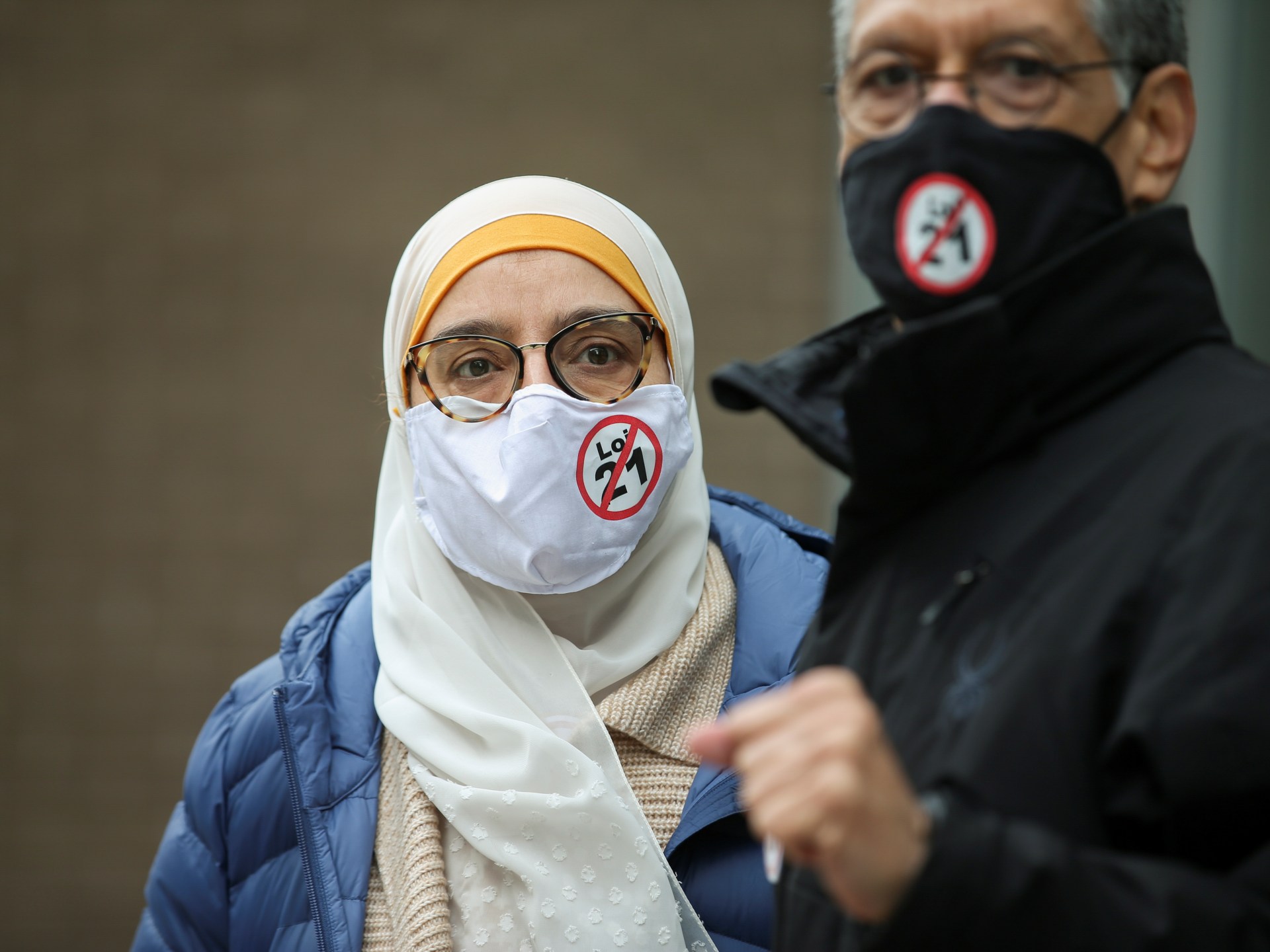
Canada’s Supreme Court is scheduled to issue its Quebec Bill 21 Supreme Court decision on November 27, 2026. The case will decide challenges to Quebec’s ban on religious symbols for certain public employees and could clarify the reach of the Charter’s notwithstanding clause, according to CBC News and a legal case preview by Supreme Advocacy.
Quebec enacted Bill 21 in June 2019. The law bars certain officials, including public-school teachers, police officers and prosecutors, from wearing religious symbols while doing their jobs, Supreme Advocacy reported. CBC described the measure as applying to civil servants such as teachers and police officers.
What is the Quebec Bill 21 Supreme Court case about?
The appeal concerns the constitutionality of Bill 21, formally the Act respecting the laicity of the State, and Quebec’s use of notwithstanding clauses in the Canadian and Quebec charters. Section 33 allows governments to override Charter section 2 and sections 7 through 15, but does not extend to section 3 democratic rights or section 23 minority-language education rights, according to Supreme Advocacy.
Challengers argue that the law has a disproportionate effect on women, particularly Muslim women who wear a hijab, and that it interferes with English school boards’ authority under section 23, Supreme Advocacy reported.
Quebec argues that its use of the override is valid, that section 28’s guarantee of equal enjoyment of Charter rights by both sexes is an interpretive provision rather than a separate equality right, and that section 23 does not protect broader cultural preferences unrelated to language, according to the legal preview.
The Supreme Court hearing took place in March, CBC reported. The court will have eight justices deciding the appeal after Justice Mahmud Jamal recused himself because he had led the Canadian Civil Liberties Association when it chose to challenge the law; CBC said Justice Mary Moreau was excluded to prevent a four-to-four split.
The English Montreal School Board, the National Council of Canadian Muslims and the Canadian Civil Liberties Association are among the groups challenging the law, CBC reported.
How did Bill 21 reach Canada’s top court?
A Quebec Superior Court judge largely upheld Bill 21 in 2021, finding that it infringed rights of religious minorities but that the province’s use of the notwithstanding clause allowed those infringements, according to CBC. The judge also found that the law’s uncovered-face rule could not apply to members of the National Assembly because of section 3, and that parts of the law did not apply to English school boards under section 23, Supreme Advocacy reported.
The Quebec Court of Appeal later overturned the English-school-board exception while leaving the section 3 exception in place, according to Supreme Advocacy. Challengers appealed that result, while Quebec cross-appealed the remaining democratic-rights finding.
Bill 21 has had reported effects beyond the court dispute. In a 2022-23 survey of 411 Muslim women conducted for the National Council of Canadian Muslims and York University researcher Nadia Hasan, 73% of respondents said the law had affected their job search, 48% said they believed they had not been hired because of their religious identity, and 88% said it made Quebec less welcoming, Al Jazeera reported. Those figures reflect the views of survey respondents, not a province-wide estimate.
The case does not cover a separate proposal to restrict religious symbols worn by students in Quebec schools. CTV News reported that the proposed student measure would go beyond Bill 21, while Al Jazeera reported that Bill 94 has expanded restrictions first introduced under Bill 21.
This story draws on original reporting from Al Jazeera.