
Qatar says U.S. and Iran agree to keep indirect talks going
Qatar said U.S. and Iranian negotiators made progress in separate meetings mediated by Qatar and Pakistan, with another round expected after Khamenei’s funeral.
By Lucas Ferreira · Science & Environment Writer
4 min read
U.S. and Iranian negotiators held separate meetings in Qatar on Wednesday and agreed to continue discussions, according to Qatar’s Foreign Ministry. Qatar said the talks, also involving Pakistani mediators, produced “positive progress” as the sides seek terms for a broader agreement.
Majed al-Ansari, a spokesman for Qatar’s Foreign Ministry, said on X that the next meeting would be arranged “at the earliest possible time” after the funeral of Iran’s previous supreme leader, Ayatollah Ali Khamenei. The funeral is scheduled to begin Saturday in Tehran, according to Qatar’s statement.
U.S. Mideast envoy Steve Witkoff and Jared Kushner, President Donald Trump’s son-in-law, were in Qatar for the talks, the Associated Press reported. Iran’s top negotiator, Kazem Gharibabadi, also took part in discussions with mediators, according to Iranian state media.
Hormuz dispute remains central
The negotiations are aimed at settling details that could allow top leaders to approve a final agreement, the Associated Press reported. Disputes over the Strait of Hormuz and Lebanon remain major obstacles, according to the report.
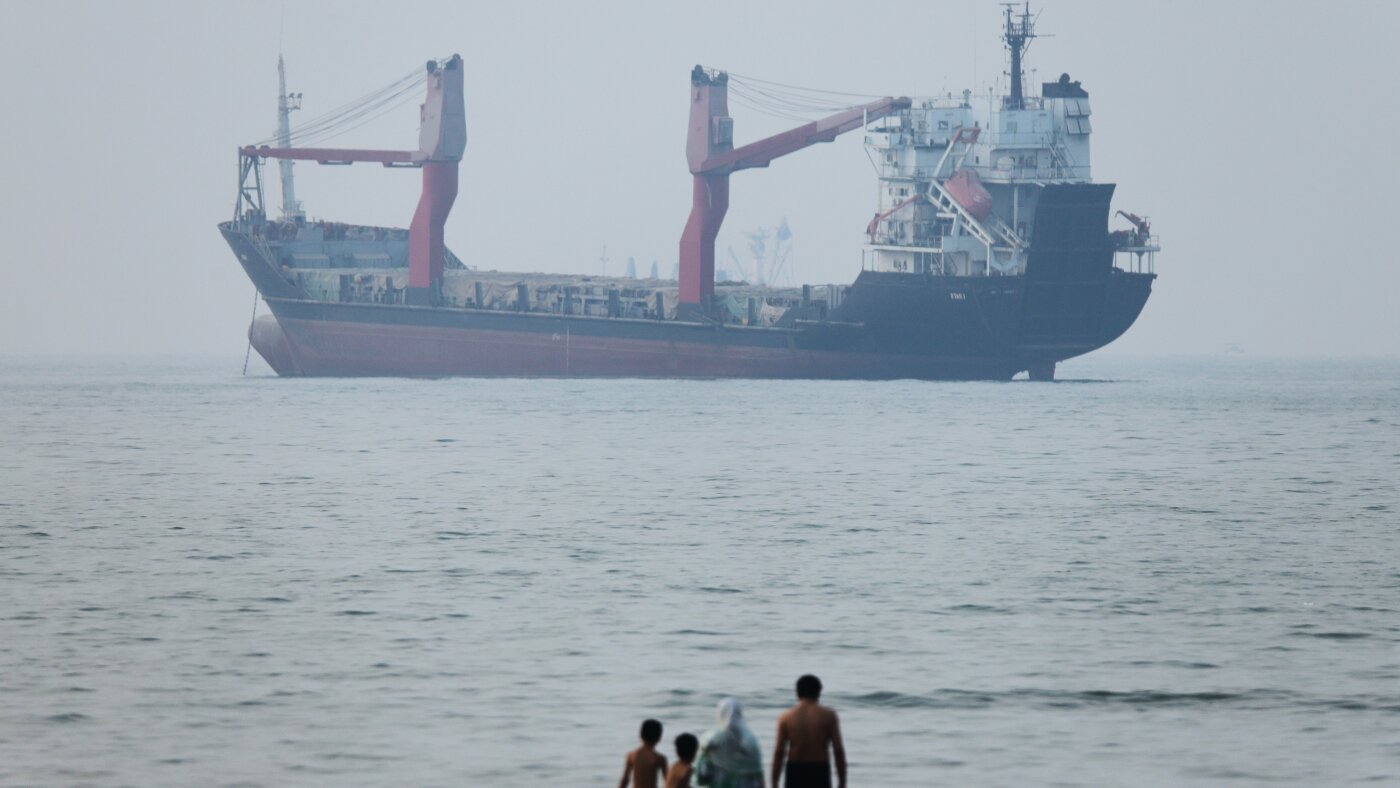
Iranian state television said Wednesday that a foreign container ship had run aground in the strait after taking a route that Iran had not approved. The report did not provide further details about the vessel.
Tehran’s account appeared to reinforce Iran’s claim that it controls navigation through the Strait of Hormuz, the Associated Press reported. The AP said the waterway has long been treated internationally as open for passage and that about one-fifth of the world’s oil and natural gas moved through it in peacetime.
Since the United States and Israel launched a war against Iran on Feb. 28, Iran has used its ability to restrict passage through the strait as leverage, the Associated Press reported. Under an interim arrangement, Iran and the United States agreed to allow ships to pass without fees for 60 days, but Tehran has insisted it controls vessel routes and later wants to charge for passage, according to the AP.
The United States and many Gulf Arab states oppose the fees, the Associated Press reported. An effort by Oman and a United Nations agency to open a route closer to Oman’s coast was followed by attacks across the Middle East last weekend, according to the AP.
Iranian state television said shippers should follow instructions from Iran’s paramilitary Revolutionary Guard in the strait. The Guard’s navy has warned that using routes other than what it calls the “Route of Authority” could cause “irreparable incidents,” according to Iranian state television.
Qatar meets both delegations
Qatar’s government said Witkoff and Kushner met with Qatar’s emir, Sheikh Tamim bin Hamad Al Thani, and Foreign Minister Sheikh Mohammed bin Abdulrahman Al Thani. U.S. Vice President JD Vance told reporters in the United States that the discussions included shipping through the Strait of Hormuz.
“Obviously, we’re worried about the nuclear issue,” Vance said. “We’re going to start talking about that.”
Sheikh Mohammed also met with Gharibabadi and other Iranian officials, with Pakistani mediators present, according to Qatar and Iranian state media. Gharibabadi said Iran’s delegation did not speak directly with the Americans and that its talks with mediators covered Lebanon and plans to return some frozen Iranian assets, Iranian state media reported.
Lebanon remains part of the negotiations, the Associated Press reported. Iran has demanded an end to fighting between Hezbollah, the Iranian-backed militia, and Israeli military forces, and has called for Israel to leave territory it holds in southern Lebanon, according to the AP. Israel says it must keep that territory and retain freedom to strike Hezbollah, which has attacked northern Israel, the AP reported.
Navy searches after helicopter landing
Separate from the talks, the U.S. Navy’s 5th Fleet said Wednesday that an MH-60S Sea Hawk helicopter made an emergency water landing in the Arabian Sea, leaving one crew member missing. The Navy said three of the four crew members were rescued and said there was “no indication” hostile action caused the emergency.
The Navy said the helicopter was assigned to the USS George H.W. Bush, one of two aircraft carriers deployed in waters off Iran. The statement did not say whether the aircraft had sunk or been recovered.
This story draws on original reporting from NPR.