
Notting Hill Carnival Jab Jab parade: the Grenadian-rooted dawn masquerade
Jab Jab is a devil-themed Grenadian masquerade within Carnival’s early J’ouvert celebrations, using oil, horns and anti-slavery satire.
By Lucas Ferreira · Science & Environment Writer
3 min read
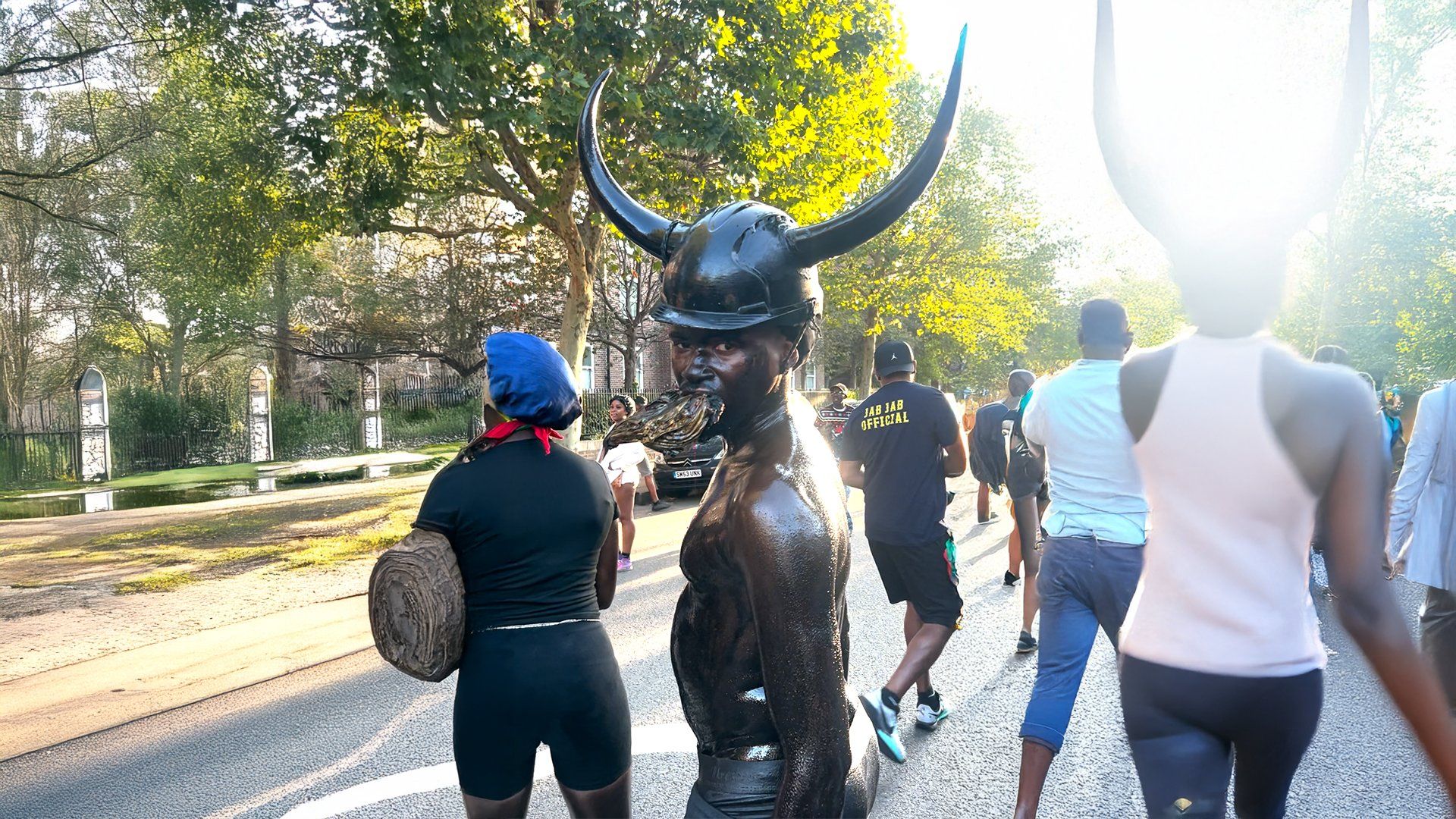
The Notting Hill Carnival Jab Jab parade is a dawn masquerade that brings a Grenadian-rooted Caribbean tradition into London’s annual celebration. It is part of the wider early-morning J’ouvert atmosphere, rather than the Carnival’s entire parade programme, and its costumes carry a reported history of satire about slavery and oppression.
Al Jazeera reported on August 30 that hundreds of participants take part each year, wearing devil horns, covering their skin with motor oil and parading at daybreak to mark the start of Carnival. Participants told the broadcaster that the event helps keep the Grenadian tradition alive.
What is the Jab Jab parade at Notting Hill Carnival?
Jab Jab is a form of Caribbean masquerade in which people take on devil-like characters. The official Notting Hill Carnival programme lists J’ouvert on Sunday, August 30, 2026, as part of Families and Children’s Day, though the supplied programme does not separately list Jab Jab.
J’ouvert is the broader pre-dawn Carnival celebration. The Guardian says its name comes from the French phrase jour ouvert, or “opening of the day.” Time Out describes the event as an early-morning gathering featuring paint, powder and steel bands; that does not mean all J’ouvert participants are taking part in Jab Jab.
Why do Jab Jab participants wear horns and oil?
The visual language of Jab draws on the devil figure. The Guardian reports that the term “jab” comes from the French word diable, meaning devil. Horns and oil are among the common features reported at Notting Hill, while chains, snakes, black paint, and meat or fish held in the mouth have also appeared in the tradition.
Those details are not a required costume list. The Guardian reported that colourful powders and paint can be used in place of the mud and oil associated with Caribbean practice, and described jab as a satirical representation of the oppressions of slavery.
Where does the tradition come from?
Jab has related traditions in more than one Caribbean country. The Guardian traces Jab Molassie to Trinidad and Jab Jab to Grenada. At Notting Hill, Al Jazeera’s reporting identifies the particular masquerade as an expression of Grenadian tradition.
That background distinguishes Jab Jab from the wider Carnival programme, which includes other forms of music, costume and parade. For 2026, the official Carnival website scheduled J’ouvert for Sunday, followed by children’s events and Carnival activities; the adult parade was scheduled for Monday.
- Jab Jab is a specific devil-themed masquerade tradition.
- J’ouvert is the wider early-morning Carnival celebration in which it is seen.
- Horns, oil and other materials are reported practices, with symbolism tied to a history of anti-slavery satire.
This story draws on original reporting from Al Jazeera.