
NATO leaders gather in Ankara as Trump presses allies on defence
The summit brings all 32 NATO members to Turkiye, with spending pledges, Ukraine’s air defences and alliance unity on the agenda.
By Sofia Marchetti · World Affairs Correspondent
4 min read
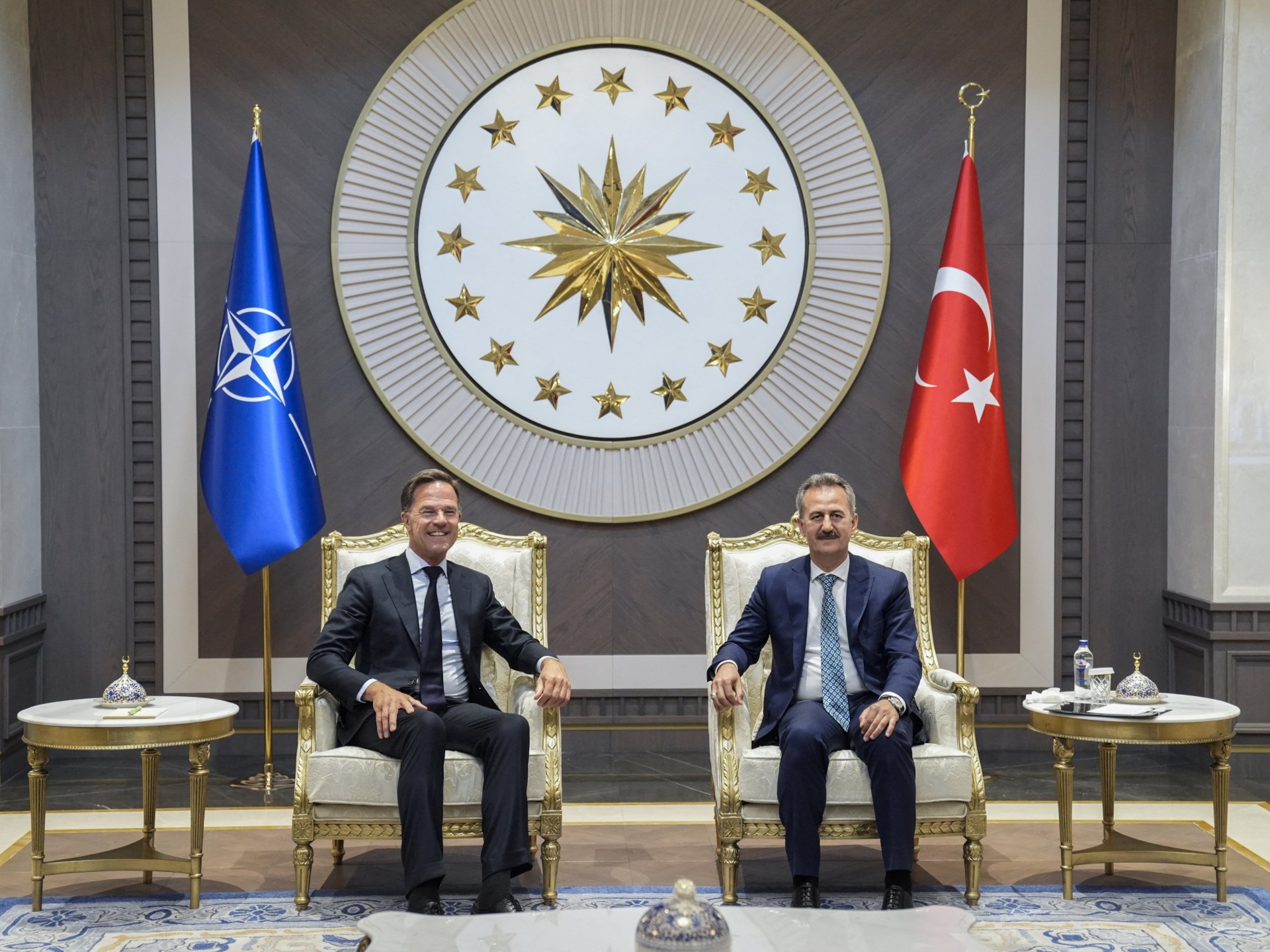
NATO leaders opened a two-day summit in Ankara on Tuesday as US President Donald Trump again pushed allies to spend more on defence. The meeting tests whether the alliance can turn larger military budgets into usable capability while keeping support for Ukraine visible.
Al Jazeera reported that leaders from all 32 NATO member states are attending the summit in Turkiye. Ukrainian President Volodymyr Zelenskyy and South Korean President Lee Jae-myung are also expected, although their countries are outside the alliance.
Australia, Japan and New Zealand are sending defence or foreign ministers, according to Al Jazeera. Bahrain, Kuwait, Qatar and the United Arab Emirates are also represented after being affected by the US-Israel war on Iran, the network reported.
Syrian President Ahmed al-Sharaa is not expected at the NATO gathering, but Al Jazeera reported that he is due to hold a separate bilateral meeting with Trump in Ankara.
Spending pledges move to the centre
Defence spending is the central issue for Trump, who has questioned NATO’s value since his first presidential campaign and argued that the United States carried too much of the burden, according to Al Jazeera. At that time, only five member states met the alliance’s previous benchmark of spending 2 percent of gross domestic product on defence.
At the 2025 NATO summit, members agreed to raise their long-term target to 5 percent of GDP by 2035, Al Jazeera reported. That total includes 3.5 percent for military spending and 1.5 percent for broader security-related needs.
NATO figures cited by Al Jazeera show every member is now estimated to be at or above the 2 percent threshold for 2025. Poland leads the list at 4.3 percent of GDP, followed by Lithuania at 4 percent, Latvia at 3.7 percent and Estonia at 3.4 percent, according to NATO data.
Ozgur Unluhisarcikli, the German Marshall Fund’s regional director for Turkiye, told Al Jazeera that this year’s discussion is expected to focus on converting spending promises into military capability. He said European allies had begun upgrading defence industries after agreeing last year to the 5 percent target.
Paolo von Schirach, president of the Global Policy Institute, cautioned that bigger budgets do not quickly produce battlefield-ready forces. He told Al Jazeera that more orders could eventually mean more military hardware, but the results will take years.
Ukraine seeks air defences
Zelenskyy is scheduled to meet Trump on Wednesday, Al Jazeera reported. Ukraine is expected to ask for additional Patriot air defence systems as Russian attacks on Ukrainian cities intensify.
A Russian drone attack on Kyiv killed at least 11 people on Monday morning, according to Al Jazeera. Jack Watling, a senior research fellow at the Royal United Services Institute, told the network that Ukraine wants political and military-technical backing from alliance members to show Russia that support will continue.
Watling said there is a direct link between the number of interceptors sent to Ukraine and the damage Russia can cause with ballistic missiles, according to Al Jazeera.
Questions over unity
European countries are expected to announce billions of dollars in military contracts at the summit, Al Jazeera reported, with some analysts viewing the moves as an effort to satisfy the Trump administration. Trump said after European nations did not join the war on Iran that he wanted their “loyalty” rather than their money, according to the network.
Trump also said he might not have attended the summit if it were not hosted by Turkish President Recep Tayyip Erdogan, Al Jazeera reported. Turkiye has increased defence spending in recent years and has become one of NATO’s largest military exporters, according to the network.
On the eve of the summit, Trump called Germany’s defence spending “ridiculous,” Al Jazeera reported. German Chancellor Friedrich Merz defended Berlin’s budget, saying it represented the country’s greatest effort to strengthen its defence capabilities.
The United States has also announced a phased withdrawal of warplanes, destroyers and submarines from NATO countries, according to Al Jazeera. Watling told the network that the removal of US air power would have a more tangible effect than reductions in infantry or armour.
Von Schirach told Al Jazeera the summit’s main value is political: showing allies are still meeting and trying to project unity despite disagreements. He said Ankara is more about reassurance and signalling than immediate changes on the ground.
This story draws on original reporting from Al Jazeera.