
Mourners fill Tehran for Khamenei funeral as Trump says fire will pause
Crowds gathered for a second day of rites for Iran’s late supreme leader while Washington signaled talks with Tehran would resume afterward.
By Daniel Okafor · Business Editor
3 min read
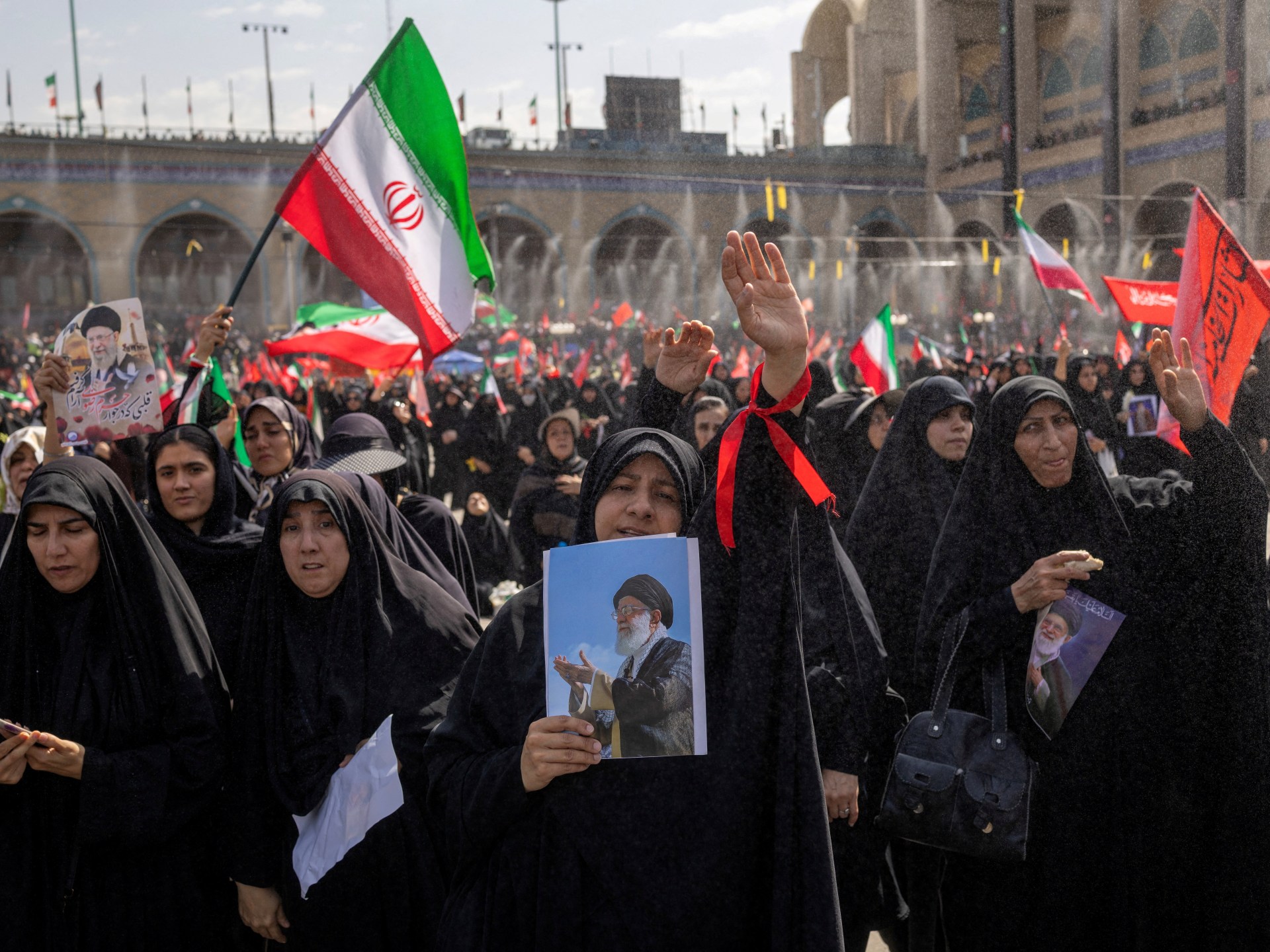
Large crowds gathered in Tehran for funeral ceremonies for Iran’s late Supreme Leader Ayatollah Ali Khamenei, whom Al Jazeera reported was killed in a US-Israeli strike on his compound on February 28. The rites are taking place amid war involving Iran, the United States and Israel, with President Donald Trump saying fire would pause during the proceedings.
Al Jazeera reported that supporters viewed Khamenei’s body for a second day at Tehran’s Grand Mosalla Hall despite a heatwave. Water misters were set up at the site, and volunteers handed out cold drinks to mourners, according to the network.
A Reuters photograph carried by Al Jazeera showed coffins draped in the colors of Iran’s flag on a stage at the Imam Khomeini Grand Mosalla in Tehran on July 4. A portrait of Ayatollah Ruhollah Khomeini, the leader of Iran’s 1979 revolution, was also displayed, according to the caption.
Trump said that “neither side will shoot the other during the funeral proceedings” and that talks with Iran would continue after the ceremonies, Al Jazeera reported. The network also reported that Trump suggested Israeli Prime Minister Benjamin Netanyahu could visit the White House as soon as next week, which it said would be Netanyahu’s first US trip since the start of the war on Iran.
New posture in Tehran
Al Jazeera’s Ali Hashem reported that Iran’s political system survived the assassination of Khamenei and several senior officials, but has changed in the aftermath. Hashem wrote that Mojtaba Khamenei, the late leader’s son and successor, has moved to consolidate his position and has chosen a more direct confrontation with neighboring countries, the United States and Israel.
According to Hashem, Iran’s new approach centers on deterrence and signals that any new war against the country would spread beyond its borders. He reported that Tehran’s stance on the Strait of Hormuz has become the clearest sign of that policy, with Iran sending the message that instability at home would disrupt normal oil trade for others.
Hashem also reported that Iran has tied the war in Lebanon to any truce and responded after an Israeli attack on Beirut’s southern suburbs. In his analysis, Lebanon is now part of Iran’s broader security calculation rather than a separate front.
Iran is also using Khamenei’s funeral route in Iraq to send a regional signal, Hashem reported. He wrote that taking the ceremony through Najaf and Karbala shows Tehran’s intent to maintain influence across the Shia world.
Fighting continues elsewhere
Al Jazeera reported that Israeli forces continued attacks on Gaza, killing at least two Palestinians in northern Gaza City and the Jabalia refugee camp. The network also reported continued Israeli attacks on Lebanon, including an Israeli claim that it killed one person in the Majdal Zoun area inside what Israel calls its security buffer zone.
Turkish President Recep Tayyip Erdogan accused Israel of undermining a recent memorandum of understanding between the United States and Iran, according to Al Jazeera. Erdogan said Turkiye was ready to support efforts to achieve peace in the region, the network reported.
This story draws on original reporting from Al Jazeera.