
Coordinated attacks hit army positions across Mali
Mali’s army said it repelled assaults on multiple towns as Tuareg separatists and an al-Qaeda-linked group claimed involvement.
By James Whitfield · Staff Writer
3 min read
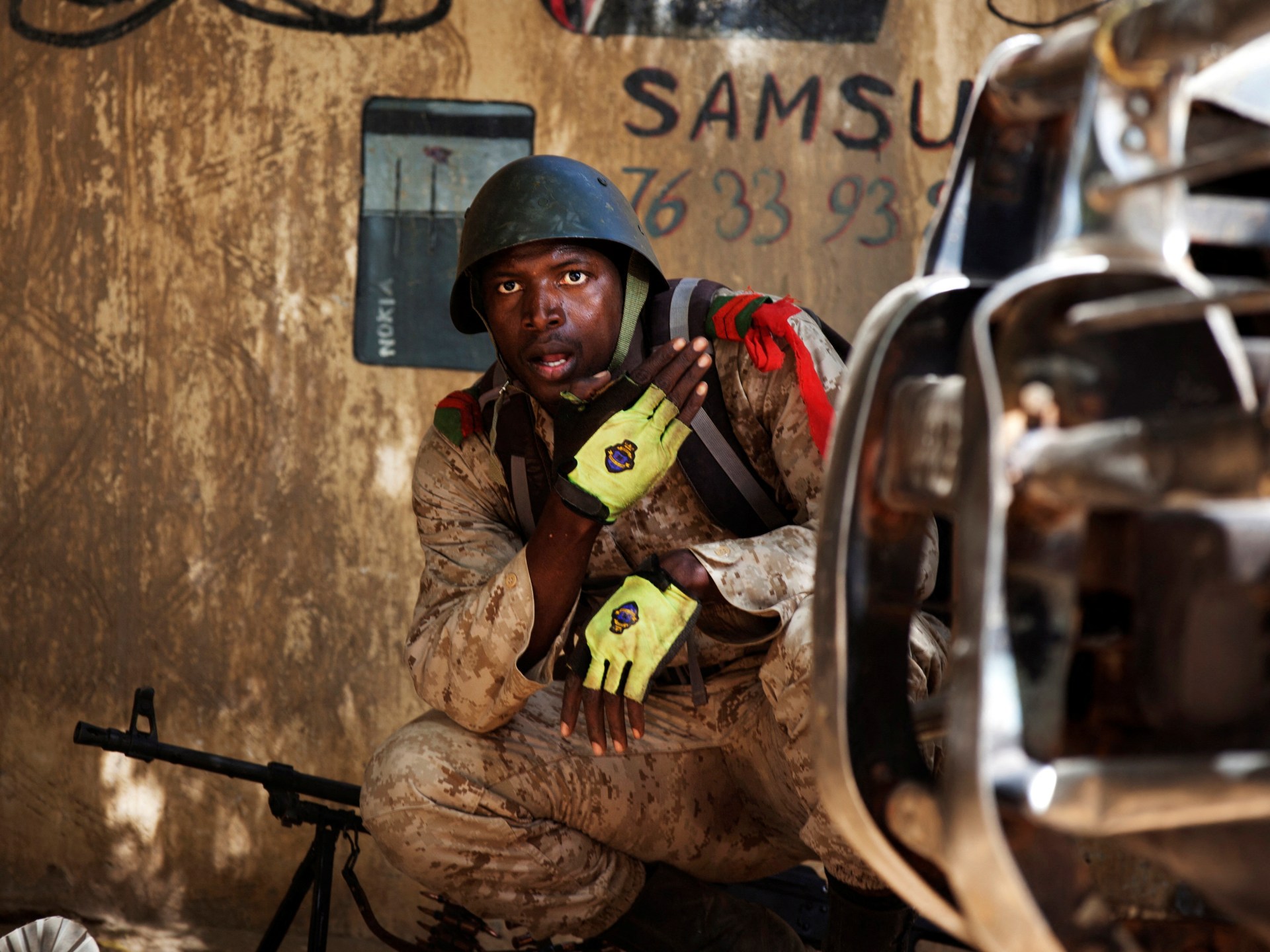
Armed groups attacked military positions across Mali on Saturday, renewing pressure on the country’s military government and its Russian-backed partners. The assaults matter because they showed coordination between groups that have challenged state control from northern Mali to areas closer to the capital.
Al Jazeera reported that the attacks targeted several towns and included a base used by Malian troops and Russian forces. A Tuareg-led separatist group and an al-Qaeda-linked regional group claimed roles in the operations, according to Al Jazeera and Reuters.
Army reports attacks in north, centre and south
The Malian army said in an initial statement that five positions came under attack: Aguelhok, Anefis and Gao in the north; Sevare in central Mali; and Kenieroba in the south, Al Jazeera reported.
The army later said the situation was “totally under control,” according to Al Jazeera. It said 20 “terrorists” were killed in Sevare and six in Gao, while one pro-government fighter was killed and four others were wounded in Gao.
In a later statement, the army said it had also repelled attacks in Konna and Somadougou, both in central Mali, with support from Africa Corps, a Russian-backed paramilitary group, Al Jazeera reported.
Africa Corps posted videos on Telegram on Sunday that appeared to show a drone strike on a rebel position in Anefis and a Russian soldier on a building at a base in Aguelhok, according to Al Jazeera. Al Jazeera said it could not independently verify the footage.
In Kenieroba, Al Jazeera reported that a major prison complex where members of Mali’s political opposition are held reportedly came under attack.
Groups claim involvement
A spokesperson for the Azawad Liberation Front, or FLA, told Reuters the Tuareg-dominated rebel group took part in the attacks. Jama’at Nusrat al-Islam wal-Muslimin, known as JNIM, also claimed responsibility, saying it attacked and seized at least seven positions held by the army or pro-government fighters, Al Jazeera reported.
Al Jazeera said JNIM’s claim could not be independently verified. The attacks followed coordinated assaults in late April that targeted Bamako and other locations across Mali, which Al Jazeera reported were carried out by the same groups and killed Defence Minister Sadio Camara.
According to Al Jazeera, JNIM was formed in 2017 as a coalition linking al-Qaeda in the Islamic Maghreb’s Saharan branch with Malian armed groups Ansar Dine, Katina Macina and al-Mourabitoun. Al Jazeera reported that the group is led by Iyad Ag Ghali and has fighters in border areas of Mali, Niger and Burkina Faso.
The FLA was formed in 2024 from a coalition of separatist forces in northern Mali, Al Jazeera reported. The group is led by Alghabass Ag Intalla and is part of a long-running Tuareg push for self-determination and independence.
Security crisis under military rule
Mali has faced repeated rebellions, coups and armed-group violence since independence in 1960, according to Al Jazeera. In 2012, Tuareg separatists allied with al-Qaeda-linked fighters took control of northern Mali before those fighters pushed them aside and seized key cities, prompting French military intervention in 2013 at the government’s request.
Al Jazeera reported that President Ibrahim Boubacar Keita was ousted in an August 2020 coup after protests over the economy and security. Assimi Goita seized power in a second coup in May 2021, cut ties with France, expelled French forces and UN peacekeepers, and brought in Russia’s Wagner group in December 2021.
Wagner said last year it would leave Mali after more than three and a half years in the country, but Russian mercenaries remained under Africa Corps, Al Jazeera reported.
Alex Vines, Africa programme director at the European Council on Foreign Relations, told Al Jazeera that recent attacks have narrowed Malian state control into “securitised enclaves and corridors.” He said armed groups were coordinating military action and that foreign military support had shown limited success.
This story draws on original reporting from Al Jazeera.