
Japan earthquake 7.1 triggers tsunami warning and power outages
A magnitude 7.1 quake hit Kumamoto in southern Japan, cutting power to 40,000 homes and halting rail services, officials said.
By Daniel Okafor · Business Editor
2 min read
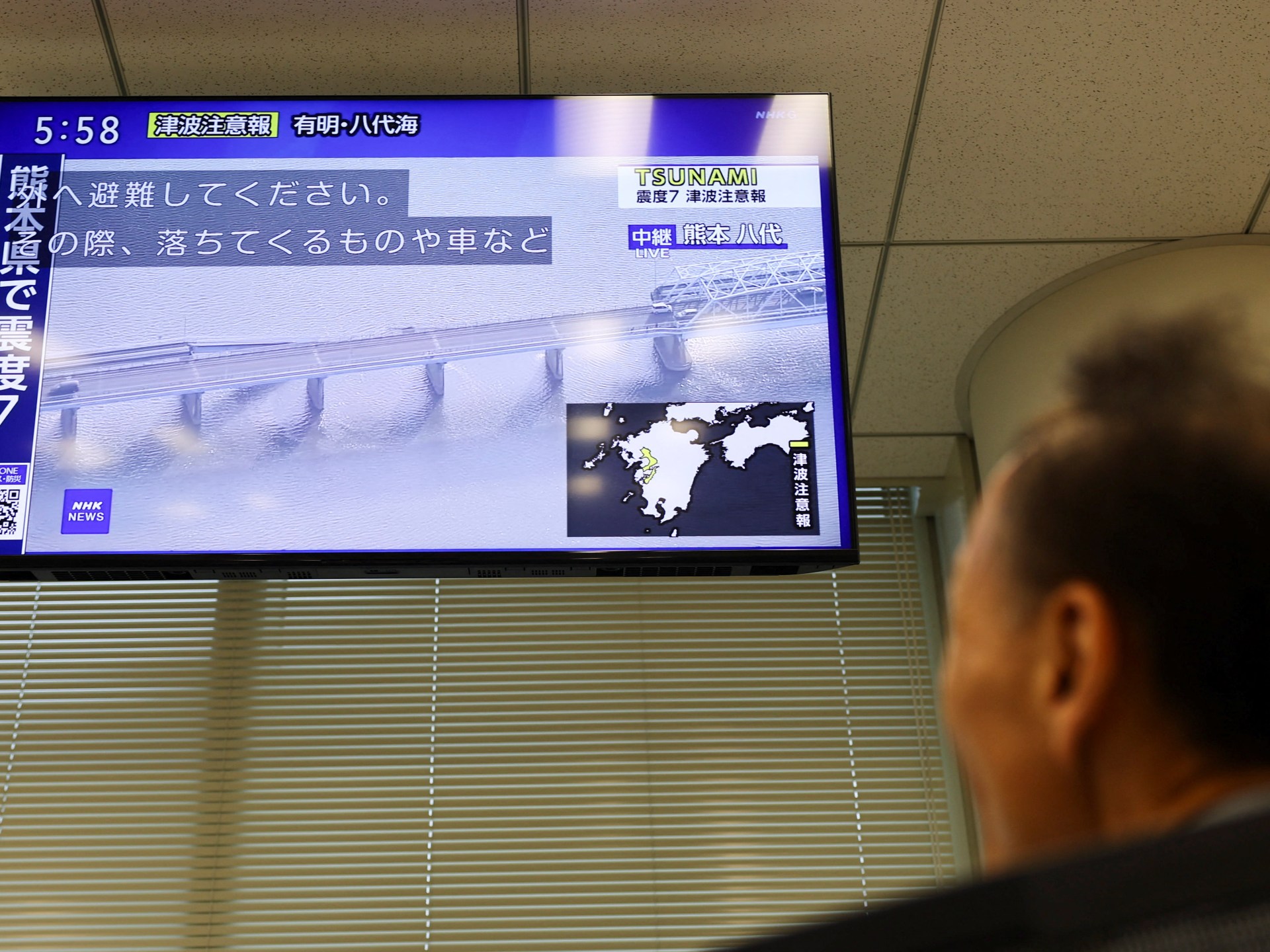
A Japan earthquake 7.1 struck southern Kumamoto prefecture on Tuesday, prompting tsunami warnings, cutting electricity and stopping rail services across parts of Kyushu. Japanese authorities warned residents in several prefectures to stay alert as aftershocks followed the quake.
The Japan Meteorological Agency said a tsunami warning was issued for waves as high as 1 metre, or 3.3 feet, after the earthquake. The Japanese government issued emergency earthquake warnings for Kumamoto, Nagasaki, Kagoshima, Fukuoka, Saga, Oita and Miyazaki prefectures, all on the southern island of Kyushu.
Where did the Japan earthquake hit?
The quake’s epicentre was in Uki, a city just south of Kumamoto, at a depth of 10km, or 6.2 miles, according to the reported official details. The Japan Times reported that strong shaking was felt in cities in Kumamoto and in nearby Nagasaki, Kagoshima, Fukuoka, Saga and Miyazaki prefectures.
Prime Minister Sanae Takaichi said on X that people in affected areas should remain on guard for the possibility of another quake of similar strength. She said the government was working to determine the scale of the damage as quickly as possible.
Power and transport disrupted in Kyushu
Kyushu Electric Power, a leading energy supplier in the region, said about 40,000 homes lost electricity because of the earthquake. JR Kyushu said it suspended rail services, including high-speed bullet trains.
Companies including Sony and TSMC, the world’s largest contract chipmaker, have plants in the quake’s path. There was no immediate clarity on whether any infrastructure had been damaged, according to the reports.
The Nuclear Regulation Authority said no irregularities had been reported at nuclear power stations in the area. Japan’s nuclear facilities are closely watched after major earthquakes because several plants are located in seismically active regions.
Why Japan faces frequent earthquakes
Japan is one of the world’s most earthquake-prone countries. It sits along the Ring of Fire, a belt of volcanoes and ocean trenches around much of the Pacific Basin, and accounts for about 20 percent of the world’s earthquakes of magnitude 6 or higher.
The country experiences tremors frequently, with one occurring at least every five minutes, according to the reported background data. That seismic risk shapes Japan’s building standards, emergency alerts and public safety systems.
Kumamoto has suffered deadly earthquakes before. Two large quakes in the prefecture 10 years ago killed 275 people and injured 2,739, according to an official count.
This story draws on original reporting from Al Jazeera.