
Israel advances West Bank settlement funding as sanctions widen
Foreign measures against settlers and officials have coincided with new Israeli steps on settlements, military posts and Gaza operations.
By Daniel Okafor · Business Editor
4 min read
Israel moved ahead with funding and military steps in the occupied West Bank as several Western governments expanded sanctions tied to settler violence, Al Jazeera reported on June 16. The measures show a widening gap between foreign pressure on Israel and the actions of its government in the West Bank and Gaza.
Peace Now, an Israeli group that monitors settlements, said the Israeli cabinet advanced a $388m plan for 69 settlements while bypassing regular planning procedures. The group said Israel has approved or retroactively legalised 103 settlements since late 2022, including 51 entirely new sites.
Sanctions and warnings
France barred Israeli Finance Minister Bezalel Smotrich from entering the country on June 9, along with four settler organisation leaders and 21 individual settlers, according to Al Jazeera. French Foreign Minister Jean-Noel Barrot cited Smotrich’s support for annexing the West Bank, resettling Gaza and causing the Palestinian Authority’s economic collapse.
France, the United Kingdom, Canada and Norway, in coordination with Australia and New Zealand, also imposed sanctions on networks accused of financing settler violence, Al Jazeera reported. Amnesty International said on June 10 that Israel was carrying out a state-backed campaign of ethnic cleansing in the West Bank to speed annexation; the Israeli military rejected the allegation.
UN Secretary-General Antonio Guterres told the Security Council the same day that settler violence was averaging six attacks a day, according to Al Jazeera. He said displacement in the occupied territory had reached levels not seen since 1967 and warned that any attempted annexation would have no legal validity.
West Bank pressure grows
Haaretz reported that the Israeli military announced a permanent post in Jenin refugee camp, which Al Jazeera described as the first standing Israeli presence in Area A since the Oslo Accords. Area A is meant to be under full Palestinian civil and security control. The army said the post would regulate troop deployment.
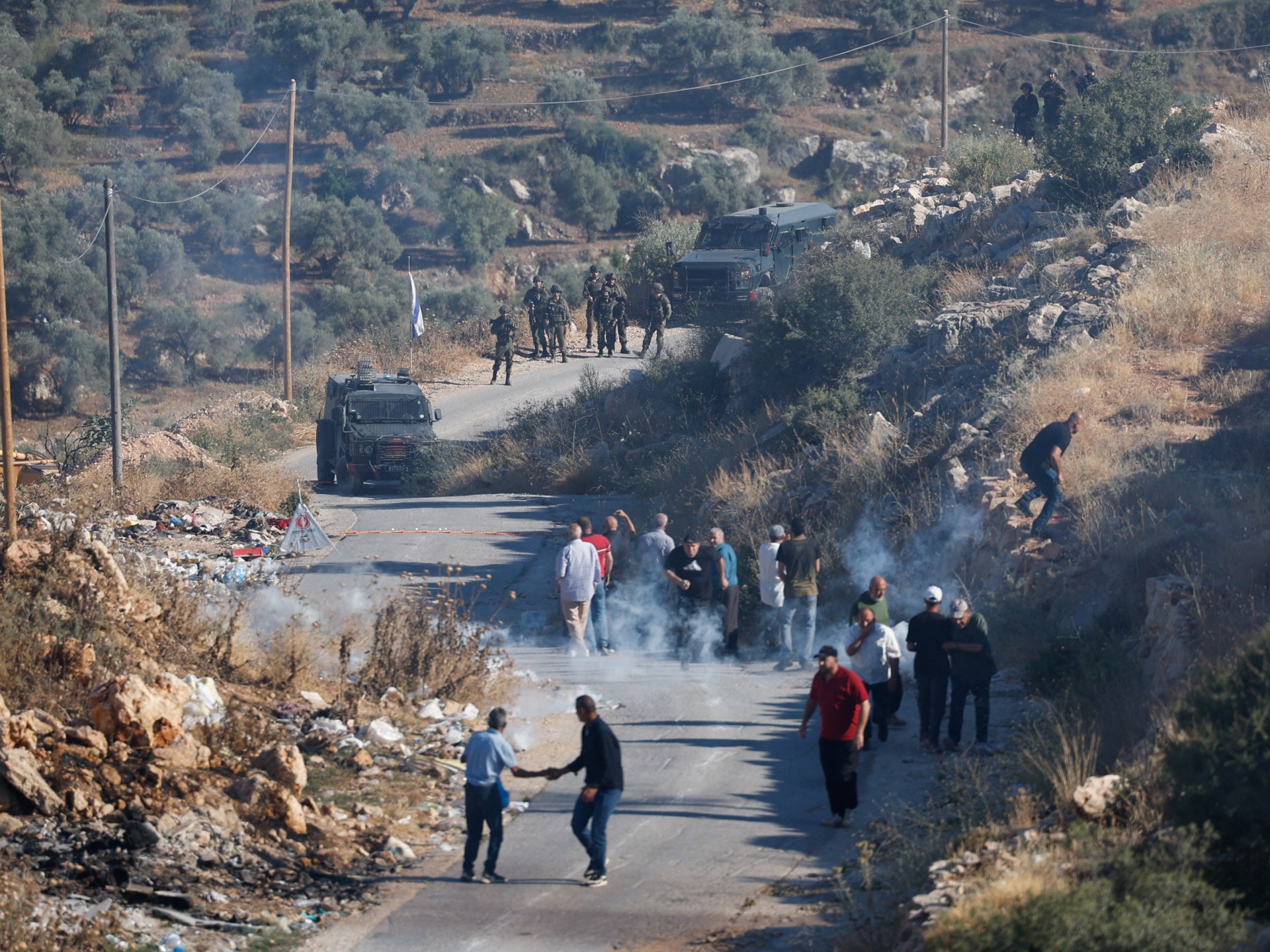
In Deir Abu Mash’al, northwest of Ramallah, residents tried for six days to prevent settlers from establishing an outpost on al-Qarana hill, according to Wafa and local activists cited by Al Jazeera. On June 15, settlers put up a second tent, attacked residents and a council member, and injured four Palestinians, one critically, while Israeli forces used tear gas and live fire, those accounts said.
Settlers also expanded or reinforced sites near al-Taybeh, Sinjil and areas south of Nablus, according to local activists cited by Al Jazeera. In Deir Dibwan and nearby Burqa, Wafa and local activists said 50 to 60 masked, armed settlers burned six vehicles, partly burned a home and set fire to entrances of mosques before residents put out the flames.
Local activists said Israeli authorities issued demolition and stop-work orders against structures near Yatta, demolished homes in Mikhmas and east of Yatta, and razed a poultry slaughterhouse in Ras Karkar. In areas east of Yatta, activist reports said forces demolished two family homes housing 25 people, two agricultural sheds, a wall and a water well, and uprooted 20 trees.
OCHA said more than 100 incidents since January have damaged or destroyed more than 190 water and sanitation structures across the West Bank. The UN agency said at least 10 communities in Masafer Yatta had been cut off from the water network.
Gaza deaths and aid shortages
In Gaza, the Health Ministry said the death toll since October 2023 had passed 73,000, while the toll since the ceasefire exceeded 990, according to Al Jazeera. An Israeli strike near Yemen al-Sa’eed Hospital in Jabalia killed at least four people on June 14, Al Jazeera reported.
Wafa and local activist reports said attacks in Nuseirat, al-Zawayda and Gaza City’s Tuffah neighbourhood killed several civilians, including a four-year-old girl. Al Jazeera also reported that three-year-old Rayan Abu al-Ajeen was shot dead on his family farm near the line marking continued Israeli military control inside Gaza.
Haaretz reported that Israeli officials approved plans for a possible return to large-scale fighting, citing intelligence that Hamas had rebuilt parts of its infrastructure. OCHA said more than 70 percent of Gaza’s population depends on trucked water, while funding shortages threaten supplies and cooked-meal production has fallen by half since March.
This story draws on original reporting from Al Jazeera.