
Israel-EU rift grows after reported Kallas apartheid comparison
Israel’s foreign minister suspended contact with the EU foreign policy chief, exposing divisions inside the bloc over policy toward Israel.
By James Whitfield · Staff Writer
4 min read
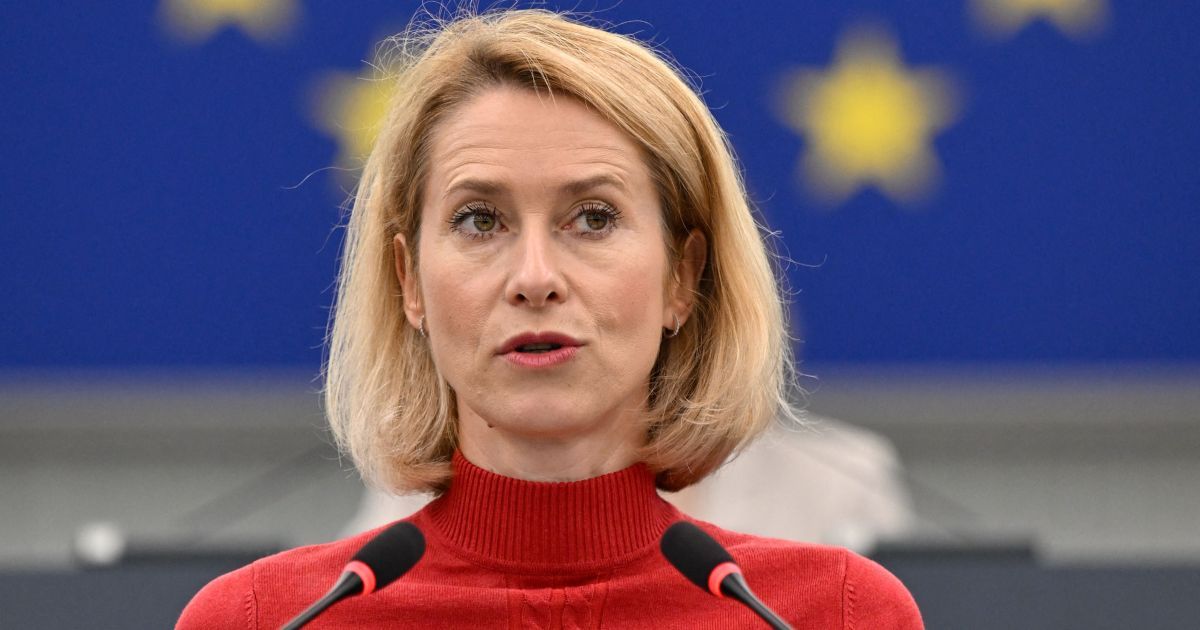
Israel’s foreign minister has said he will stop dealing with the European Union’s foreign policy chief, Kaja Kallas, after a report that she compared Israeli policies toward Palestinians with South Africa’s apartheid system. The dispute adds pressure to EU-Israel relations at a time when member states are split over sanctions, trade and the war in Gaza.
Euractiv reported, citing unnamed officials, that Kallas made the remarks during high-level talks with Mexican officials in May. The outlet said she privately likened Israel’s conduct in Gaza and the occupied West Bank to the racial segregation system that governed South Africa until the mid-1990s.
Israeli Foreign Minister Gideon Saar said Thursday on X that he had “no choice” except to cut contact with Kallas until she withdrew what he called a “blood libel” against Israel. Kallas responded on X by saying the EU remained committed to dialogue and a two-state solution; Al Jazeera reported that she did not deny the Euractiv account in that response.
The exchange comes as Israel faces proceedings in international courts over allegations of genocide and war crimes in Gaza. Israel has rejected such accusations in other proceedings, but the Al Jazeera report focused on the diplomatic fallout inside Europe.
EU divisions limit any wider break
Nele Anders, a Berlin-based analyst at the European Council on Foreign Relations, told Al Jazeera that the dispute reflects a wider problem for Kallas and the European External Action Service, the EU diplomatic arm she leads. Anders said foreign policy remains controlled largely by national capitals, while the European Commission under Ursula von der Leyen has taken a larger role in geopolitical issues.
Anders said EU-Israel ties are fractured, yet she did not expect a collective rupture. Any major EU step against Israel must pass through member states with sharply different positions.
Irish Prime Minister Micheal Martin told reporters at a European Council summit that the EU’s failure to act more forcefully against Israel damages Europe’s credibility. He also called Saar’s decision to cut ties with Kallas unacceptable, according to Al Jazeera.
Ireland has pushed for EU measures against Israel, including proposed sanctions on far-right Israeli ministers Itamar Ben-Gvir and Bezalel Smotrich over allegations involving the treatment of pro-Palestinian activists detained after Israeli forces intercepted a Gaza-bound aid flotilla. Al Jazeera reported that the EU has not reached the unanimity needed to approve those sanctions.
Trade agreement remains intact
The EU has imposed limited sanctions on some settler organisations, including measures approved in 2024 and again in May, according to Al Jazeera. Broader action has stalled, including proposals to restrict trade with settlements, which are considered illegal under international law.
The EU-Israel Association Agreement also remains in force. The pact, signed in 1995 and active since 2000, underpins the bloc’s relationship with Israel and covers trade, investment, research, innovation and education. Al Jazeera reported that the EU is Israel’s largest trading partner.
Ireland, Spain and Slovenia have argued for suspending the agreement, while Germany, Italy, Hungary and the Czech Republic have resisted, according to Al Jazeera. United Nations experts have also urged the EU to suspend the agreement, citing an International Court of Justice ruling that states must not help maintain an illegal situation in occupied Palestinian territory.
Anders told Al Jazeera that suspending the agreement would require unanimity, giving each member state a veto. She said Germany also has enough political weight to help form a blocking minority in areas decided by qualified majority voting.
Germany pushes back on Kallas remarks
German Chancellor Friedrich Merz distanced himself from Kallas’s reported language, telling reporters in Brussels that he did not share her wording. Armin Laschet, who chairs the German Bundestag’s Foreign Affairs Committee, described the remarks as anti-Semitic, according to Al Jazeera.
Felix Berenskotter, a lecturer in international relations at King’s College London, told Al Jazeera that Germany continues to show strong solidarity with Israel, though Berlin is examining more closely what that commitment requires. He said the German government has become more critical of Israeli actions, while remaining cautious about public rebukes.
Other EU states have shifted further. France recognised Palestinian statehood in September, while Spain, Norway and Ireland did so last year, according to Al Jazeera. France and Italy also instructed prosecutors this month to examine Ben-Gvir’s conduct toward their nationals during the interception of the Gaza aid flotilla.
Berenskotter told Al Jazeera the Saar-Kallas dispute is unlikely to produce a deeper EU-Israel crisis. He said Israel may be seeking to influence internal EU debates over the role of Kallas’s diplomatic service and the balance of power with the European Commission.
This story draws on original reporting from Al Jazeera.