
Iran attacks US bases in Middle East during Trump-Netanyahu meeting
CENTCOM said it intercepted all Iranian ballistic missiles aimed at US forces, as oil prices rose and Trump met Netanyahu.
By Sofia Marchetti · World Affairs Correspondent
3 min read
Iran attacks US bases became the latest flashpoint in the Middle East after the US military said it intercepted ballistic missiles fired by Iran at American forces in the region. The episode raised pressure on Washington’s pause in strikes against Iran and sent oil prices higher.
US Central Command said on X on Wednesday that Iran’s Islamic Revolutionary Guard Corps launched multiple ballistic missiles in what CENTCOM called an “attempted surprise attack” on US forces based in the Middle East. CENTCOM said every missile was intercepted and that US forces remained on high alert.
Jordan’s state news agency reported five missile interceptions over Jordan. The IRGC, in a statement carried by Iran’s IRIB broadcaster, said its air force had fired several ballistic missiles at a US airbase and a Central Command center in Jordan.
What happened in the Iran attacks on US bases?
US officials said Iran fired multiple ballistic missiles at American forces in the Middle East, and that US defenses intercepted them. Iranian state-linked reports said the IRGC targeted US military facilities in Jordan, while Jordanian media reported interceptions in the country’s airspace.
The IRGC framed the strike as a response to US actions, saying through IRIB that “the resistance will continue” as long as threats against Iran and what it called illegal US actions continue. Al Jazeera’s Resul Serdar, reporting from Tehran, described the attack as appearing pre-emptive rather than a direct response to an immediate strike.
The missiles were launched days after President Donald Trump halted a two-week US bombing campaign against Iran on July 24. Trump later said “good talks” were taking place with Iran, according to Al Jazeera, but he has also threatened to resume strikes if negotiations stall. Iran has denied that it is trying to restart talks with Washington.
Serdar said the new missile fire was likely to affect mediation efforts after 13 days of US-Iran exchanges. Jason Campbell, a senior fellow at the Middle East Institute, told Al Jazeera that Tehran appeared to be trying to regain initiative, adding that Iran may suspect the US pause is being used to prepare for more attacks.
Why did the timing draw attention?
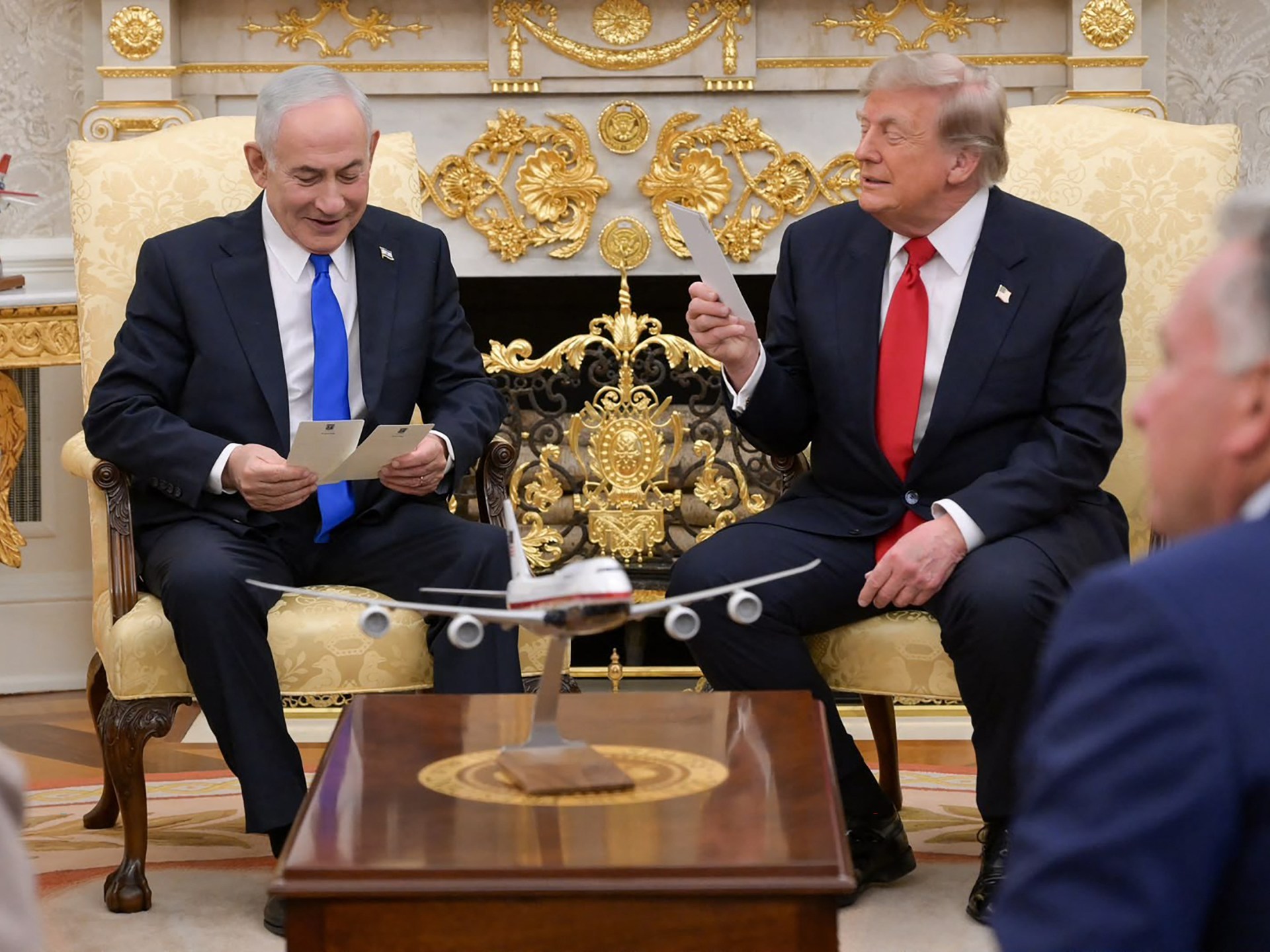
The Iranian missile launches came as Trump met Israeli Prime Minister Benjamin Netanyahu at the White House. Al Jazeera reported that Netanyahu has been pressing for war on Iran.
Al Jazeera’s Alan Fisher, reporting from Washington, said Iran appeared to be sending Trump a message that it must be included in any discussions. Fisher also said Israeli reports suggested Netanyahu wanted to raise Pickaxe Mountain, a site where Israel believes Iran may be building another nuclear facility.
Energy markets reacted after the US military confirmed the attack. US oil futures rose more than 4 percent to above $82 a barrel, while Brent crude moved above $88 a barrel, according to Al Jazeera. Prices had been falling earlier as Washington’s suspension of strikes continued and traders watched for signs of renewed talks.
What is at stake in the Strait of Hormuz?
The Strait of Hormuz is a key route for oil shipping, and tensions there can quickly affect energy markets. Trump has criticized Iran over the blocking of some vessels, while Iran says it has the right to control shipping through the strait.
On Wednesday, the IRGC said it had “struck and stopped” three oil tankers in Hormuz, according to Iran’s Tasnim news agency. The IRGC said the tankers ignored warnings and kept moving on what it called an unsafe and illegal route.
Oman has proposed joint management of traffic in the strait, but Iran rejected that plan. Deputy Iranian Foreign Minister Kazem Gharibabadi told state television that Tehran opposed splitting transit routes equally and instead proposed that Iran manage shipping on its side while Oman manage part of the opposite lane.
This story draws on original reporting from Al Jazeera.