
Indigenous languages remain woven into US place names
Al Jazeera traced 50 US locations whose names come from Native American languages, as many of those languages face steep declines.
By Daniel Okafor · Business Editor
3 min read
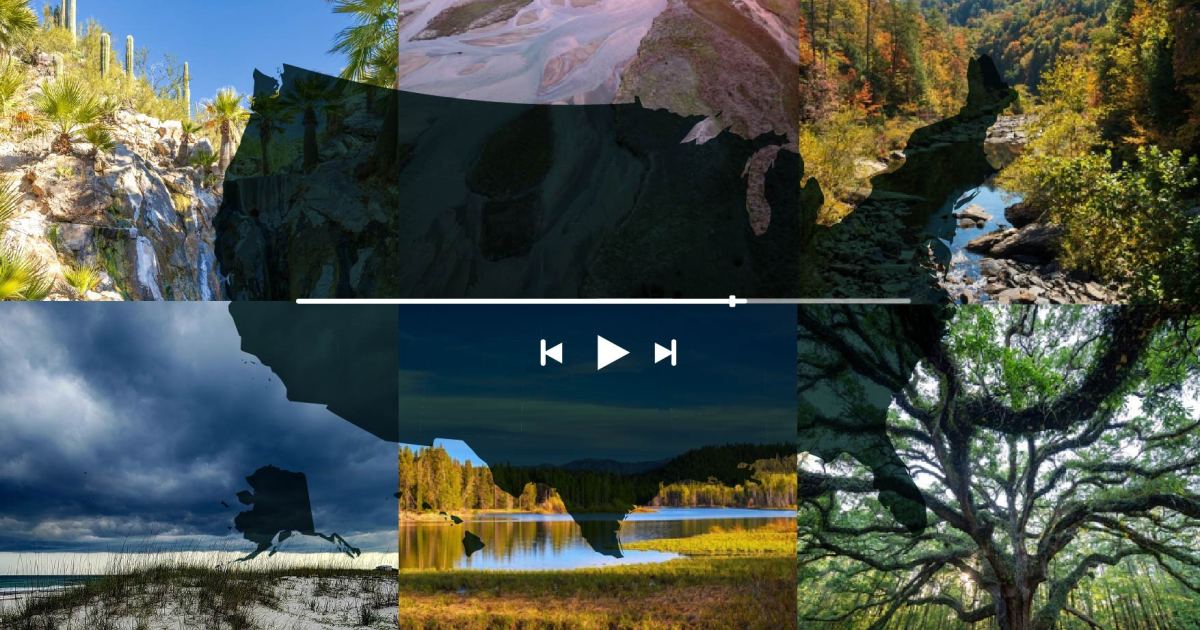
Al Jazeera has catalogued 50 US place names with Native American origins, pairing each with pronunciations, language roots and meanings. The project shows how Indigenous languages remain present in everyday maps even as many communities work to preserve languages weakened by displacement and assimilation.
The list includes states, cities, rivers, lakes and parks whose names many Americans use without knowing their origins. Al Jazeera published the project as the United States approaches 250 years since the July 4 Declaration of Independence.
Among the examples cited by Al Jazeera, Alabama comes from the Alibamu people and is often linked to a Choctaw meaning rendered as plant-cutters or thicket-clearers. Yosemite, known widely for the national park, is tied to Miwok and Ahwahneechee history and is often described as a Miwok term applied to people of the valley rather than the valley’s own name.
- Chicago is traced to Miami-Illinois, with meanings linked to wild onion, wild leek or striped skunk, according to Al Jazeera.
- Michigan is traced to Algonquian and Ojibwe roots meaning big lake or great water, according to the project.
- Wyoming is linked to Munsee and Lenape, with meanings tied to a big river flat or broad plains, Al Jazeera reported.
- Texas is traced to Caddo and Hasinai, with a meaning given as friends or allies, according to the project.
Names that survived removal
Dr Crystal Cavalier-Keck, a member of the Occaneechi Band tribe of the Saponi Nation in North Carolina, told Al Jazeera that local place names still carry Indigenous language. She cited the Haw River, named for the Sissipahaw people, and Hyco Creek, which she said means “turkey” in her tribe’s language.
Cavalier-Keck told Al Jazeera that her community avoided removal by moving into swamps and other areas where colonists were less likely to settle. Al Jazeera noted that the Indian Removal Act of 1830 forced tens of thousands of Native people from homelands east of the Mississippi to territory in present-day Oklahoma.
Her tribe has about 2,000 enrolled members, according to Al Jazeera. Cavalier-Keck said many others left North Carolina because assimilation was easier than publicly claiming Indigenous heritage in a hostile racial climate.
Language loss, she told Al Jazeera, has made it harder to connect with ancestral places. “The land remembers. The trees and the rocks are witnesses to the violence that happened here,” she said. “But we’ve lost the language that helped us reconnect with the land, the trees and the water.”
Few languages have thousands of speakers
In the 2020 US census, about 3.7 million people identified as American Indian or Alaska Native alone, roughly 1 percent of the population. Including people who also reported another race, the total was 9.7 million, or nearly 3 percent, according to census figures cited by Al Jazeera.
Al Jazeera reported that about 300 Indigenous languages were once spoken across 50 to 60 language families. According to the US Census Bureau’s 2017-2021 American Community Survey, only five are spoken by more than a few thousand people: Navajo, with more than 161,000 speakers; Cherokee, about 10,440; Zuni, about 8,100; Choctaw, about 7,260; and Hopi, roughly 7,100.
Rene Locklear White, a member of the Lumbee Tribe, told Al Jazeera that English often cannot capture the full meaning of Indigenous words, especially in languages where one word can carry the information of a sentence. Al Jazeera reported that the Lumbee Tribe won full federal recognition in December 2025 after a struggle lasting more than a century.
UNESCO says dozens of Indigenous languages in the United States now have only a small number of elderly speakers, according to Al Jazeera. The report also highlighted preservation work through immersion schools, digital dictionaries, recordings and cultural programs, along with mapping efforts by Cherokee community member Aaron Carapella through Tribal Nations Maps.
This story draws on original reporting from Al Jazeera.