
Indian village football tournament awards goats alongside cash prizes
A Jharkhand village tournament drew teams from 64 villages, mixing FIFA-style rules with Ho community customs and goat trophies.
By Sofia Marchetti · World Affairs Correspondent
4 min read
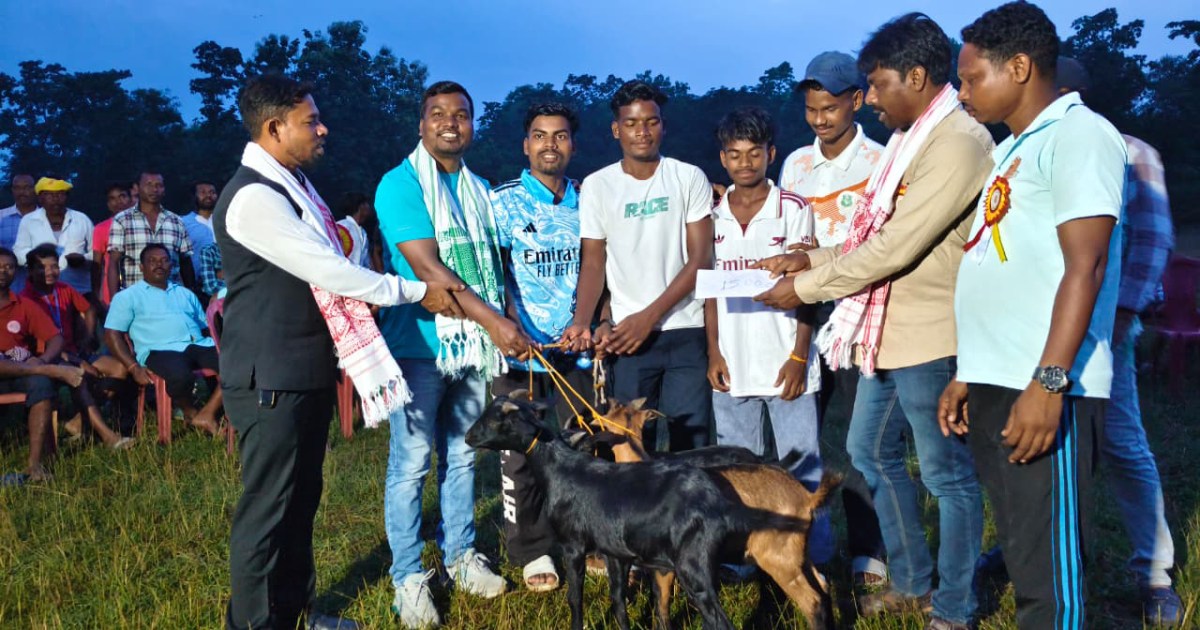
A football tournament in eastern India ended with the winners taking home cash and live goats, prizes chosen to reflect local Ho community customs. Al Jazeera reported that the Rangila Star Tirilbasa tournament in Chaibasa, Jharkhand, brought together teams from 64 nearby villages from July 14 to 17.
The event was held in Tirilbasa village during the FIFA World Cup period, as Spain’s second title was being celebrated globally, according to Al Jazeera. On Friday, NCS Maudi defeated Kumbaram 1-0 in the final.
NCS Maudi received 15,000 rupees, or about $156, and three castrated male goats known locally as khassi, Al Jazeera reported. Kumbaram won 12,000 rupees and two goats, while third-placed Kobra FC Nimdhi and fourth-placed Galubasa FC each received 9,000 rupees and one goat.
Team captain Sachin Devam told Al Jazeera that his players had arrived by two-wheeler and would need an autorickshaw to carry the goats back to their village, about 10km away. He said the team planned to celebrate its first victory with the whole village in what he called a “khassi picnic.”
Goats as community prizes
The tournament was in its fifth edition, according to the organisers cited by Al Jazeera. They said they use FIFA’s rulebook where applicable and bring in commentators and referees certified by the state football association to reduce disputes during matches.
Other parts of the tournament are shaped by the traditions of the Ho people, an Indigenous community native to the Chaibasa region. Al Jazeera reported that khassi goats are central to Ho celebrations and rituals, with the meat shared during community events.
Manish Kudada, an 18-year-old player and organiser from Tirilbasa, told Al Jazeera that goats were included because they are important in local culture. He said some winning teams slaughter the animals for a feast, while others keep them as livestock or a trophy.
Raj Keshri, goalkeeper for Tirilbasa and another organiser, told Al Jazeera that serving chicken without khassi meat at weddings can disappoint villagers. He said the mix of cash and goats lets players keep money while sharing the victory more widely.
Local rules, local identity
The tournament is played at what organisers call the “ek munda” level, meaning players are tied to a single village, Al Jazeera reported. Teams field nine players rather than 11, and at least six must come from the same village.
The matches also drop the offside rule, allowing players to shoot from anywhere on the field. Galubasa FC player Sudarshan Tiu told Al Jazeera that the format gives small-village players a chance that they may not get in open tournaments dominated by more experienced teams.
Suvir Kumar Tanti, a commentator who works across the Kolhan region during the monsoon football season, told Al Jazeera that the goat prizes make the event unusual. He said many other tournaments in the region use medals and trophies instead.
Al Jazeera described the grounds as a daylong gathering place, with spectators sitting beside the pitch or in trees, food stalls selling snacks and local drinks, and evening games after the football ended. Keshri said the name Rangila Star Tirilbasa was meant to express the village’s colour and talent.
Chaibasa’s football growth
Al Jazeera reported that Jharkhand has a long record in sport and that the state government supports local football and hockey clubs with grants. Clubs including Rangila Star also organise tournaments for women’s teams.
Chaibasa’s sports scene expanded after years of disruption linked to Maoist insurgency, according to Al Jazeera. The report said the government regained control of the district from Maoists in 2011, and that Home Minister Amit Shah declared the armed rebellion over in March after security operations in Jharkhand and nearby states.
Local tournaments have helped players gain attention, including Malati Munda, a midfielder and forward who told Al Jazeera she improved after moving to Chaibasa for higher studies. She said she had played in events where winners received cash and goats, and now plays for the Home Guard paramilitary in Ranchi.
Football content creator Harish Hembram told Al Jazeera that he began by posting videos of local matches for fans who could not attend. He said his YouTube channel now has more than 211,000 subscribers and earns about 20,000 rupees a month.
Sandeep Menon, author of Sacred Grounds: A Journey Through People’s Football in India, told Al Jazeera that village tournaments give young players visibility and pride. He said football across India is often adapted to local conditions, space and social customs.
This story draws on original reporting from Al Jazeera.