
India exam leaks protests continue after Modi promises fast-track courts
Student leaders say they will keep protesting until Education Minister Dharmendra Pradhan resigns over exam paper leak scandals.
By Sofia Marchetti · World Affairs Correspondent
3 min read
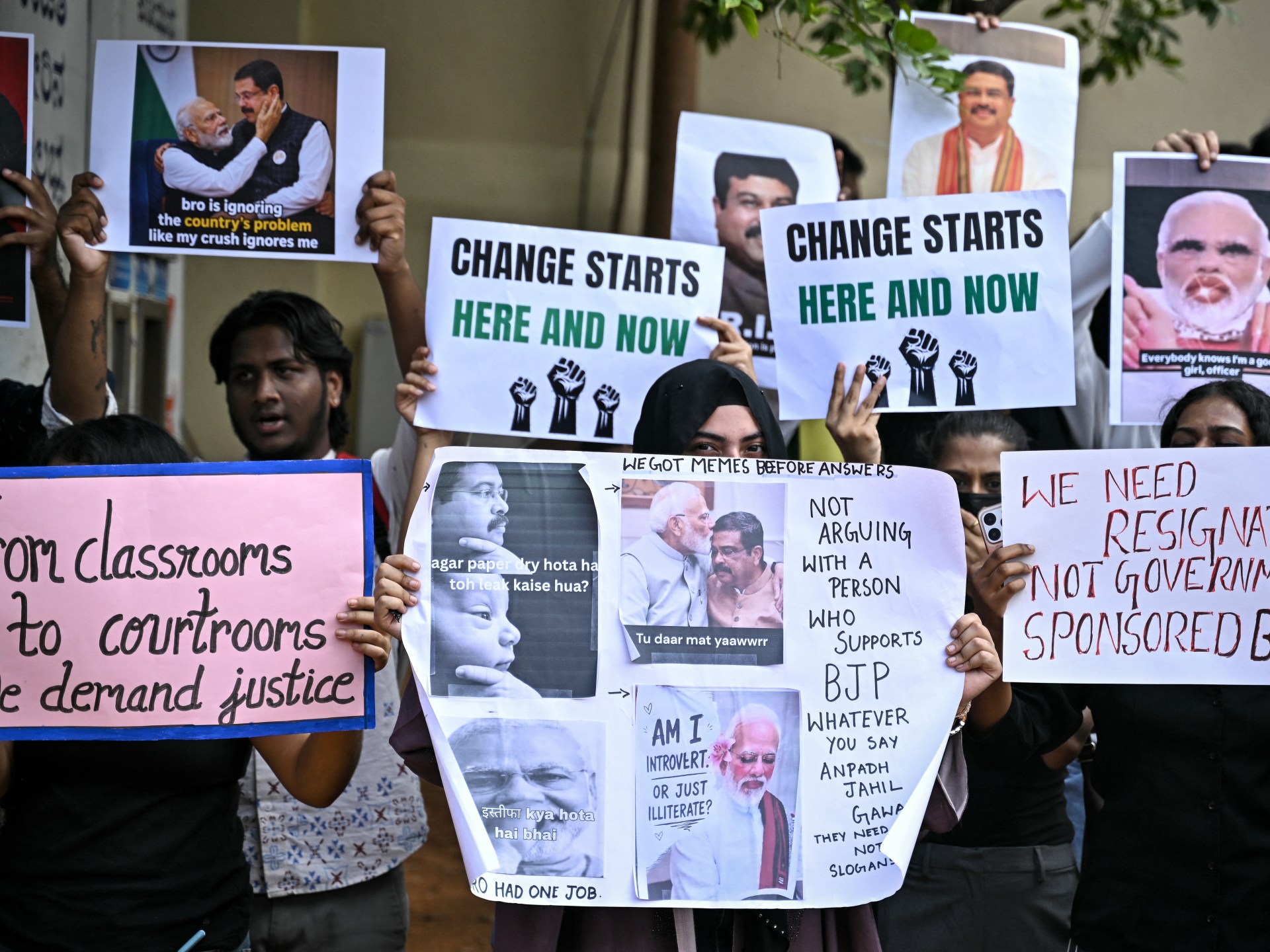
India exam leaks protests continued after Prime Minister Narendra Modi promised fast-track courts for people accused of leaking examination papers, Al Jazeera reported. Student organisers said the pledge did not meet their central demand: the resignation of Education Minister Dharmendra Pradhan.
Modi’s late-Thursday remarks were his first spoken response to the youth-led demonstrations, according to Al Jazeera. The protests have drawn tens of thousands of young people and spread from New Delhi to cities including Mumbai, Bengaluru and Patna.
Why are students protesting exam leaks in India?
The demonstrations are being led by the Cockroach Janta Party, or CJP, a satirical online movement that began in May and has become a national platform calling for education reforms, Al Jazeera reported. The group is protesting a series of paper leaks, technical problems and cancelled tests that have angered students and families.
The main protest camp is at Jantar Mantar in New Delhi, near Parliament Street. Demonstrators have also occupied parts of Parliament Street since Monday, with some camping on the road that links Parliament House and Connaught Place, Al Jazeera reported.
Police fired tear gas and used batons on demonstrators on Monday as protesters tried to march towards parliament, according to Al Jazeera. Human Rights Watch and Amnesty International condemned what they described as excessive police force and the suspension of mobile internet services at Jantar Mantar.
The CJP’s demands include Pradhan’s resignation, the withdrawal of cases against peaceful protesters and 10 million rupees, or about $104,000, for each family of more than 20 students who have died by suicide since recent exam cancellations, Al Jazeera reported.
What did Modi promise?
Modi wrote on X that the government would create fast-track courts to ensure quick and strict punishment for those involved in paper leaks. “Nothing is more important than the welfare and future of our youth,” he said.
Student leaders rejected the proposal as inadequate. CJP spokesperson Ashutosh Ranka said at Jantar Mantar that fast-track courts would not address what the group sees as deeper failures in the education system, Al Jazeera reported.
The controversy includes the National Eligibility cum Entrance Test, or NEET, the national exam used for admission to medical schools. More than two million students take NEET each year, and its papers have leaked three times in the past five years, including this year, according to Al Jazeera.
What happens next in the talks?
Indian activist Sonam Wangchuk, who supported the student demands, ended a 26-day hunger strike late Thursday. In a post on X, Wangchuk said he stopped fasting after negotiations and because of concerns about possible violence.
Health Minister JP Nadda and junior Atomic Energy Minister Jitendra Singh were present when Wangchuk ended the fast, according to Al Jazeera. Nadda said, according to the BJP’s social media platforms, that the government was positive about not filing cases against peaceful protesters and was considering compensation for suicide victims connected to recent NEET paper leaks.
Two senior government ministers and two CJP leaders met after Wangchuk ended his strike. CJP leaders said the government asked for until Saturday afternoon to respond to their demand that Pradhan step down, Al Jazeera reported.
The pressure in New Delhi has also affected public transport. The Delhi Metro Rail Corporation said Thursday that 16 stations in the capital would remain closed until further notice, prompting CJP founding president Abhijeet Dipke to accuse Modi on X of being willing to shut Delhi rather than remove Pradhan.
This story draws on original reporting from Al Jazeera.