
Hamas hands Gaza administration to technocratic committee
Al Jazeera reported the move ends Hamas’s direct civil administration of Gaza after two decades of blockade, internal division and war.
By Daniel Okafor · Business Editor
4 min read
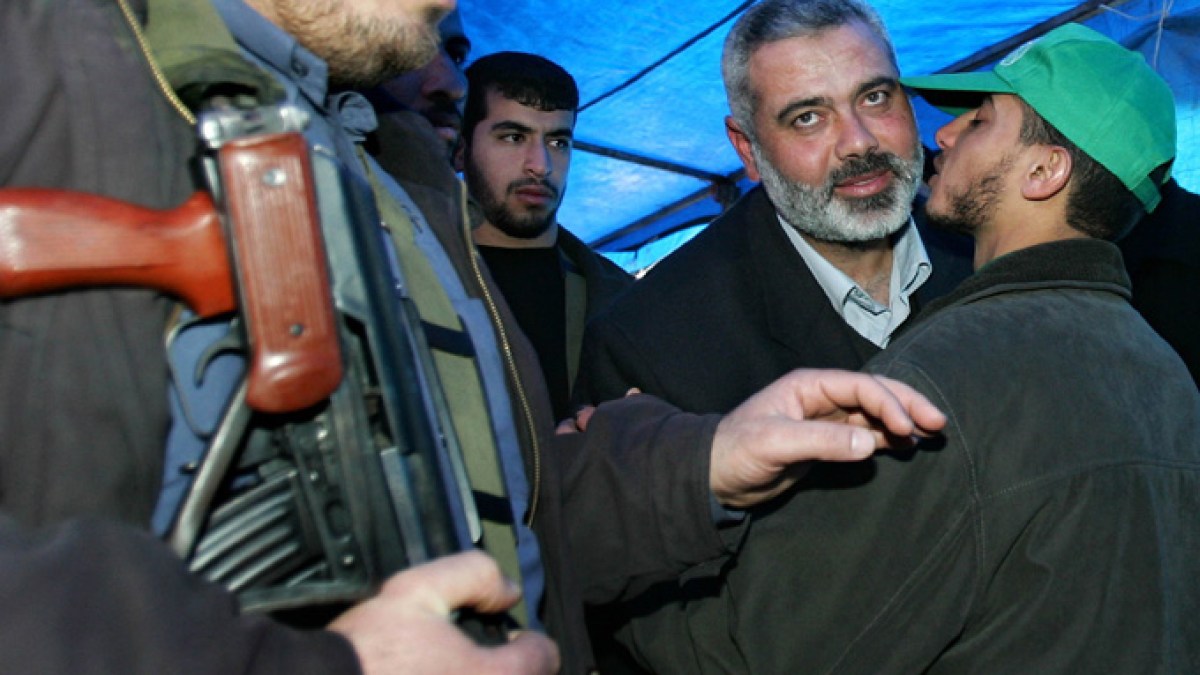
Hamas has dissolved the emergency body that ran civil affairs in Gaza and handed administration to a technocratic committee, Al Jazeera reported. The shift matters because it marks the end of nearly 20 years of direct Hamas governance over the enclave’s public services.
Al Jazeera said the Government Emergency Committee’s duties are being transferred to the National Committee for the Administration of Gaza, which operates under the internationally backed Gaza Peace Council. The new committee is headed by Ali Shaath, described by Al Jazeera as a Palestinian official and civil engineer.
From election victory to isolation
Hamas’s period in government began after the January 26, 2006 Palestinian parliamentary elections, according to Al Jazeera. The group won 76 of 132 seats, while Fatah won 43, in a vote in which nearly 78 percent of 1.3 million eligible Gaza voters cast ballots.
Al Jazeera reported that Hamas leader Ismail Haniyeh sought to reassure outside powers after the vote, while Palestinian legislator Hanan Ashrawi warned the result could leave Palestinians isolated internationally. Palestinian political researcher Mohammad Al-Aila told Al Jazeera that the election’s integrity was not disputed, but Western governments rejected the outcome because Hamas did not fit their political preferences.
The pressure on Gaza grew after Palestinian fighters captured Israeli soldier Gilad Shalit on June 25, 2006, Al Jazeera reported. After violent fighting between Palestinian factions, Hamas took full control of Gaza on June 14, 2007; Palestinian President Mahmoud Abbas then dissolved the unity government, and Israel imposed a land, sea and air blockade.
Al Jazeera reported that the blockade helped push 80 percent of Gaza’s population into aid dependence, closed 80 percent of factories and cost tens of thousands of jobs. A 2010 effort to challenge the blockade, the Freedom Flotilla, ended when Israeli forces raided the Mavi Marmara ship, according to Al Jazeera.
Repeated attempts to change Gaza’s administration
Hamas formed an administrative committee in 2014 after a reconciliation agreement collapsed, Al Jazeera reported. The move followed Israeli military offensives in 2008, 2012 and 2014 and years of strained governance under blockade.
Al Jazeera said Hamas issued a new political document in 2017 and later dissolved its administrative committee under Egyptian pressure to allow a unity government to function. In 2018, the Government Action Follow-up Committee became a continuing body for civil and service affairs after reconciliation efforts stalled.
Al-Aila told Al Jazeera that Hamas had shown earlier willingness to give up parts of civil rule, including support for Palestinian elections later cancelled by Abbas in 2021 and agreement to a reconciliation accord signed in Algiers in 2022. He said the group had concluded that governing Gaza alone was no longer workable.
War and the emergency committee
Al Jazeera reported that Hamas fighters led an attack on southern Israel in October 2023, killing nearly 1,200 people and taking more than 200 captives to Gaza. Israel responded with a war in Gaza in which more than 70,000 people have been killed, according to Al Jazeera.
After the war began, Hamas’s governing body activated a central operations room and created the Government Emergency Committee, Al Jazeera reported. The committee coordinated hospitals, displacement shelters, water supplies and rubble clearance.
Al Jazeera reported that Israel targeted Gaza’s civilian infrastructure, administrative personnel and senior Hamas figures during the war. Haniyeh was assassinated while visiting Tehran in July 2024, and Issam al-Da’alis, head of the Government Action Follow-up Committee, was killed by Israeli forces in March 2025.
Al-Aila told Al Jazeera that Israel sought to break Gaza’s administrative capacity by striking civil and police headquarters, creating what he called an administrative void. He said that disorder made Gaza more open to outside plans for alternative administration.
What changes under the new arrangement
Al Jazeera reported that the White House approved a transitional structure in January 2026, including the Gaza Peace Council and the National Committee for the Administration of Gaza. Gaza’s Government Media Office announced the Emergency Committee’s dissolution on July 6, 2026, outside Al-Aqsa Martyrs Hospital.
Israeli Foreign Minister Gideon Saar rejected the move as a “trick,” according to Al Jazeera, arguing that Hamas was trying to copy Hezbollah’s role in Lebanon by leaving services to technocrats while retaining military power.
Under the transition, about 45,000 existing government employees in health, education and interior security will remain in their jobs, Al Jazeera reported. Al-Aila warned that removing experienced civil servants could paralyze institutions and trigger unrest, and said the new committee’s success depends on avoiding exclusion and working with Gaza’s political forces, families and civil society.
This story draws on original reporting from Al Jazeera.